
Ergonomic Office Chair: 2026 Buyer's Guide and Model Selection
For many professionals, students, and gamers, long periods of sitting are an integral part of daily life. A poorly configured workstation can negatively impact posture. An ergonomic office chair is designed to support a posture tailored to your body through individual adjustment options. This article analyses the technical criteria for selecting a suitable model and presents a curated selection of chairs.
Buyer's Guide: What to Look for in an Ergonomic Desk Chair
The selection of a suitable chair should be based on objective, technical features. The following criteria are relevant for making an informed decision.
1. Adjustment Mechanisms and Adaptability
A chair is ergonomic when it can be adapted to the user's individual body measurements. Key adjustment options include:
- Seat Height: Your feet should be able to rest flat on the floor, while your thighs form a slightly downward-sloping line. This promotes blood circulation.
- Seat Depth: There should be a gap of about three to four fingers' width between the back of your knees and the front edge of the seat to avoid pressure on your lower legs.
- Backrest and Tilt Mechanism: A height-adjustable backrest supports the spine in the correct places. A synchronous mechanism is advantageous as it links the tilt of the seat and backrest in an ergonomically sound ratio, thus promoting dynamic sitting.
- Lumbar Support: An adjustable office chair with lumbar support is crucial. It supports the lower back (lumbar region) and helps maintain the natural S-curve of the spine. The support should be adjustable in height and depth.
- Armrests: Height, width, and depth-adjustable armrests (often referred to as 3D or 4D armrests) relieve strain on the shoulder and neck area by providing stable support for the arms.
- Headrest: An adjustable headrest supports the head and relieves the cervical spine, especially in reclined working positions or during breaks.
2. Material and Build Quality
The choice of material affects comfort, durability, and climate control.
- Upholstery: A mesh office chair offers high breathability and air circulation, which is particularly beneficial during long sitting sessions. High-density foam padding also provides comfort but should be able to retain its shape.
- Frame and Base: Materials like steel or aluminum alloys ensure high stability and durability. The base should be wide enough to prevent tipping.
- Gas Lift Cylinder: The gas lift cylinder for height adjustment is a safety-critical component. Certifications (e.g., according to the BIFMA standard) can be an indicator of tested quality and load capacity.
3. Load Capacity and Dimensions
The maximum weight capacity is an important specification. Standard models are often designed for up to 120 kg. For higher requirements, models up to 150 kg or more are available. The dimensions of the chair, especially the width of the seat and the height of the backrest, should match the user's height and build.
Our Selection of Sihoo Office Chairs for 2026
The following models from the Sihoo brand are distinguished by specific technical features that qualify them for different user needs in the home office or professional office environment.
Sihoo M18 Ergonomic Office Chair
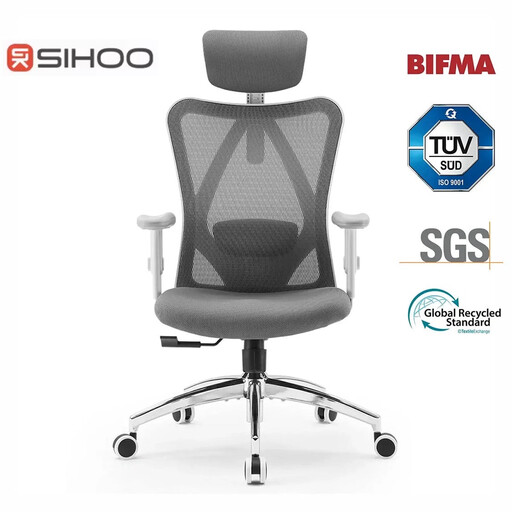
Analysis of Product Features: The Sihoo M18 is a computer chair with five key adjustment points: backrest, headrest, seat height, tilt, and armrest height. The backrest is made of high-elasticity polyester mesh fabric for good ventilation. The W-shaped seat, made of high-density polyurethane foam, is designed to minimise pressure on the legs. The steel frame and mechanism are engineered for a maximum weight capacity of 150 kg.
-
Objective Advantages:
- High weight capacity of up to 150 kg.
- Breathable mesh back for improved air exchange.
- Five adjustment options for individual customisation.
- W-shaped seat cushion for thigh pressure relief.
-
Suitable Application Scenarios:
- Individuals seeking a robust office chair for long hours of sitting with a high weight capacity.
- Users in warmer environments who will benefit from the breathability of the mesh fabric.
Sihoo M102C Ergonomic Mesh Office Chair
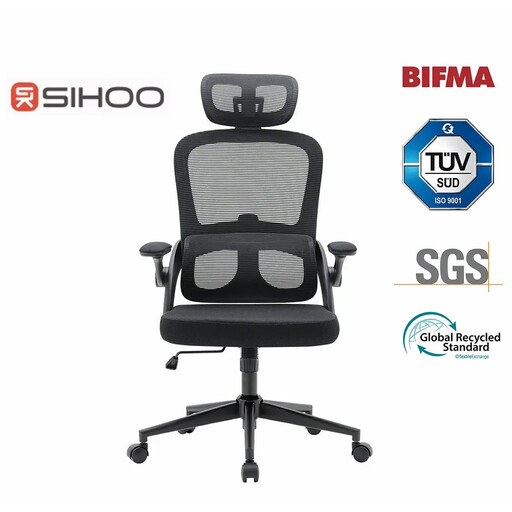
Analysis of Product Features: The M102C model focuses on precise lumbar support. The lumbar support is separately adjustable vertically within a 6 cm range. The armrests are not only adjustable but also flip-up, which makes it easier to store the chair under a desk. The maximum weight capacity is stated as 136 kg.
-
Objective Advantages:
- Separately and vertically adjustable mesh lumbar support.
- Flip-up armrests for space-saving storage.
- Comprehensive adjustment options including headrest and seat height.
-
Suitable Application Scenarios:
- Users who place a high value on targeted and adjustable support for the lumbar region.
- Home office users with limited space.
Sihoo M57S Ergonomic Office Chair
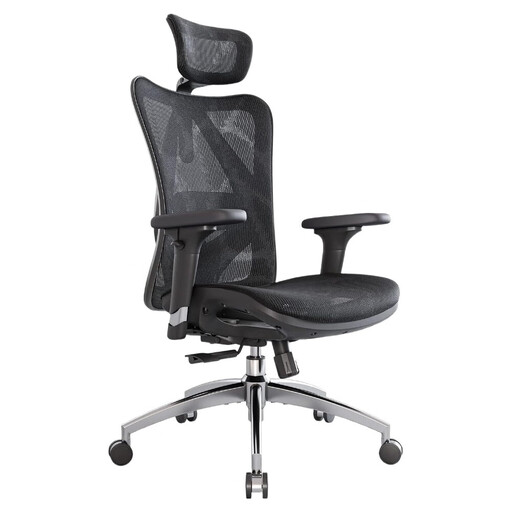
Analysis of Product Features: The Sihoo M57S is positioned as an ergonomic executive chair with advanced adjustment features. A standout feature is the 3D armrests, which are adjustable in height, depth, and rotation. The aluminum alloy frame and the gas lift cylinder, which is BIFMA and SGS certified according to the manufacturer, support a weight capacity of up to 150 kg. The S-shaped backrest with adjustable lumbar support and headrest is designed for continuous spinal support.
-
Objective Advantages:
- 3D armrests for versatile adjustment to suit various activities.
- High weight capacity up to 150 kg, supported by an aluminum alloy frame.
- Breathable polyester mesh on the backrest and seat.
- Backrest tilt angle can be locked between 110° and 126°.
-
Suitable Application Scenarios:
- Demanding users who require maximum flexibility in armrest adjustment.
- Individuals looking for a chair with high load capacity and a focus on durable materials.
Further Options and Alternatives
Should the presented models not exactly meet your requirements, the market offers other specialised seating solutions. Particularly in the PC Gaming Chairs category, you can find models with different design and functional features that are also designed for long periods of sitting.
Frequently Asked Questions (FAQ)
1. How do you correctly adjust an ergonomic office chair? Start with the seat height, so your feet are flat on the floor. Adjust the seat depth so there is a 2-3 finger gap between the back of your knees and the edge of the seat. Adjust the lumbar support to support the natural curve of your lower back. Set the armrests so your forearms rest at a 90-degree angle with relaxed shoulders. The headrest should support your neck and the back of your head.
2. What is the difference between a standard office chair and an ergonomic office chair? A conventional office chair often offers only basic functions like height adjustment. An ergonomic desk chair, on the other hand, has a multitude of adjustment options (seat depth, lumbar support, armrests, headrest, tilt mechanism) that allow for individual adaptation to the user's body to promote a healthy posture and reduce strain.
3. How important is lumbar support in an office chair? Lumbar support is a very important feature. It fills the gap between the backrest and the natural inward curve of the lumbar spine. Without this support, the lower back tends to slump outward, which can lead to poor posture and increased stress on the intervertebral discs. Adjustable lumbar support allows for precise positioning and pressure adjustment.