
Ergonomic Office Chair: 2026 Buying Guide and Recommendations
Choosing an office chair is a decision that significantly impacts your daily work routine. The demands on a chair are high, especially when sitting for several hours. An ergonomic office chair is designed to support the body, promote a neutral posture, and minimise strain. Its functionality relies on adjustable components that can be tailored to the user's individual body measurements.
What to Look for in an Ergonomic Desk Chair
The effectiveness of an ergonomic chair depends on its adjustability and the materials used. The following criteria are essential for making an informed decision.
Lumbar Support: Function and Adjustment
The lumbar support is a critical component for stabilising the lumbar spine. It fills the gap between your lower back and the backrest, supporting the natural S-curve of the spine. Ideally, this support is adjustable not only in height but also in depth (pressure) to allow for precise customisation to your individual anatomy. An office chair with lumbar support can help reduce the strain on intervertebral discs during long periods of sitting.
Adjustability of Seat Height, Depth, and Armrests
- Seat Height: The correct seat height is achieved when your feet are flat on the floor and your knees form an angle of approximately 90 degrees. Your thighs should be parallel to the floor.
- Seat Depth: There should be a gap of two to four fingers' width between the back of your knees and the front edge of the seat. This prevents constriction of blood circulation in your legs.
- Armrests: Adjustable armrests (in height, width, and depth, also known as 3D or 4D armrests) relieve strain on the shoulder and neck area. Your forearms should be able to rest comfortably on them at a 90-degree angle.
Materials: Breathable Mesh and Cushioning
A breathable office chair, often featuring a mesh backrest, promotes air circulation and prevents heat build-up. This is particularly advantageous during long hours of use. The seat should have high-quality molded foam cushioning that retains its shape over time and distributes pressure evenly.
Headrest and Neck Support: Necessity and Benefits
A swivel chair with a headrest offers additional support for the neck and head, especially in reclined working positions or during short breaks. An adjustable headrest can help prevent tension in the upper spine.
Safety and Quality Standards
Certifications such as the European standard EN 1335 or the American BIFMA seal provide information about the safety, stability, and durability of an office chair. They ensure that the product meets defined stress tests and minimum ergonomic requirements.
Our Top Picks for 2026
Based on technical specifications and functional design, we have curated a selection of models to suit various needs.
Ochama x SONGMICS Home Office Mesh Chair
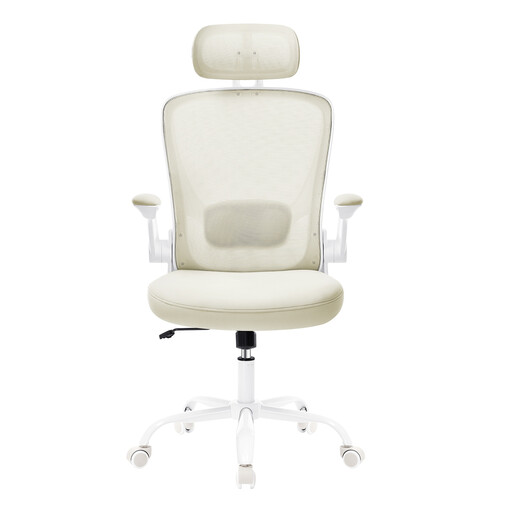
- Why we recommend it: This model combines essential ergonomic features with a practical design for the home office. Its S-shaped backrest, complete with adjustable lumbar and head support, provides a solid foundation for healthy posture. A standout feature is the flip-up armrests, which allow the chair to be pushed neatly under a desk to save space.
- Pros:
- Space-saving flip-up armrests
- Breathable mesh backrest and cushioned seat
- Adjustable headrest and lumbar support
- Tilt function for flexible seating positions
- Best for: Users looking for a functional, space-saving home office chair with key ergonomic adjustments.
Sihoo Doro C300 Ergonomic Office Chair
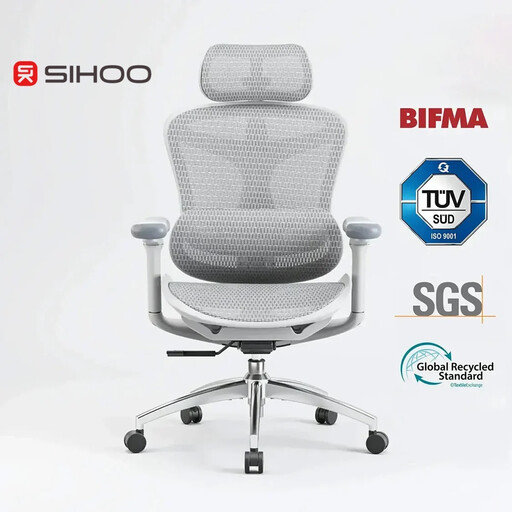
- Why we recommend it: The SIHOO Doro C300 office chair stands out with its advanced adjustment mechanisms. The self-adaptive lumbar support dynamically responds to the user's movements. Its 3D armrests synchronise with the backrest's recline, ensuring continuous support. The smart weight-sensing mechanism and a high weight capacity of up to 150 kg highlight its robust construction. According to the manufacturer, the chair meets standards such as EN1335 and BIFMA.
- Pros:
- Dynamic, self-adaptive lumbar support
- 3D armrests synchronised with the backrest
- Smart weight sensor with adjustable tilt angles
- High weight capacity of up to 150 kg
- Best for: Individuals who spend most of their workday seated and require a chair with dynamic, automatic adjustments that adapt to their movements.
SIHOO M18 Ergonomic High Back Executive Swivel Office Chair
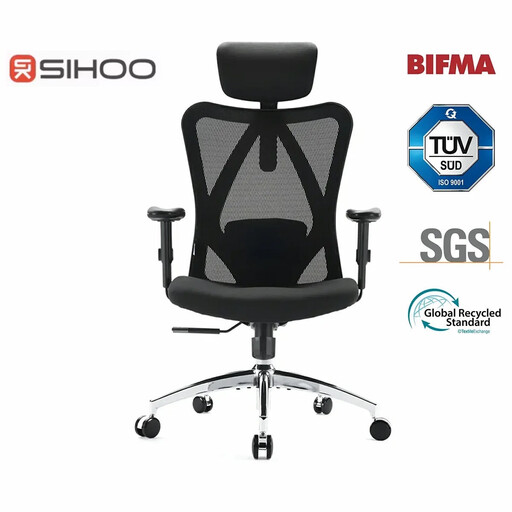
- Why we recommend it: The SIHOO M18 is designed as an office chair for long sitting periods, offering comprehensive support for the entire back with its high-back design. The W-shaped seat promotes a centred posture, while the waterfall front edge reduces pressure on the thighs. With BIFMA and SGS certifications that, according to the manufacturer, confirm a static pressure load capacity of 1136 kg, this model is built for durability.
- Pros:
- High backrest for full-body support
- Comprehensive adjustment options for the headrest, lumbar support, and armrests
- W-shaped seat design for pressure relief
- High weight capacity and certified stability
- Best for: Users, especially taller individuals, who prefer an executive-style chair with a high back and versatile adjustments for maximum comfort during long hours of sitting.
Discover More Options
If these models don't meet your specific requirements, you can find a wider selection in our main category. There, you can filter more models by features, materials, and price.
Explore our entire range of office chairs.
Frequently Asked Questions (FAQ)
How do you correctly adjust an ergonomic office chair?
Start with the seat height, ensuring your feet are flat on the floor. Next, adjust the seat depth, leaving a gap of 2-4 fingers between the back of your knees and the seat edge. Position the lumbar support to align with your lower back. Finally, set the armrests so your forearms rest at a 90-degree angle with your shoulders relaxed.
What is lumbar support and why is it important?
Lumbar support is a contoured part of the backrest that supports the lower back (lumbar region). It is important because it maintains the natural curve of the spine and prevents the back from slumping into an unhealthy, rounded posture. This reduces strain on the intervertebral discs and helps prevent back pain.
How long should you sit in an office chair before taking a break?
Regardless of the chair's quality, it is recommended to change your sitting position regularly and to stand up at least once every hour. Short breaks of 5-10 minutes for moving and stretching promote circulation and relieve strain on the spine and muscles.