
Ergonomic Office Chair: 2026 Buyer's Guide and Recommendations
Choosing the right office chair is a critical decision, primarily determined by your daily hours of use and individual physical needs. An ergonomic office chair is engineered with specific adjustment options and design features to support a neutral posture and reduce strain on the musculoskeletal system during extended desk work. This article examines the key technical criteria for selection and presents a curated list of models with varying specifications.
Buyer's Guide: Technical Criteria for Selecting an Ergonomic Desk Chair
The functionality of an office chair is defined by the interplay of its mechanical components. The following parameters are crucial for making an informed purchasing decision.
The Importance of Adjustability
A chair designed for optimal back health is distinguished by its ability to adapt to the user. The following adjustment options should be considered:
- Lumbar Support: This support in the lower backrest helps maintain the natural S-curve of the spine. Ideally, it should be adjustable in height and depth to precisely fit the lumbar region.
- Armrests: Adjustable armrests relieve strain on the shoulder and neck muscles. Height adjustability is the minimum standard. Models with additional width and depth adjustments offer a more personalised fit. A swivel chair with flip-up armrests can also be stored neatly under a desk to save space.
- Seat Height and Depth: The correct seat height is achieved when your feet are flat on the floor and your thighs form an angle of approximately 90 degrees with your lower legs. Adjustable seat depth ensures a gap of about three to four fingers between the back of your knees and the front edge of the seat, preventing restricted blood circulation.
- Office Chair with a Headrest: An adjustable headrest is particularly important for relieving strain on the cervical spine when reclining or during breaks.
Material Selection: Mesh vs. Upholstered Office Chairs
The material of the seat and backrest affects both comfort and durability.
- Mesh Back: An office chair with a mesh back offers excellent breathability. The material promotes air circulation and prevents heat build-up, which is especially beneficial during long periods of use. The elasticity of the mesh also conforms to the shape of your back.
- Upholstery: Traditional upholstered chairs with fabric or leather covers provide a softer seating surface. The quality of the foam (density and resilience) is crucial for long-term comfort and shape retention.
Stability and Load Capacity
A chair's base, typically a five-star design, and its gas lift determine its stability and maximum weight capacity. A heavy-duty office chair is essential for users with a higher body weight. Certifications like BIFMA or SGS indicate the tested safety and durability of the components. The casters should be appropriate for your flooring (hard casters for carpet, soft casters for hard floors) to ensure mobility and protect the surface.
Our Top Picks for 2026
The following models were selected based on their technical specifications and feature sets.
GTIMEX Friendly Ergonomic Mesh Office Chair
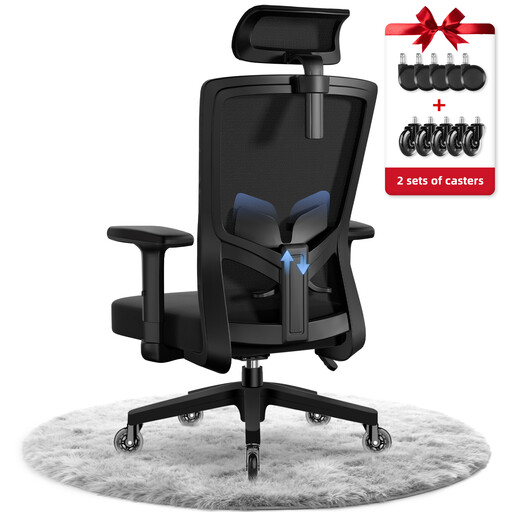
Why we recommend this product: This model combines comprehensive adjustment options with a practical, space-saving design. The flip-up armrests and solid core features make it a functional solution for the modern home office.
Pros:
- Comprehensive Adjustability: The headrest (11 cm height, 120° rotation), lumbar support (6 cm), armrests (10 cm), and seat height (10 cm) are all adjustable.
- High Weight Capacity: The BIFMA and SGS-certified gas lift is designed for a user weight of up to 150 kg.
- Space-Saving Design: The flip-up armrests allow the chair to be pushed completely under the desk.
- Material: The backrest, made of breathable nylon mesh, promotes air circulation.
Who it's for: Users looking for a versatile, adjustable, and sturdy chair for a home office or professional workspace who also value a space-saving design.
Ochama x SONGMICS Home Office Mesh Chair
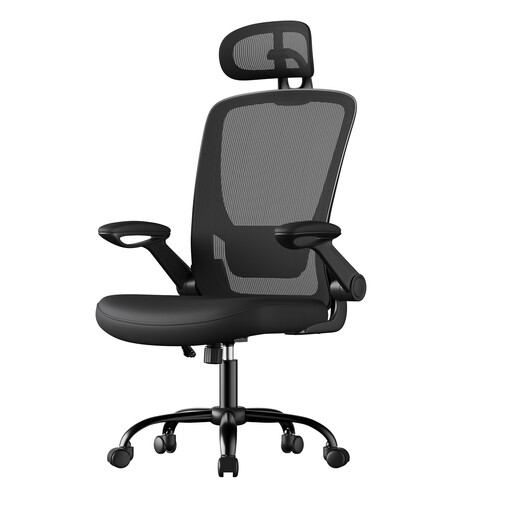
Why we recommend this product: This model focuses on core ergonomic functions, providing a solid foundation for comfortable work. The combination of an S-shaped backrest, adjustable lumbar support, and a rocking function covers the essential requirements for an ergonomic workspace.
Pros:
- Core Ergonomic Features: An S-shaped backrest with adjustable lumbar and headrest support to promote healthy posture.
- Flexibility: A rocking function (90-105°) allows for dynamic sitting.
- Comfortable Seating: The 8 cm thick foam cushion and breathable mesh cover provide pressure relief and cooling.
- Stable Construction: The metal base and a reliable gas lift support a weight of up to 120 kg.
Who it's for: Users who need a functional and reliable ergonomic desk chair for daily use in a home office and prioritise essential adjustment features.
GTIMEX Ergonomic Executive Swivel Office Chair
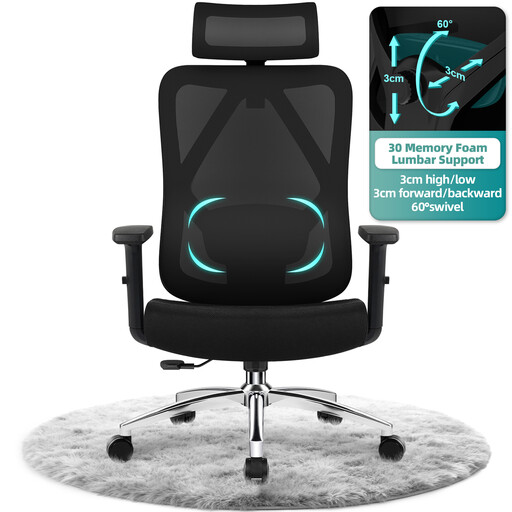
Why we recommend this product: This model, which has the features of an ergonomic executive chair, is designed to meet the highest standards of durability and adjustability. Its 3D adjustable memory foam lumbar support and high weight capacity of 200 kg set it apart from other models.
Pros:
- Maximum Load Capacity: The aluminium alloy base and reinforced components are designed for a user weight of up to 200 kg.
- Precision Lumbar Support: The 3D memory foam lumbar support is adjustable in height, depth, and rotation (60°).
- Advanced Recline Function: The backrest can be locked at three angles (90°, 115°, 135°), making it suitable for focused work as well as relaxation.
- High-Quality Materials: The combination of high-density foam and breathable mesh fabric offers both durability and comfort.
Who it's for: Users with a higher body weight or individuals seeking an extremely robust and highly customisable office chair for long, intensive workdays.
Discover More Options
If the featured models don't perfectly match your requirements, you can find a wider selection of office chairs with different specifications and designs in our Golden Chair category.
Frequently Asked Questions (FAQ)
1. What should you look for in a back-friendly office chair? A back-friendly office chair should have height- and depth-adjustable lumbar support, an adjustable seat height and depth, and adjustable armrests. A synchronous mechanism, where the seat and backrest move in a coordinated motion, also promotes dynamic sitting.
2. What should the weight capacity of an ergonomic office chair be? The standard weight capacity is often between 110 and 120 kg. For heavier users or for enhanced durability, it is advisable to choose models with a capacity of 150 kg or more. Look for certifications like BIFMA, which confirm tested stability.
3. Is a mesh or upholstered office chair better? The choice is subjective and depends on personal preference. A mesh back offers better ventilation and is ideal for people who tend to get warm easily. High-quality upholstery can feel softer and may offer better pressure distribution. Both materials can provide excellent ergonomic support if they are of sufficient quality.