
Educational Toy Recommendations for Meaningful Gifts for Children
The selection of children's toys is vast and can quickly become overwhelming. Parents, grandparents, and relatives often face the question of which product not only entertains but also meaningfully supports a child's development. The goal of this article is to provide clear guidance. As a Joybuy Product Recommendation Officer, I will present a curated selection of educational toys and explain the criteria that truly matter when making a purchase.
What to Look for When Buying Educational Toys
To find a suitable and safe product, it's helpful to consider a few fundamental aspects. These criteria will help you better assess the quality and benefits of educationally valuable toys.
1. Age-Appropriate Design and Development
A crucial factor is the manufacturer's age recommendation. Toys for ages 1 and up are designed to engage basic sensory and gross motor skills, often featuring large, easy-to-grip elements. In contrast, toys for ages 3 and up challenge more complex abilities like hand-eye coordination, logical thinking, or initial counting and sorting tasks. A toy that matches the child's developmental stage prevents frustration and fosters positive learning experiences. Pay attention to how a product can specifically develop fine motor skills, for instance, through grasping, stacking, or manipulating small parts.
2. Material Quality and Safety Standards
A child's safety is the top priority. In the EU, toys must meet the requirements of the Toy Safety Directive and bear the CE mark. This mark confirms that the product complies with applicable safety standards. For toys intended for toddlers, non-toxic materials and durable construction are essential. Wooden toys are a popular choice due to their longevity, tactile feel, and stability. It's important to look for a splinter-free finish and the use of saliva-resistant paints.
3. Educational Approach
Good educational toys encourage a child's initiative and creativity. Concepts like Montessori toys are based on the principle of independent discovery. These toys often have a simple design to focus concentration on a specific skill, whether it's sorting colours, matching shapes, or understanding quantities. The focus is on allowing the child to find their own solutions through experimentation, thereby building self-confidence.
Top Educational Toy Picks
Based on the criteria mentioned, we have compiled a selection of products that cater to different age groups and learning objectives.
Haba Grasping Puzzle Fruit & Colours
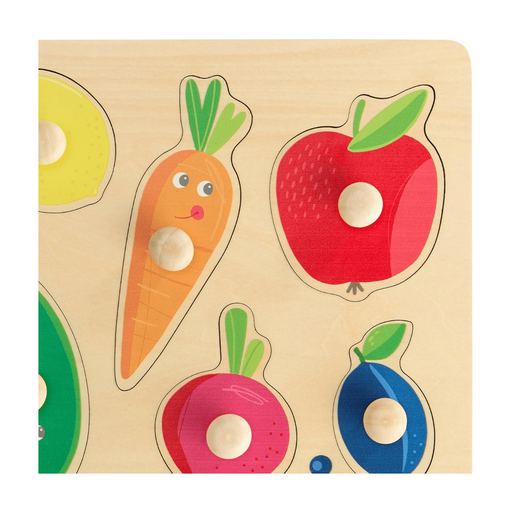
Why It Stands Out This wooden puzzle from Haba is specially designed for the very youngest children. The large, easy-to-grip knobs on the puzzle pieces are perfect for small hands, making them easy to grasp and place. It's a classic motor skills toy that facilitates early learning achievements.
Benefits
- Specifically promotes fine motor skills and hand-eye coordination.
- Made from durable wooden toy material.
- Simple, clear shapes and colours to enhance perception.
- Large knobs make grasping easy for children aged 12 months and up.
Who It's For Ideal for toddlers from 1 year old who are being playfully introduced to recognising shapes and colours. It's an excellent first puzzle and a thoughtful gift for children on their first birthday.
Filapen Montessori Toy for Ages 3+
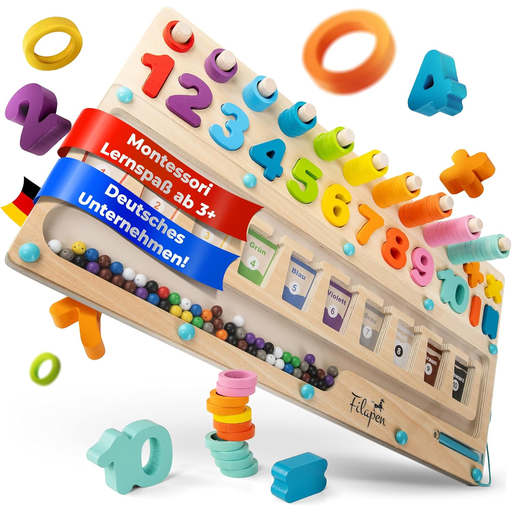
Why It Stands Out This magnetic game from Filapen combines multiple learning areas in one product. Children use a magnetic pen to guide coloured balls through a maze to the matching colour fields. Simultaneously, wooden numbers can be placed into their corresponding slots.
Benefits
- Multifunctional Montessori toy: promotes colour and number recognition.
- Trains concentration and problem-solving skills.
- The securely attached magnetic pen prevents parts from being lost.
- Develops fine motor skills through the precise guidance of the pen.
Who It's For For children aged 3 and up who already have basic motor skills and are ready for more complex tasks. It's well-suited for preschool preparation and playfully promotes an understanding of colours and numbers.
Pink LCD Writing Tablet for Kids

Why It Stands Out This LCD writing tablet offers a modern alternative to paper and pens. Children can draw, write, and doodle, and then erase the screen with a single button press. Its lightweight and sturdy design makes it a practical companion for on-the-go.
Benefits
- Encourages creativity and writing practice without wasting paper.
- Lightweight and compact, ideal for travel in the car, on a plane, or at a restaurant.
- The colourful screen makes drawing especially engaging.
- Durable construction from ABS plastic, designed for use by children.
Who It's For For children aged 3 to 8 who enjoy drawing and writing. It's a practical gift for children that provides quiet entertainment both at home and on the go, while fostering creativity.
Looking for More Options?
This selection represents just a small sample of the possibilities. Every child has unique interests and needs. If you'd like to discover more products tailored to different age groups and learning goals, you can find a wider range of toys in our category.
Discover More in the Baby Colours Category
Frequently Asked Questions About Educational Toys
What are educationally valuable toys?
Educationally valuable toys are designed to go beyond mere entertainment by specifically fostering one or more of a child's skills. These include cognitive abilities (e.g., logical thinking, memory), motor skills (fine and gross), social competencies (e.g., through role-playing), or creative expression. They encourage the child to actively engage and discover.
When are educational toys beneficial?
Educational toys are beneficial from birth, as long as they are appropriate for the child's developmental stage. For infants, simple grasping toys or mobiles that stimulate the senses are suitable. From around one year of age, toys for ages 1 and up that promote motor skills become relevant. As children get older, the toys become more complex, supporting skills like learning letters and numbers.
How can I identify safe toys for my child?
Look for the CE mark, which confirms compliance with EU safety standards. Check the toy for sturdy construction, secure connections, and the absence of sharp edges or small, detachable parts (choking hazard), especially for toys intended for children under three. For wooden toys, the paints should be saliva-resistant and the surfaces smooth. Always read the manufacturer's warnings.