
ECE 22.06 Motorcycle Helmet: Buyer's Guide and Recommendations for 2026
The introduction of the ECE R 22.06 testing standard marks a significant evolution in safety standards for motorcycle helmets in Europe. Compared to the previous ECE 22.05 standard, it imposes stricter requirements on protective performance and testing procedures. For riders, this means a new generation of helmets tested under more rigorous conditions. This article analyses the technical criteria of the new standard and presents a selection of models that meet these requirements.
Buyer's Guide: What to Look for in an ECE 22.06 Certified Helmet
Choosing the right helmet is based on an analysis of safety and functional features. The ECE 22.06 standard serves as the foundation for this.
The ECE R 22.06 Testing Standard in Detail
The ECE 22.06 standard, often referred to as the ECE R 22.06 helmet standard, has fundamentally revised the testing protocols for protective helmets. Key changes include:
- Expanded Impact Tests: Helmets are now tested for their shock absorption properties at different speeds (low and high). The number of defined impact points on the helmet shell has also been increased.
- Rotational Acceleration Test: For the first time, the protective performance during an oblique impact is measured. This test simulates the rotational forces that can act on the head in a real-world accident.
- Requirements for Accessories: Visors, sun visors, and communication systems are now also subjected to stricter tests. For example, the visor must withstand a high-speed particle impact without shattering.
- P/J Homologation for Modular Helmets: Modular helmets must pass tests in both the open (J configuration) and closed (P configuration) positions of the chin bar to receive dual homologation.
Helmet Types: Full-Face vs. Modular
The choice between a full-face and a modular helmet depends on individual riding habits.
- Full-Face Helmet: Consists of a single, solid outer shell and offers high structural integrity. This helmet type is ideal for riders who prioritise maximum protection and good aerodynamics at higher speeds. A full-face helmet with a sun visor combines this protection with practical anti-glare functionality.
- Modular Helmet: Features a flip-up chin bar. This increases convenience during short stops, refuelling, or in city traffic. Modern modular helmets with ECE 22.06 certification offer a level of protection that approaches that of full-face helmets, provided they have P/J dual homologation. They are often the preferred choice for touring riders and are a great motorcycle helmet for glasses wearers, as they are easier to put on.
Material and Construction
A helmet's outer shell is the first line of defence. Common materials include:
- Polycarbonate / Thermoplastic (e.g., ABS): Acrylonitrile Butadiene Styrene (ABS) is a robust and cost-effective material processed using injection moulding. It provides reliable shock absorption in line with standard specifications.
- Fibreglass / Composite Materials: Helmets made from fibreglass, carbon, or aramid are typically lighter and can distribute impact energy over a larger area.
The inner shell is usually made of EPS (Expanded Polystyrene) of varying densities to effectively absorb impact energy.
Comfort and Functional Features
Modern helmets offer useful features that go beyond pure protection:
- Motorcycle Helmet with Dual Visor: An integrated, tinted sun visor that can be operated independently of the main clear visor is an essential comfort feature for rides in changing light conditions.
- Ventilation System: Adjustable air intakes on the chin and forehead, along with air outlets at the rear, ensure effective air circulation and prevent heat build-up.
- Inner Lining: A removable and washable inner lining is beneficial for the helmet's hygiene and longevity. Skin-friendly, moisture-wicking materials enhance wearing comfort.
- Preparation for Communication Systems: Recesses in the ear area and thoughtful cable routing facilitate the installation of Bluetooth headsets.
Our Top Picks for 2026
Based on technical specifications and practical utility, we present two models that meet the ECE 22.06 standard.
1. MY Modular Riding Helmet (935 Series)
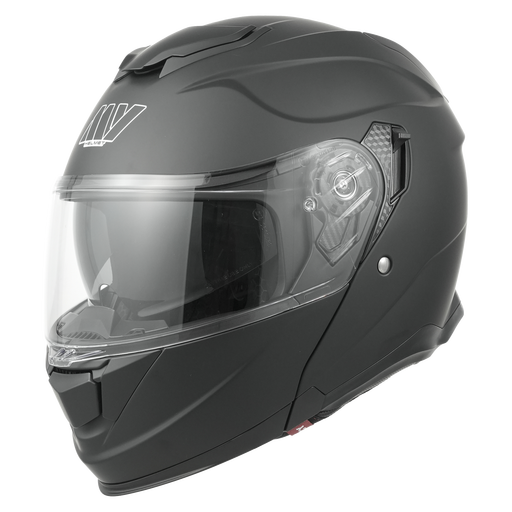
Why We Recommend This Product The MY 935 is an ECE 22.06 modular helmet designed for flexibility for commuters and touring riders. Its modular construction is combined with modern safety and comfort features. The preparation for a Bluetooth headset and the dual-visor system directly address the needs of riders who value connectivity and adaptability.
Pros
- Certification: Meets the ECE R 22.06 testing standard.
- Helmet Shell: Made from high-strength ABS with a shock-absorbing EPS inner shell.
- Visor: Equipped with a dual-visor system (clear outer visor and integrated sun visor).
- Comfort: The inner lining is comfortably designed to ensure a pleasant wearing experience, even on longer journeys.
- Connectivity: Recesses are provided on both sides under the cheek pads for easy installation of a Bluetooth communication system.
Who It's For This helmet is a practical choice for motorcycle riders (men and women) seeking a versatile touring helmet for the daily commute or longer rides, who appreciate the convenience of a modular mechanism.
2. MY Protective Riding Helmet (936 Series)
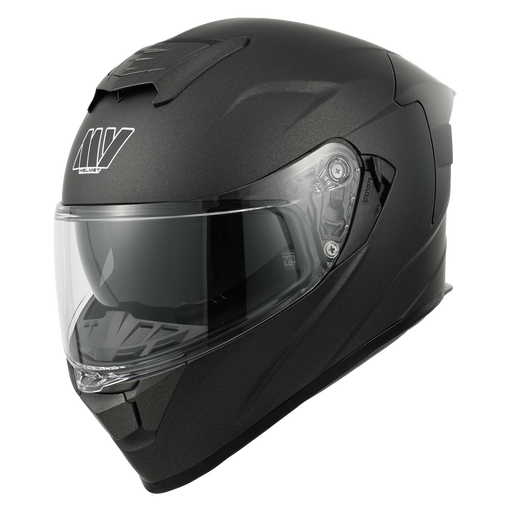
Why We Recommend This Product The MY 936 is a classic full-face helmet with a sun visor that combines the structural advantages of a one-piece shell with the convenience of integrated anti-glare protection. This model meets the current ECE 22.06 standard and focuses on the core functions of protection and comfort. The removable and washable inner lining facilitates maintenance and contributes to its longevity.
Pros
- Certification: Tested and approved according to ECE R 22.06.
- Helmet Shell: Constructed from ABS with a high-density EPS inner shell for shock absorption.
- Visor: Integrated inner sun visor to improve visibility in bright sunlight.
- Inner Lining: The skin-friendly inner lining is fully removable and washable, which simplifies hygiene.
- Design: Designed as a unisex model for adult riders.
Who It's For This protective motorcycle helmet is designed for riders looking for a straightforward and robust full-face helmet for road use. It is suitable for daily rides as well as occasional tours where a closed helmet design is preferred.
Explore More Options
If you prefer the flexibility of a modular mechanism and want to compare other models with different features, you can find a wider selection of helmets in our category.
Discover More Modular Helmet Models in Our Collection
Frequently Asked Questions (FAQ)
1. What is the key difference between ECE 22.05 and ECE 22.06? The main difference lies in the stricter testing procedures. The ECE 22.06 standard includes tests at various impact speeds, a test for rotational forces during an oblique impact, and more stringent requirements for visors and accessories like sun visors.
2. What is the lifespan of a motorcycle helmet with ECE 22.06 certification? Most manufacturers recommend replacing a motorcycle helmet after about 5 to 7 years, even without visible damage. Material fatigue from UV radiation and environmental factors can compromise its protective performance over time. A helmet must be replaced immediately after a fall or a significant impact.
3. Can I use a helmet with the ECE 22.06 standard throughout Europe? Yes. The ECE (Economic Commission for Europe) regulation is an internationally recognised homologation system. A helmet certified under ECE R 22.06 can be legally used on the road in all countries that recognise ECE regulations. This includes the entire EU and many other countries worldwide.