
How to Choose the Right Adjustable Cutlery Drawer Insert
A cluttered kitchen drawer slows down meal preparation and leaves everyday tableware jumbled together. Most standard fitted kitchens in rental apartments or modern homes come with basic drawers that rarely match generic, fixed-size plastic trays. An adjustable cutlery insert solves this mismatch by sliding outward to fit the exact internal width of your cabinet, eliminating awkward gaps where loose peelers, corn skewers and teaspoons tend to disappear.
Selecting the right expandable insert requires balancing drawer geometry, material resilience and your specific utensil inventory. Whether you require a wipe-clean synthetic tray for heavy daily use or warm, natural timber to match solid wood cabinets, understanding how different extension mechanisms and compartment layouts perform in real kitchen environments will ensure you pick a tidy, durable solution.
Common Buyer Mistakes When Sizing and Selecting Drawer Inserts
Measuring the Top Opening Instead of Internal Base Dimensions
Many kitchen drawers feature sloping internal sidewalls or concealed soft-close runners that reduce usable floor space. Measuring only the top rim of the drawer box often leads buyers to order an organiser that is several millimetres too wide at the bottom, causing the insert to rock unevenly or jam the runner mechanism entirely. Always measure the internal width and depth across the bottom floor of the drawer.
Overlooking Vertical Clearance for Layered Utensils
Standard cutlery sits low, but serving tongs, ladles and balloon whisks sit significantly higher. A common oversight is choosing an organiser that matches the drawer depth while ignoring the total height of the insert itself. If the tray walls measure 5 cm high and your drawer has only 7 cm of total clearance, chunky handles will snag against the underside of the kitchen worktop every time you pull the drawer out.
Assuming All Materials Tolerate Lingering Moisture Equally
While cutlery should ideally be dried before storage, everyday life often means slightly damp forks and spoons are put away straight from the dishwasher. Placing damp utensils into natural wood or bamboo trays without adequate ventilation can lead to surface watermarks or premature swelling over time. If your household prioritises fast unloading, resilient plastic options provide greater forgiveness against residual droplets.
Key Criteria for Evaluating Adjustable Cutlery Organisers
Width Adjustability and Internal Drawer Alignment
Expandable inserts rely on either telescopic wings or modular interlocking dividers to bridge the gap between standard carcass sizes. Evaluating the minimum compressed width and maximum wingspan ensures seamless integration across varied cabinet units.
- Expansion Range: Verify that your drawer floor width falls comfortably between the minimum collapsed width and maximum extended span rather than right at the absolute limit.
- Extension Stability: Look for smooth-gliding side wings that sit flush on the drawer base without buckling or sagging under the weight of heavier serving spoons.
Material Construction and Hygiene Maintenance
Cutlery trays gather loose crumbs, oil residue and dust, making routine cleaning a key consideration. The material dictates how quickly you can wipe down compartments or sanitise the tray.
- Food-Safe Polymers: BPA-free polypropylene or durable ABS plastic withstands direct contact with tap water, resists food grease and allows swift wipe-down maintenance.
- Natural Bamboo: High-density bamboo offers natural strength and structural rigidity, bringing an organic finish to your kitchen while requiring gentle wiping with a damp cloth rather than soaking.
Compartment Distribution and Utensil Separation
A practical layout separates everyday table settings from oversized tools so that dinner forks and sharp utility knives never tangle.
- Core Cutlery Slots: Ensure there are at least four dedicated elongated sections for table knives, dinner forks, dessert spoons and teaspoons.
- Expanded Utility Channels: Wide side wings should provide uninterrupted linear length to accommodate rolling pins, spatulas, bread knives and meat thermometers.
Our Top Recommendations for Adjustable Cutlery Inserts
Explore three carefully constructed drawer organisers tailored to varying cutlery volumes, everyday routines and interior kitchen aesthetics.
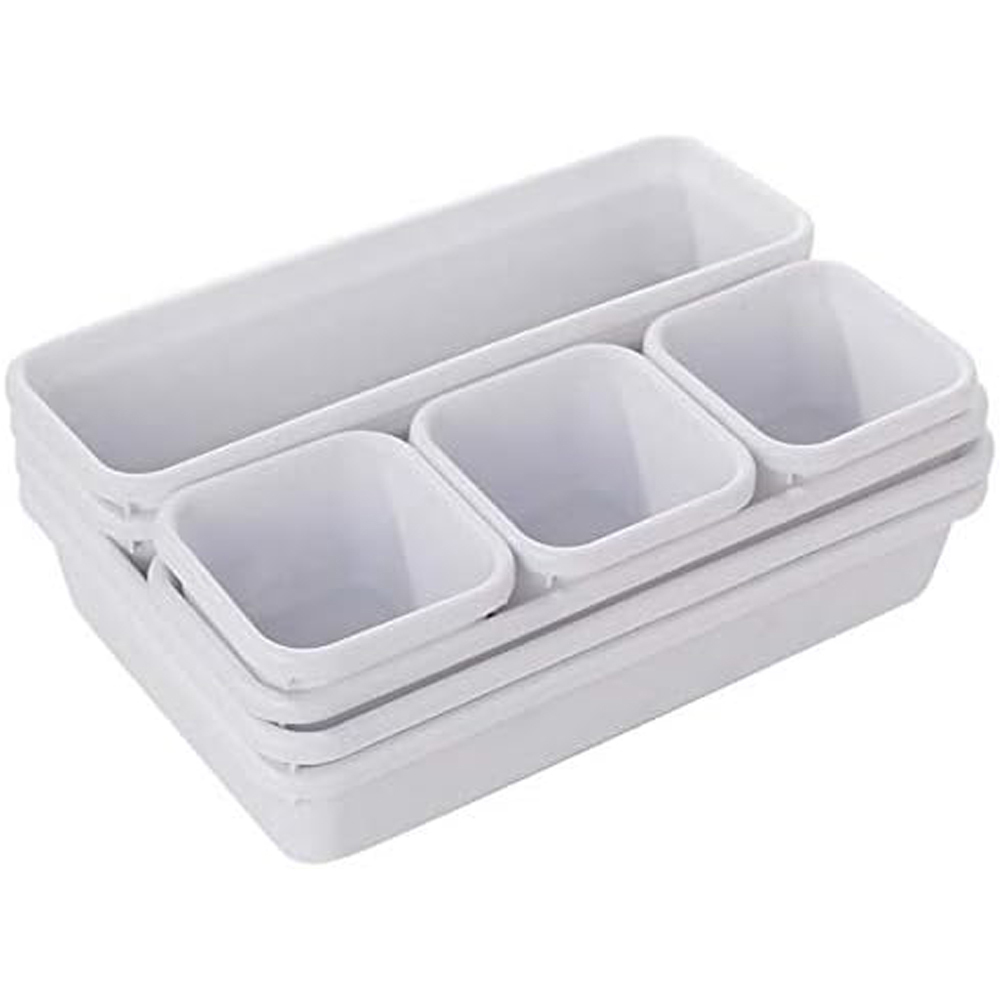
WhereHike White Plastic Drawer Organiser with Adjustable Dividers
Why This Fits Their Persona: This clean white organiser uses integrated, repositionable dividers to provide a modular approach to drawer planning. It lets you customise slot dimensions directly, making it easy to create bespoke sections for mismatched cutlery, measuring spoons or everyday kitchen gadgets.
Unlike rigid trays with fixed compartment shapes, this configurable setup prevents wasted space caused by slots that are either too long for teaspoons or too narrow for broad soup spoons.
Its resilient plastic build delivers straightforward cleaning and moisture resistance, allowing quick maintenance in busy family households.
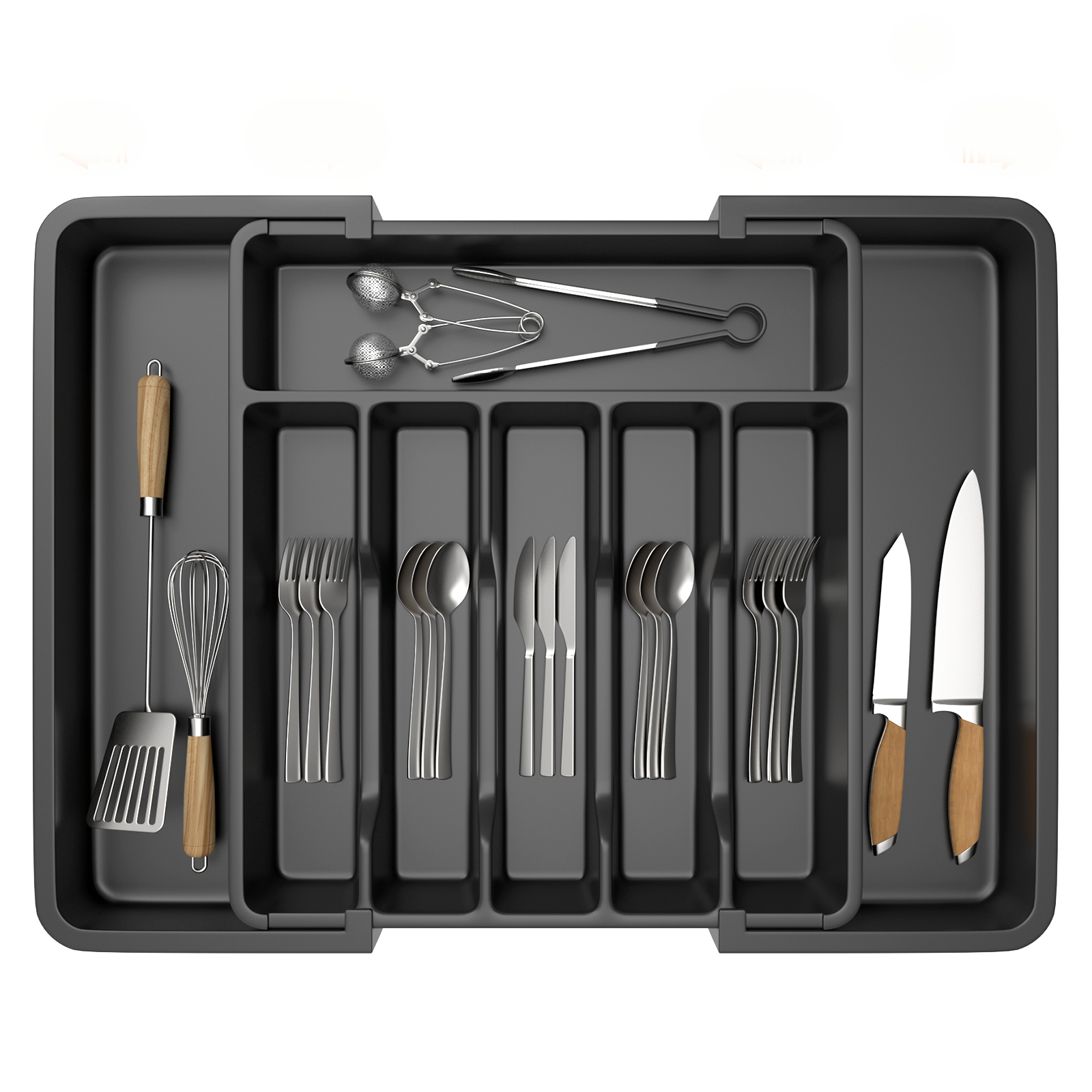
DayPlus CJP-ZXY Extendable 8-Compartment Cutlery Tray
Why This Fits Their Persona: Featuring up to eight separate compartments when pulled out to its full width, this expandable tray is built for homes that need distinct zones for complete multi-piece cutlery sets alongside larger kitchen utensils. Its dedicated spaces keep steak knives, salad servers and dessert cutlery properly sorted.
It resolves the common frustration of trays sliding backwards during energetic drawer pulls by incorporating a non-slip base that maintains solid footing on smooth drawer liners.
Constructed from BPA-free polypropylene plastic, it offers robust food-safe storage that handles high utensil volumes while remaining effortless to rinse and wipe down.
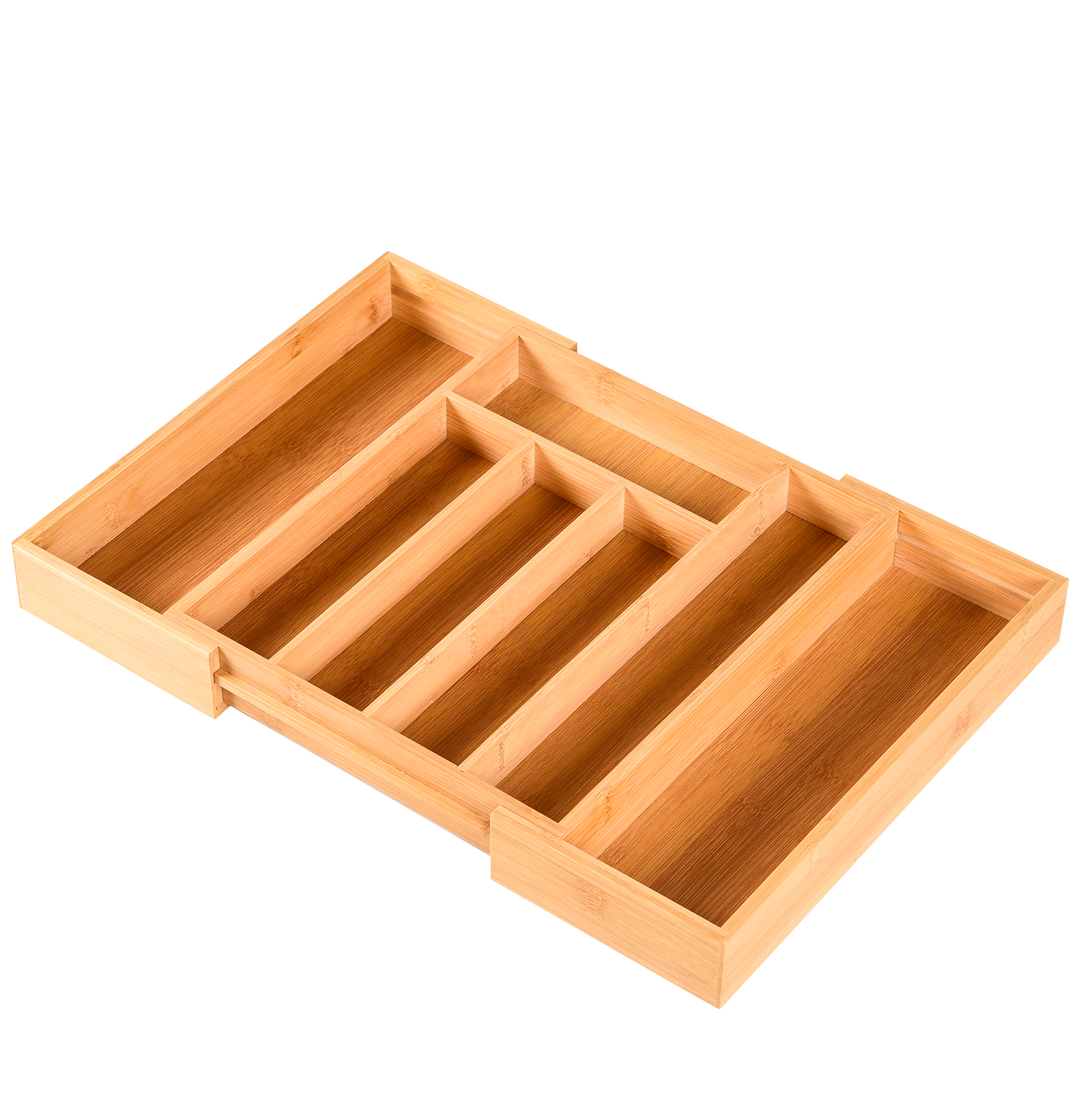
Floordirekt Nevada Extendable Bamboo Cutlery Organiser
Why This Fits Their Persona: Crafted from natural brown bamboo, this organiser extends from 28.3 cm up to 40 cm in width with a standard depth of 32.5 cm and a 5 cm height. It suits compact to medium drawers in modern apartments, instantly elevating the interior look of your cabinetry with organic wood grain.
Its sturdy 5 cm wall profile prevents taller tools from spilling over into adjacent compartments, maintaining crisp organisation across dinner cutlery and prep tools.
The dense bamboo construction provides solid, acoustic-dampening weight that minimises the metallic clattering of cutlery when opening or shutting drawers.
Looking for More Kitchen Organisation Ideas?
If your drawers require non-standard depths, multi-tier sliding inserts or separate spice organisers, our comprehensive kitchen collection has solutions for every layout.
Frequently Asked Questions
How should I measure my kitchen drawer to guarantee an adjustable insert fits?
Measure the inside of your drawer at the very bottom, taking both the front-to-back depth and left-to-right width. Check for any protruding screw heads, internal brackets or bevelled corners that could obstruct the base of the insert. Finally, check the vertical clearance from the drawer base to the top drawer frame to ensure the insert and your tallest utensils clear the cabinet opening.
What are the main practical differences between plastic and bamboo cutlery inserts?
BPA-free plastic inserts are moisture-resistant, lightweight and easy to clean with warm soapy water, making them ideal for high-traffic kitchens where cutlery might occasionally be put away slightly damp. Bamboo inserts offer a rigid, premium aesthetic and natural weight that dampens cutlery noise, but they require dry wiping or a lightly wrung cloth to preserve the wood grain.
How can I prevent an adjustable cutlery insert from sliding when opening and closing drawers?
If your insert does not feature integrated non-slip rubber feet, placing a cut-to-size textured silicone or EVA drawer mat underneath the tray will stop it from shifting. Alternatively, expanding the side wings until they make snug contact with both internal side walls provides natural lateral anchoring, keeping the organiser steady during daily use.