
Dog Crates 2026: A Guide to Choosing the Right Model
Purchasing a dog crate is a decision driven by functional requirements and the animal's well-being. Whether as a secure den in your home, a flexible dog playpen in the garden, or a portable solution for travel, selecting the right model depends on the material, size, and specific application. This guide analyses the technical criteria relevant for making an informed decision.
Buyer's Guide: What to Look For When Choosing
The decision for a dog crate should be based on an objective assessment of material properties, functionality, and safety features.
Material Analysis: Metal vs. Wood
The choice of material is a primary factor that determines the use and longevity of a dog crate.
-
Metal Dog Crate: Models made of metal, often in a wire-frame design, are distinguished by their high durability and ease of cleaning. The powder-coated surfaces are typically weather-resistant, making them well-suited for temporary outdoor use. The open-grid structure ensures maximum air circulation. Such models are often designed as a foldable dog crate, which simplifies storage and transport. They are a pragmatic choice for a puppy playpen or as a temporary enclosure.
-
Wooden Dog Crate: Dog crates made of wood or wood-metal combinations are designed to integrate into the living space as dog furniture. They often double as a side table or nightstand. The enclosed design provides the dog with a den-like feel, which many animals find calming. When choosing, pay attention to a sturdy construction and a non-toxic surface finish on the wood. This variant is primarily suitable as a permanent indoor dog crate.
Functional Aspects: Portability and Size
Functionality determines the practical utility in everyday life.
-
Portability: A foldable dog crate offers maximum flexibility. It can be stowed away to save space when not in use or taken along for transport in the car, on holidays, or for visits to friends and family. The mechanisms should be easy to operate but stable and secure when assembled.
-
Size: The crate must offer the dog sufficient space. As a guideline: The dog should be able to stand up straight, turn around comfortably, and lie down fully stretched out in a natural position. Measure your dog's height while standing (from the floor to the top of the head) and its length (from the tip of the nose to the base of the tail) to determine the appropriate internal dimensions.
Safety Features
Regardless of the material, certain safety aspects must be checked. These include sturdy and secure latches that cannot be opened by the dog itself. Rounded edges and corners minimise the risk of injury to both animal and human. For wire crates, the bar spacing should be chosen so that the dog cannot stick its head through.
Our Top Picks for 2026
Based on an analysis of technical specifications and practical utility, we present two models that cover different user profiles.
1. Yaheetech 80cm Puppy Playpen with 16 Panels
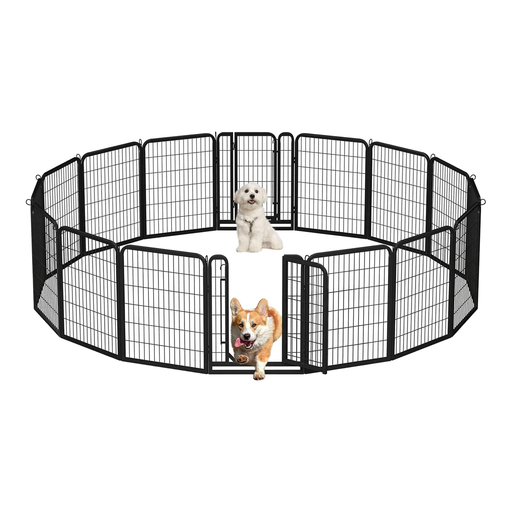
Why we recommend this product This model from Yaheetech is a modular system that offers maximum flexibility for indoor and outdoor use. The 16 individual elements, including two with doors, allow for the creation of a spacious and customisable enclosure that adapts to its surroundings. The robust metal construction with a water-resistant coating and the included ground stakes qualify it for safe use in the garden.
Pros
- Modular Design: 16 panels (14 grid elements + 2 door elements) for flexible shaping.
- For Indoor & Outdoor Use: Water-resistant metal coating and 16 ground stakes for anchoring in the soil.
- Safety Features: Two doors with slide-bolt latches and rounded edges to protect the animal.
- Foldable Design: The elements are designed for space-saving storage and transport.
- Generous Dimensions: Each panel measures 80 cm in height, making it suitable for small to medium-sized dogs.
Who It's For This playpen is ideal for dog owners looking for a flexible and spacious solution for their puppy or small to medium-sized dog. It is particularly suitable for use in the garden, at a campsite, or for sectioning off a safe play area in larger indoor spaces.
View Product: Yaheetech 80cm Puppy Playpen
2. aivituvin-AIR100 Wooden Dog Crate with Foldable Design
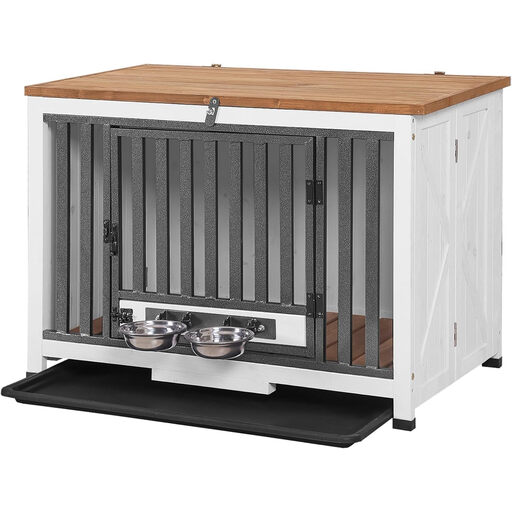
Why we recommend this product The Aivituvin dog crate combines the function of a secure den with the design of a piece of furniture. The construction of fir wood and a steel frame offers stability, while the design as a side table allows for seamless integration into your living space. Special features include tool-free assembly in under 30 seconds and an integrated, 360° rotating feeding station.
Pros
- Furniture-Style Design: Aesthetically blends into the home as dog furniture (e.g., a nightstand).
- Quick Assembly: Tool-free setup in less than 30 seconds, according to the manufacturer.
- Thoughtful Features: Foldable roof for easy access, a removable bottom tray for simple cleaning, and a 360°-rotation feeding station.
- Durable Materials: Combination of solid fir wood and a robust steel frame.
- Secure Latching: The door is equipped with secure latches.
Who It's For This model is the right choice for dog owners seeking an aesthetically pleasing and permanent solution for indoor use. It is suitable for small to medium-sized dogs and for owners who value quick assembly and multifunctional dog furniture.
View Product: aivituvin-AIR100 Wooden Dog Crate
Alternative Solutions for Specific Needs
A dog crate is used for temporary and spatial confinement. In some living situations, however, what's needed is not a complete enclosure but rather controlled passage. For regulating access to certain rooms or to the outdoors, specialised Pet Doors can be a sensible addition or alternative.
Frequently Asked Questions (FAQ)
1. How big does a dog crate need to be? The crate should be sized so that the dog can comfortably stand up straight, turn around, and lie down fully stretched. Measure your dog's height at the withers and its body length (nose to base of tail), then add a few centimetres to each as a buffer to determine the minimum internal dimensions.
2. How do I get my dog used to a crate? The acclimatisation process should be gradual and positive. Place the open crate in a busy area of your home. Put blankets, toys, and treats inside to make it an attractive place. Feed the dog in the crate and initially close the door only for brief moments while you are present. Slowly extend the time periods. The crate should never be used as a place of punishment.