
DJI Mini Drone: A Technical Guide for 2026
The DJI Mini series has carved out a niche in the consumer drone market with one key feature: a take-off weight of under 250 grams. This characteristic is not just important for portability as a foldable drone or travel drone; it also has significant implications for the legal framework in Germany and the EU. Models in this weight class typically fall into the C0 drone category, which simplifies operation for pilots as no complex examinations are required. This article analyses the technical specifications and practical use cases of current DJI Mini models to provide a solid basis for an informed decision.
What to Look for When Choosing a DJI Mini Drone
Selecting the right model depends on balancing specific technical parameters. The following criteria are crucial for an objective assessment.
Weight Class and Regulation (C0)
The take-off weight of under 250 grams is the defining factor of the Mini series. According to EU drone regulations, the C0 certification permits operation in the Open A1 category. This means flights near uninvolved people are allowed (though not over crowds). Pilots are exempt from the requirement to obtain the A2 Remote Pilot Certificate. However, operator registration with the Federal Aviation Office (LBA) and attaching the e-ID to the drone are still mandatory.
Camera Quality: Sensor Size and Video Resolution
For users focused on photography and videography, the camera is the core component. A drone with a 4K camera is now standard in this segment. Key distinguishing features include:
- Sensor Size: Larger sensors (e.g., 1-inch CMOS) can capture more light, resulting in better image quality, a higher dynamic range, and reduced noise in low-light conditions.
- Video Specifications: Parameters such as frame rate (fps), HDR (High Dynamic Range) capability, and colour profiles (e.g., D-Log M) are relevant for professional video post-processing.
- Gimbal System: A mechanical 3-axis gimbal is essential for stabilising footage and compensating for movement and wind.
Flight Time and Battery Life
The maximum flight time stated by the manufacturer is measured under ideal, windless conditions. In practice, the actual flight time is often 20-30% shorter. Models with a flight time of over 30 minutes offer a comfortable buffer for planning and executing shots. Packages like the "Fly More Combo" include extra batteries and are a worthwhile consideration for extended missions.
Obstacle Avoidance and Safety
Obstacle avoidance systems are a key safety and convenience feature, especially for a drone for beginners. The systems vary by model:
- No or basic sensors: Some entry-level models only have downward-facing sensors to stabilise the hover.
- Forward, backward, and downward sensors: Provide protection in the primary flight directions.
- Omnidirectional obstacle avoidance: Sensors that scan the environment in all directions (forward, backward, sideways, upward, downward) offer the most comprehensive protection and enable advanced flight modes like ActiveTrack.
Transmission Range and Stability
The video transmission range (e.g., DJI OcuSync) determines how far the drone can fly from the pilot before the live feed on the remote controller is lost. A long range of 10 km or more is an indicator of a robust transmission system that maintains a stable connection even in environments with radio interference.
Our 2026 Model Selection
Based on the technical criteria mentioned above, here is our selection of models from the DJI Mini series.
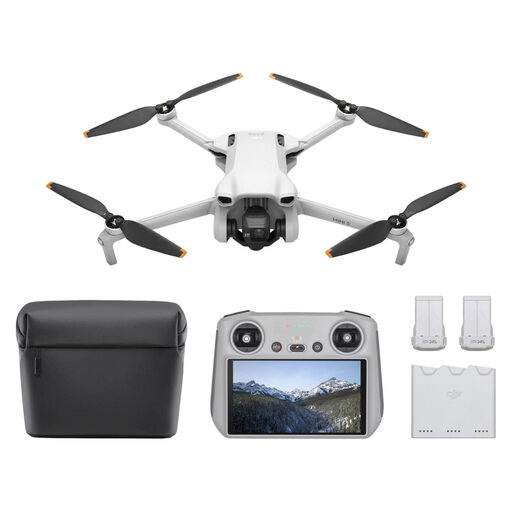
DJI Mini 3 Fly More Combo (DJI RC)
-
Why we recommend this product: The DJI Mini 3 offers an excellent balance of performance and cost. With 4K HDR video, a long flight time, and C0 certification, it represents a solid entry point. The True Vertical Shooting feature is specifically designed for content creators producing content for social media platforms.
-
Advantages:
- Weight: Under 249 g, C0-certified.
- Camera: 4K HDR video, Dual Native ISO Fusion for detailed rendering in both bright and dark areas of the image.
- Flight Time: Up to 38 minutes per battery. The Fly More Combo significantly extends total operational time.
- Operation: True Vertical Shooting without quality loss from digital cropping.
- Stability: Level 5 wind resistance (up to 38 km/h) and a mechanical 3-axis gimbal.
-
Who it's for: This model is ideal for beginners and hobbyist pilots looking for a reliable and regulation-compliant lightweight drone with good image quality for travel and everyday shooting.
View details for the DJI Mini 3 Fly More Combo
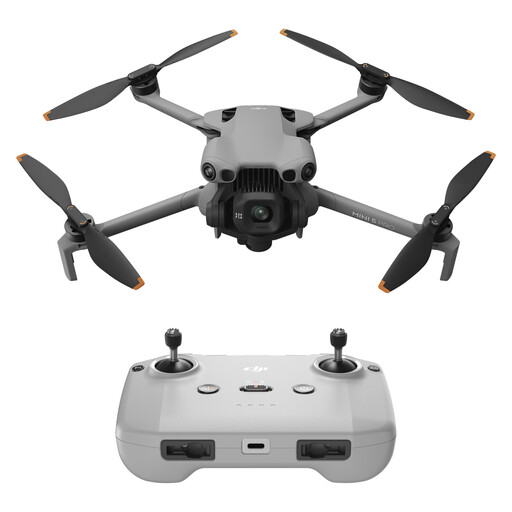
DJI Mini 5 Pro
-
Why we recommend this product: The DJI Mini 5 Pro is aimed at users with higher standards for image quality and flight safety. The large 1-inch CMOS sensor and omnidirectional obstacle avoidance, which also functions at night, technically set this model apart. The extended gimbal rotation also enables more creative shooting angles.
-
Advantages:
- Camera System: Large 1-inch CMOS sensor for high image quality, 4K/60fps HDR video.
- Safety: Omnidirectional obstacle avoidance with LiDAR support for night flights.
- Creativity: True Vertical Shooting and a 225-degree gimbal rotation.
- Tracking: Enhanced ActiveTrack 360° for precise subject tracking.
- Range: Up to 20 km video transmission range.
-
Who it's for: This model is designed for ambitious amateur photographers, videographers, and content creators who require maximum image quality and flight safety in a compact, C0-certified body.
View details for the DJI Mini 5 Pro
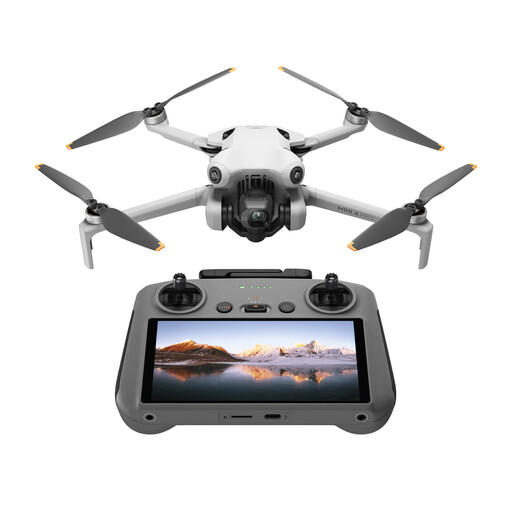
DJI Mini 4 Pro (DJI RC 2)
-
Why we recommend this product: The DJI Mini 4 Pro integrates many of the advanced features of the Pro line, such as omnidirectional obstacle avoidance and a long transmission range, into a proven form factor. It serves as a bridge between the entry-level and top-tier models.
-
Advantages:
- Safety: Omnidirectional obstacle avoidance for 360° protection.
- Tracking: ActiveTrack 360° with a manual mode for precise control.
- Transmission: Up to 20 km FHD video transmission for a stable, long-range connection.
- Camera: Powerful 4K HDR video capabilities.
- Weight: Under 249 g, compliant with C0 requirements.
-
Who it's for: The DJI Mini 4 Pro is an option for users who don't want to compromise on advanced safety and tracking features but may not need the top-tier model's largest camera sensor. It is suitable for both beginners and advanced pilots.
View details for the DJI Mini 4 Pro
Technical Specifications at a Glance
| Feature | DJI Mini 3 | DJI Mini 5 Pro | DJI Mini 4 Pro | | :--- | :--- | :--- | :--- | | Weight | < 249 g | < 249 g | < 249 g | | Certification | C0 | C0 | C0 | | Camera Sensor | 1/1.3-inch CMOS | 1-inch CMOS | 1/1.3-inch CMOS | | Max. Video Resolution | 4K/30fps HDR | 4K/60fps HDR | 4K/60fps HDR | | Obstacle Avoidance | Downward | Omnidirectional (with LiDAR) | Omnidirectional | | Max. Flight Time | 38 min | 36 min | 34 min | | Max. Transmission | 10 km | 20 km | 20 km |
Further Options and Categories
The DJI Mini series covers a wide spectrum of use cases. However, if your requirements extend beyond the specifications of these compact models—for instance, needing greater wind stability, specialised camera systems, or longer flight times—you can find other models in our main category.
Discover our full range of camera drones for adults.
Frequently Asked Questions (FAQ)
1. Which DJI Mini drone is suitable for beginners? The DJI Mini 3 is an excellent choice for beginners. It is more affordable, meets all legal requirements of the C0 class, and provides a solid technical foundation with 4K video and a long flight time. Models like the Mini 4 Pro or 5 Pro offer added safety with their omnidirectional obstacle avoidance, which is also beneficial for newcomers.
2. Do I need a licence for a DJI Mini drone under 250g? No, in the EU, a "drone licence" (neither the A1/A3 Certificate of Competency nor the A2 Remote Pilot Certificate) is not required to operate a C0-certified drone (under 250 g). However, a one-time online registration as a drone operator with the Federal Aviation Office (LBA) is legally mandatory.
3. What does C0 certification for drones mean? C0 certification is a classification under the EU Drone Regulation. It applies to drones with a maximum take-off weight of under 250 grams. These drones can be operated in the Open A1 category, which permits flight near uninvolved people. They are subject to the lowest regulatory hurdles for pilots.