
DJI Action Camera Buyer's Guide 2026: A Technical Deep Dive
Choosing a DJI Action Camera depends on specific technical requirements and the intended application. Whether for vlogging, extreme sports, or immersive 360-degree footage, the models in the DJI Osmo series offer different specifications optimised for various scenarios. This guide analyses the crucial parameters to help you make an informed decision.
Buyer's Guide: Technical Selection Criteria for Action Cameras
An action camera's performance is determined by the interplay of several key technical components. The following criteria are central to evaluating image quality and real-world performance.
Sensor Size and Resolution
Sensor size is a critical factor for image quality, especially in low-light conditions. A larger sensor can capture more light, resulting in footage with less noise and more detail. Models with sensors like 1/1.3-inch or 1/1.1-inch offer a distinct advantage here. Video resolution, typically specified for a 4K camera, defines the image's level of detail. A high frame rate (fps), such as 60fps or 120fps, enables smooth motion capture and the creation of slow-motion footage.
Stabilisation and Lens
Effective image stabilisation is essential for a sports camera to ensure shake-free footage during dynamic action. Technologies like RockSteady 3.0 and HorizonBalancing digitally correct for vibrations. The lens determines the field of view (wide-angle) and light-gathering capability (aperture). A variable aperture, found in some models, allows for flexible adaptation to changing light conditions.
Form Factor and Design
The form factor dictates the camera's versatility. An especially small camera is ideal as a discreet POV (Point-of-View) camera, while classic action cameras are built for durability. A 360-degree camera, in turn, captures the entire environment, offering creative reframing possibilities in post-production. Magnetic mounting systems enhance flexibility for attachment.
Waterproofing and Battery Life
For use in watersports or rain, a natively waterproof camera that doesn't require an additional housing is a major advantage. The specified dive depth (e.g., 10m or 20m) is a key metric here. Battery life, often stated in minutes for a specific recording setting (e.g., 1080p/24fps), determines the maximum continuous runtime. Fast-charging features can minimise downtime.
Our Top Picks for 2026
Based on technical specifications and intended use cases, we present three models from the DJI Osmo series.
DJI Osmo Nano Standard Combo (64GB)
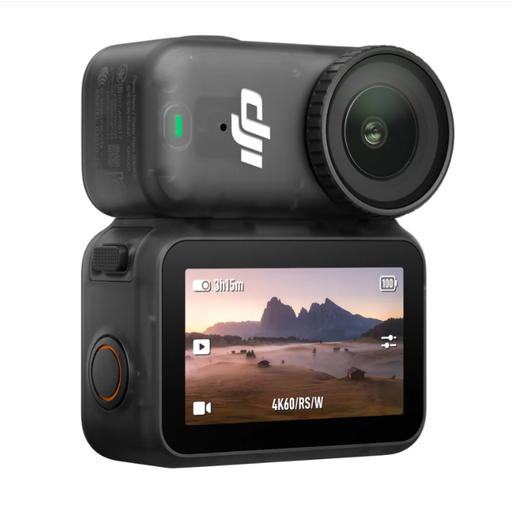
Why We Recommend It The DJI Osmo Nano stands out with its ultra-compact form factor and low weight of approx. 52g. Its 1/1.3-inch sensor, combined with a 143° wide-angle lens, delivers detailed 4K/60fps footage. The magnetic mounting system makes it a versatile vlogging camera and POV camera for hands-free shooting.
Pros
- Ultra-Compact and Magnetic: Lightweight and flexible to mount, ideal for discreet shots.
- 4K/60fps Wide-Angle: Captures expansive scenes in high resolution with smooth playback.
- Battery Life and Storage: Up to 200 minutes of recording time with the Vision Dock and 64GB of built-in storage.
- Waterproof: The camera body is waterproof down to 10 metres.
Who It's For This model is designed for content creators and everyday videographers seeking an extremely portable and discreet camera for spontaneous vlogs, time-lapses, or POV shots.
DJI Osmo 360 Adventure Combo
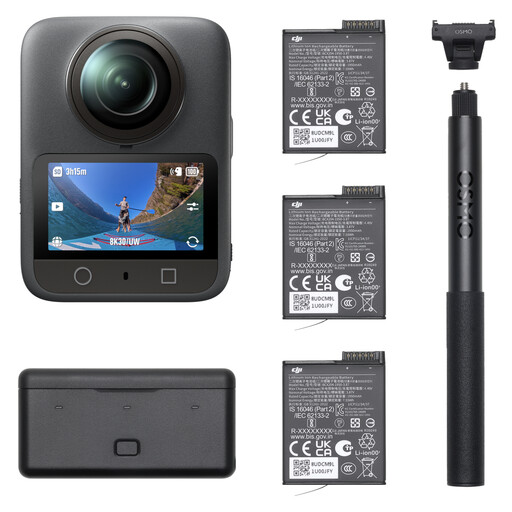
Why We Recommend It As a 360-degree camera with a large 1-inch sensor, the Osmo 360 sets a new standard for image quality in immersive recording. It enables 8K/30fps 360° video and 120MP panoramic photos. The "invisible selfie stick" effect creates stunning third-person perspectives, making it a compelling option for travel and sports footage.
Pros
- 8K 360° Video: Captures the entire environment in ultra-high resolution for maximum flexibility in post-production.
- Large 1-Inch Sensor: Delivers strong performance in low-light conditions and a wide dynamic range.
- High Photo Resolution: Shoots 120MP photos for detailed spherical panoramas.
- Comprehensive Accessory Kit: The Adventure Combo includes three batteries and a charging hub for extended shooting sessions.
Who It's For This model is aimed at creative filmmakers, travellers, and athletes who want to produce immersive content and leverage the freedom of reframing in post-production.
Osmo Action 6 Standard Combo
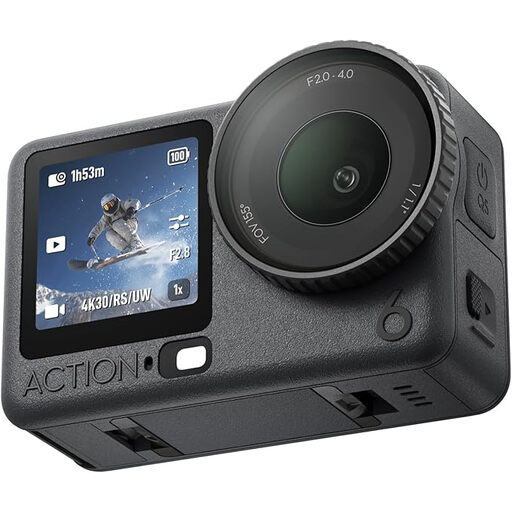
Why We Recommend It The Osmo Action 6 is a classic action camera optimised for durability and image quality. Its large 1/1.1-inch sensor and variable aperture (f/2.0–f/4.0) allow for excellent adaptation to different lighting conditions. With waterproofing down to 20 metres without a case and a cold-resistant design, it is built for demanding outdoor use.
Pros
- Large 1/1.1-Inch Sensor: Ensures high image quality and good low-light performance.
- Variable Aperture: Allows control over depth of field and adjustment to ambient brightness.
- Highly Durable: Waterproof to 20 metres and cold-resistant for use in extreme conditions.
- Long Battery Life: Offers up to 4 hours of recording time under normal conditions.
Who It's For This model is the top choice for sports and outdoor enthusiasts who need a durable, high-performance, and versatile 4K action camera for all weather and lighting conditions.
Other Options in the Camcorder Category
While the DJI Osmo series offers specialised solutions for action and vlogging scenarios, the market for video cameras is vast. For users whose needs extend beyond the action camera segment or require different form factors, exploring alternative devices may be worthwhile. Discover more models in our Camcorder category.
Frequently Asked Questions
Which DJI action camera is best for vlogging? Several models are well-suited for vlogging. The DJI Osmo Nano is ideal for spontaneous vlogs and POV shots due to its small size and discreet design. The Osmo Action 6, with its front-facing screen, offers easy framing when filming yourself and features advanced audio options through a direct connection to DJI microphones.
Are DJI cameras waterproof without an additional case? Yes, many models in the DJI Osmo series are natively waterproof. According to the manufacturer, the DJI Osmo Nano is waterproof down to a depth of 10 metres. The Osmo Action 6 is even waterproof down to 20 metres without a separate protective case, making it suitable for most watersports.
What is the difference between a normal action camera and a 360-degree camera? A normal action camera, like the Osmo Action 6, captures a fixed field of view with a wide-angle lens. A 360-degree camera, such as the Osmo 360, uses two or more lenses to capture the entire spherical environment simultaneously. The main advantage lies in post-production: from a single 360-degree recording, any desired angle can be extracted and exported as a traditional flat video (a process known as reframing).