
Buying a dinnerware set: what to consider when it comes to material, size and everyday use
A new dinnerware set should suit your household, the storage space you have available and the way you eat day to day. Product pages often use similar-sounding claims such as ‘durable’, ‘high quality’ or ‘suitable for every occasion’. On their own, these tell you little about whether a set will really meet your needs. The details that matter are the ones you can check, such as the number of pieces, material, dimensions and care instructions.
Common pitfalls when buying a dinnerware set
1. Confusing the number of pieces with the number of place settings
An 18-piece dinnerware set does not necessarily include 18 complete place settings. It often contains, for example, six dinner plates, six soup plates and six dessert plates. That makes it a dinner service for six, but it won’t include any extra serving platters, cups or bowls.
A 12-piece dinnerware set is often designed for four people. Before you buy, check exactly what’s included:
- How many dinner plates are included?
- Are there soup plates, dessert plates or bowls?
- Does the set include cups, serving platters or extra bowls?
- Can you buy individual plates later?
2. Making assumptions based on broad material descriptions
Ceramic, stoneware and porcelain have different properties. A general description such as ‘ceramic tableware’ isn’t enough to judge the weight, finish or suitability for everyday use.
- Porcelain tableware is often thinner and, with its clean look, can work well for more formal table settings. However, how resistant it is to breakage depends on its shape, wall thickness and finish.
- Stoneware tableware is usually a little heavier and is often sold for everyday use. Glazes can be matt, glossy or reactive, and may vary in how delicate they are.
- Ceramic tableware is a broad term. Check the product details for the specific material and care instructions.
3. ‘Dishwasher-safe’ and ‘microwave-safe’ may not apply to every finish
For dishwasher-safe tableware, the product information should explicitly say so. Hand-painted rims, metallic decorations or delicate glazes may need special care. A porcelain plate isn’t automatically microwave-safe either: it depends on the decoration, glaze and manufacturer’s guidance.
Also look out for warnings about sudden temperature changes. Don’t put a cold plate straight under very hot food or on a very hot surface. This can cause stress in different types of ceramic material.
What to check before you buy
Choose a set size to suit your household
For a household of two to four people, a 12-piece dinnerware set with four dinner plates, four dessert plates and four soup plates can make a practical starter set. Families of six often benefit from an 18-piece dinner service. If you regularly have guests, consider buying extra plates or bowls too, so you have spares in case anything gets damaged or you’re hosting a larger gathering.
Dimensions and capacity
A dinner plate measuring around 26 to 27 cm in diameter gives you room for a main course. Dessert plates are often around 19 to 21 cm across. For bowls, capacity is especially important: a bowl holding around 590 to 600 ml, for example, is suitable for cereal, soup or stew.
Large, heavy plates also need enough room in your kitchen cupboard. Stackable shapes can help you make better use of your storage space. If you’re choosing square or irregularly shaped plates, check that they stack securely.
Care and usage instructions
These details are especially important to check before you order:
- Dishwasher-safe: makes everyday cleaning easier.
- Microwave-safe: lets you heat food directly in the plate or bowl.
- Oven-safe and freezer-safe: don’t assume these from microwave or dishwasher suitability.
- Glaze and decoration: reactive glazes may have individual colour variations.
- Damage: don’t continue using plates or bowls with cracks, chips or sharp edges.
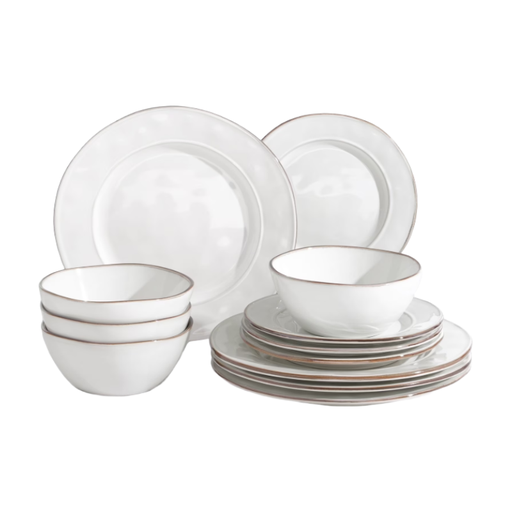
12-Piece Dinner Plate Set in Pearl White - Service for 4
Why this product suits this profile: The set contains four dinner plates, four salad plates and four cereal bowls made from stoneware, providing the essentials for a household of four.
The set contents and number of place settings are clearly stated, making it easier to check whether you really get four complete place settings.
Stoneware, a stackable design, and stated suitability for the dishwasher and microwave.
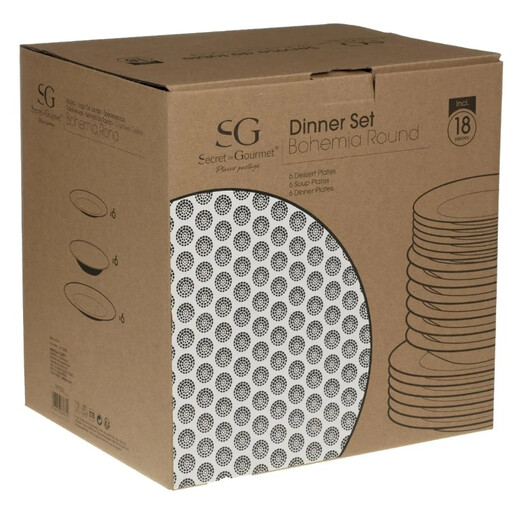
Secret de Gourmet Bohemia Round 18-Piece Dinner Service
Why this product suits this profile: This porcelain dinnerware set includes six dinner plates, six soup plates and six dessert plates, making it suitable for six people and a range of courses.
The types of plates included and their diameters of 27, 20 and 19 cm are listed clearly. This makes it easy to see exactly what you’ll get before buying.
Porcelain, 18 pieces and, according to the product details, dishwasher-safe.
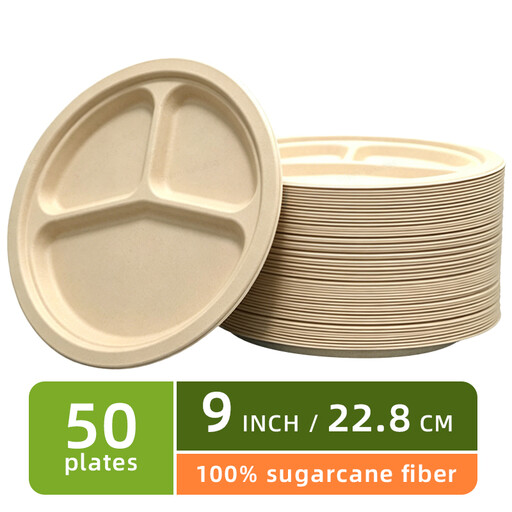
Sugarcane Disposable Dinner Plates, 50 Pack
Why this product suits this profile: For catering, events, buffets or larger celebrations, a pack of 50 disposable bagasse plates can make organising everything easier.
The pack size and 23 cm diameter are stated, so you can work out in advance how many you’ll need for your guests and the food you’re serving.
50 plates, three compartments and, according to the product description, a compostable bagasse design.
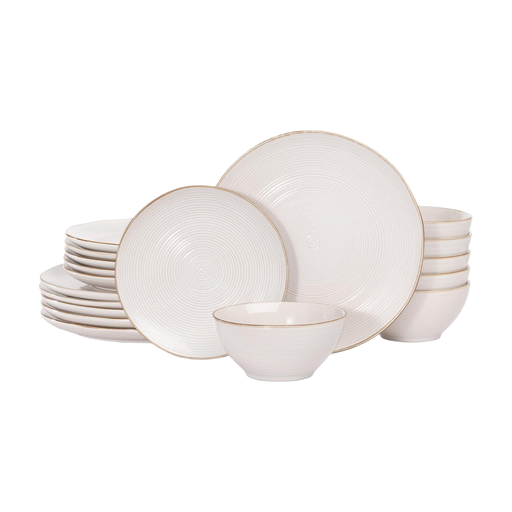
Richmount Tempus 18-Piece Dinner Set, White
Why this product suits this profile: Designed for six people, this set combines six dinner plates, six dessert plates and six cereal bowls in a stackable design.
The exact contents, plate dimensions and bowl capacity are listed. The product information also includes guidance on temperature changes and open flames.
Stoneware, a stackable design, and stated suitability for the microwave and dishwasher.
Frequently asked questions about dinnerware sets
How many pieces should a dinnerware set include?
For four people, a 12-piece dinnerware set with four dinner plates, dessert plates and soup plates or bowls is a common starter set. For six people, an 18-piece dinnerware set is a good option. If you often have guests, consider adding extra plate sets or a separate bowl set.
Which material is best for everyday use?
It depends on the care and usage instructions for the product in question. Stoneware is often sold as a durable choice for everyday use, while porcelain’s sleek look can also suit more formal table settings. Before you buy, check the guidance on dishwasher and microwave use, the glaze and temperature changes rather than relying on the general material description.
How can you make your dinnerware last longer?
Avoid sudden temperature changes, stack plates carefully and stop using any damaged pieces. Decorated or hand-painted items may have specific care instructions. Your dinnerware set is also more likely to stay complete for longer if you check whether you can buy individual pieces later and whether matching dinner, soup or dessert plates are available.