
Dining Table Buyer’s Guide: How to Find the Perfect Model
A new dining table is more than just a piece of furniture; it's the centerpiece for shared meals, conversations, and social gatherings. However, the sheer number of options can quickly become overwhelming. Many models look appealing at first glance but only reveal their weaknesses in daily use. To help you make an informed decision, we'll highlight the most common pitfalls and show you which criteria truly matter.
The 3 Most Common Mistakes When Buying a Dining Table
Before you decide on a model, you should be aware of the typical problems that often only surface after the purchase. Proactive planning can save you from disappointment and unnecessary expenses.
- The Unstable Construction Trap: Wobbly tables are a frequent annoyance. Inadequate leg attachments or a flimsy base can cause the table to give way with every touch. This is not only disruptive but can also damage the table's structure over time.
- Misleading Material Descriptions: Terms like "wood-effect" can be deceptive. While solid wood promises high durability, many budget-friendly tables are made from engineered wood (e.g., MDF) with a foil coating. High-quality engineered wood is robust and easy to care for, but inferior versions can be susceptible to scratches and moisture.
- Misjudging Size and Space Requirements: A table that is too large will overwhelm the room, while one that is too small quickly becomes impractical when you have guests. Legroom is also often overlooked, which can be restricted by bulky bases or poorly positioned table legs.
What Really Matters: The Decisive Parameters
To avoid the mistakes mentioned above, focus on three objective criteria. These will help you realistically assess the quality and functionality of a dining table.
The Tabletop: Material and Thickness
The tabletop is the most heavily used component. Its material and construction determine its longevity and maintenance needs.
- Material: Tables made from engineered wood (MDF) offer excellent value for money. They are dimensionally stable and, with the right surface treatment, very easy to care for. Look for a scratch-resistant and water-repellent coating to protect the table from the rigors of daily life. A
wooden dining tablecan also refer to a high-quality wood-effect finish on an engineered wood base. - Thickness: A tabletop thickness of at least 3 cm is a good indicator of stability and quality. Thinner tops are more prone to bending under load or feeling unstable.
The Base: Stability and Legroom
The construction of the base is crucial for the table's stability.
- Four-Leg Construction: The classic design typically offers good stability and maximum legroom along the long sides. Models in the
farmhouse dining tablestyle often feature solid wooden legs. - Pedestal or Trestle Base: A central base, often found on an
industrial dining tablewithmetal legs, provides unrestricted legroom on all sides. Here, a heavy, solid base is essential for stability.
The Size: Number of People and Room Dimensions
The right size is a compromise between the available space and the desired number of seats.
- Space per Person: Plan for a width of about 60 cm per seat. A
dining table for 4should therefore be at least 120 cm long. For alarge dining tablefor 6 to 8 people, lengths from 180 cm are recommended. - Room Size: Measure your room carefully. There should be at least 80–100 cm of space around the table to allow chairs to be pushed back comfortably and to keep walkways clear. A
round dining tablecan be a space-saving and sociable alternative in square or smaller rooms.
Prime Recommendations by Lifestyle
Based on the criteria above, we have identified several models that are well-suited for different living situations and needs.
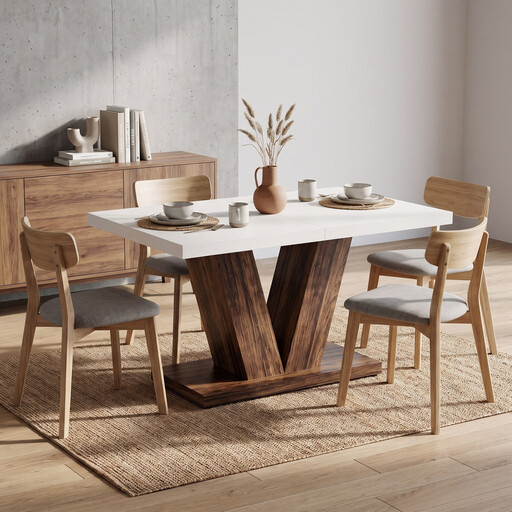
120cm Kitchen Dining Table for 4 with Heavy-Duty Base
Why This Fits Their Persona: With its 120 x 80 cm dimensions, this table is ideal for smaller dining areas or eat-in kitchens. It comfortably seats four people without dominating the room. The simple farmhouse design blends harmoniously into various interior styles.
The 4 cm thick tabletop and the stable triangular pedestal base counteract the risk of unstable construction. The clear material specification (engineered wood) provides transparency.
High stability thanks to a solid base with a load capacity of up to 100 kg. The low-maintenance surface is ideal for daily use.
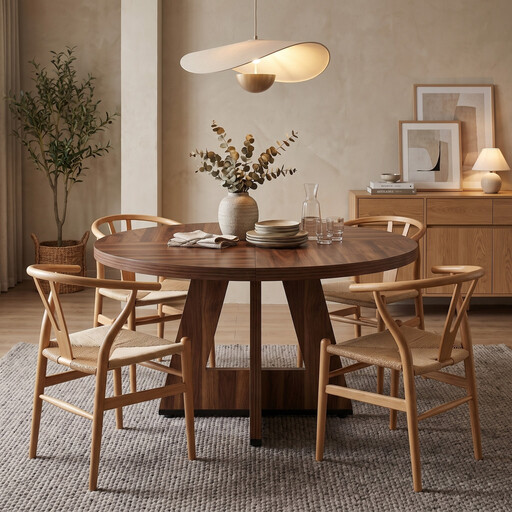
Round Wooden Farmhouse Dining Room Table
Why This Fits Their Persona: The round shape encourages conversation and creates a cosy atmosphere. With its classic design featuring a wooden top and legs, this model embodies the timeless charm of the farmhouse style and brings warmth to the room.
The use of high-quality engineered wood offers a durable wood-look finish without the high maintenance of solid wood. The round shape avoids the problem of sharp corners in tight spaces.
A generous 120 cm diameter for up to four people. The versatile design fits both traditional and modern interiors.
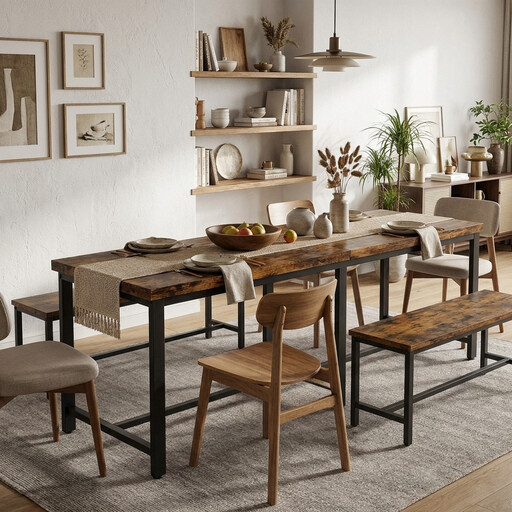
200cm Long Dining Table for 6-8 People, Industrial Kitchen Table
Why This Fits Their Persona: With a length of 200 cm, this table is the ideal solution for large families or those who frequently host guests. The industrial style, combining a wood-effect finish with sturdy metal legs, makes a modern statement in the dining room.
The sturdy metal frame and the 3.5 cm thick tabletop ensure maximum stability, even when fully occupied. The generous length provides ample legroom for everyone.
Comfortably seats 6-8 people. The scratch-resistant surface of the tabletop is designed for intensive daily use.
Looking for more options?
We have compiled a complete, up-to-date list of products that fully meet these strict selection criteria and German safety regulations.
Frequently Asked Questions (FAQ)
How much space should be allocated per person at a dining table?
As a rule of thumb, allow a width of 60 cm and a depth of 40 cm per person. This ensures that every guest has enough room for their plate, cutlery, and glasses without feeling cramped.
How do you care for a dining table made of engineered wood?
Tables made of engineered wood are generally very low-maintenance. For daily cleaning, a soft, dry, or slightly damp cloth is sufficient. Avoid harsh cleaning agents or abrasive sponges, as they can damage the surface. Spills should be wiped up immediately.
What is the difference between a dining room table and a kitchen table?
Today, the terms dining room table and kitchen table are largely used interchangeably. Historically, a kitchen table was often smaller and more robust, designed for daily work and family meals, while the dining room table was reserved for more formal occasions. Now, the choice of term and table depends primarily on the available space and personal interior style.