
Digital Voice Recorder Recommendations and Buying Guide
Whether you're in a crucial lecture, a detailed interview, or a decisive meeting, capturing spoken information can often be a challenge. Manual notes can be incomplete, and focusing on writing distracts from the actual conversation. A digital voice recorder offers a reliable solution to capture every word with precision.
This guide provides an overview of the features found in current models and presents a selection of devices suited for various applications. The goal is to provide you with a solid foundation to make an informed choice.
What to Look for When Choosing a Digital Voice Recorder
Choosing the right device depends on your individual needs. The following criteria will help you understand the technical specifications and make an informed choice.
1. Recording Quality and Noise Cancellation
The clarity of the recording is crucial. Quality is often measured in kilobits per second (kbps). Higher values, such as 1536 kbps in WAV format, represent uncompressed and highly detailed recordings. However, for most applications, like capturing conversations, compressed MP3 formats at 128 kbps are also sufficient.
Another key aspect is noise cancellation. Models with intelligent noise-cancelling microphones can filter out distracting background sounds like air conditioning or keyboard clatter. This is especially beneficial for a voice recorder for interviews in noisy environments.
2. Battery Life and Storage Capacity
Nothing is more inconvenient than a dead battery in the middle of an important recording. Pay attention to the specified maximum recording time per charge. A voice recorder with long battery life of 20 hours or more provides enough buffer for long workdays or conferences.
The storage capacity, measured in gigabytes (GB), determines how many hours of audio you can save. For example, 64 GB can be enough for up to 900 hours of recording in a compressed format.
3. Smart Features: Transcription and Voice Activation
Modern devices offer more than just basic recording. Voice-activated recording (AVR or VOR) is a useful feature where the device automatically starts recording when someone speaks and pauses during silence. This saves storage space and makes playback easier later on.
An AI voice recorder takes it a step further. Such models can be a voice recorder with transcription, converting spoken language into text in real-time. Some devices even offer translations and automatic summaries, significantly reducing post-processing workload.
Our Digital Voice Recorder Picks
Based on the criteria above, we've put together a selection of devices, each with a distinct focus.
Rexsun 128GB Portable Digital Voice Recorder L357
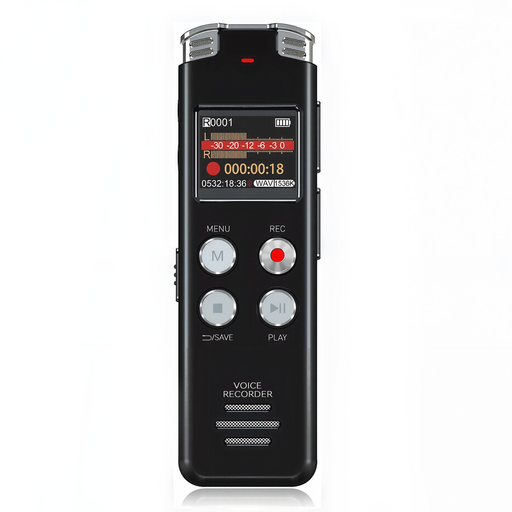
Why it stands out: This model combines a very high storage capacity with long battery life. With 128 GB of storage, it offers space for up to 900 hours of recordings. The ability to record in high-resolution 1536 kbps WAV format ensures clear and detailed sound reproduction.
Pros:
- Ample Storage: 128 GB for extensive audio archives.
- Long Battery Life: Up to 35 hours of continuous recording.
- High-Quality Recording: Supports WAV recordings up to 1536 kbps.
- Easy Operation: One-touch recording and intuitive buttons for playback and navigation.
- Voice Activation (AVR): Records only when sound is detected.
Who is it for? Users who need long, high-quality, uninterrupted recordings, such as journalists conducting lengthy interviews, students in all-day lectures, or for documenting conferences.
Rexsun 64GB Digital Voice Recorder L810
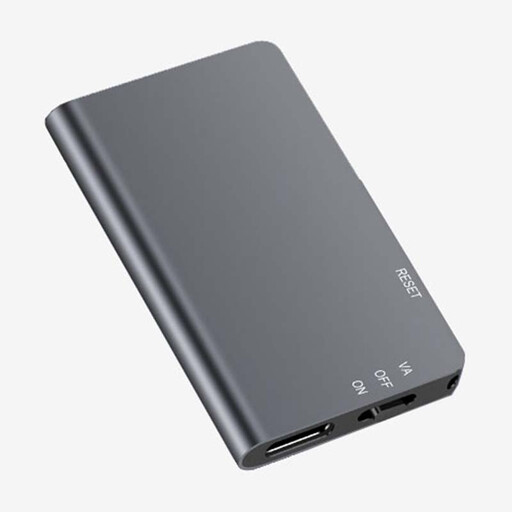
Why it stands out: The L810 model is an extremely compact and lightweight recording device. Weighing just 18 grams and featuring minimalist dimensions, it fits discreetly into any pocket. Despite its small size, it offers a considerable 64 GB of storage capacity.
Pros:
- Extremely Portable: Very small (32x54x6.7mm) and lightweight (18g).
- Solid Battery Life: Up to 22 hours of recording time on a full charge.
- Large Storage: 64 GB of internal memory for up to 900 hours of audio.
- Voice Activation (VOR): Efficient recording with automatic pauses during silence.
- Plug & Play: Easy file transfer via USB-C without additional software.
Who is it for? Users who value maximum portability and discretion. Ideal for quick notes on the go, capturing spontaneous ideas, or making discreet recordings in meetings.
32GB AI Voice Recorder with Transcription
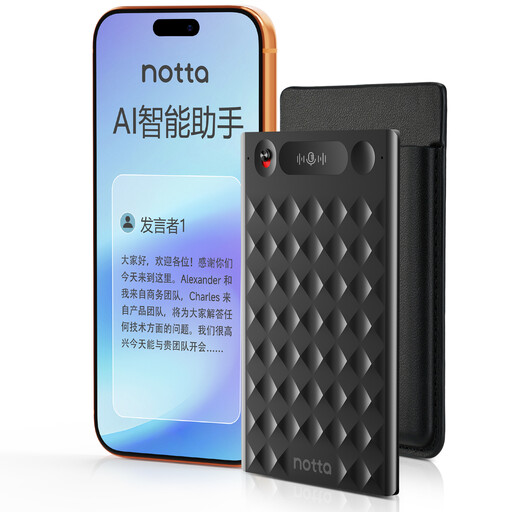
Why it stands out: This AI voice recorder is more than just a speech recorder. It integrates artificial intelligence to transcribe recordings in real-time, translate them into 58 languages, and automatically generate summaries. Its dual recording modes allow for capturing both phone calls and ambient conversations.
Pros:
- AI Features: Real-time transcription, translation, and summarisation.
- Dual Recording Modes: A bone conduction microphone for calls and a 4-mic array for capturing room audio.
- Cloud Sync: Automatic and encrypted backups to the cloud (GDPR compliant).
- Fast Data Transfer: Wi-Fi for more stable and faster transfers than Bluetooth.
- Premium Design: CNC-machined aluminium body with an OLED display.
Who is it for? Professionals, academics, and content creators who need to not only record audio but also process it quickly and efficiently. The automatic transcription and summarisation save valuable post-production time.
Looking for More Options?
The models presented here provide a solid foundation for various use cases. If you are also interested in other precision-crafted electronics and accessories, you might find more useful tools in our alloy pen category.
Frequently Asked Questions (FAQ)
What is the difference between MP3 and WAV?
WAV (Waveform Audio File Format) is an uncompressed audio format. It stores audio data without any loss of quality, resulting in larger files but higher sound fidelity. MP3 (MPEG-1 Audio Layer III) is a compressed format. It significantly reduces file size by removing sound information that is barely perceptible to the human ear. WAV is often preferred for professional applications, while MP3 is practical for notes and longer recordings where storage space is limited.
How does voice-activated recording (AVR/VOR) work?
Voice Activated Recording (AVR/VOR) is a feature where the recorder starts recording as soon as it detects a sound level above a predefined threshold. If the level drops below this value (e.g., during a pause in conversation), the recording automatically pauses. This helps save storage space and speeds up playback by skipping long silent passages.
Is transferring data to a computer complicated?
No, with most modern digital voice recorders, the transfer is very simple. They typically connect to a computer via a USB port (often USB-C). The device is recognised by the operating system (Windows, macOS) just like an external USB flash drive. You can then simply copy the audio files to your hard drive using drag-and-drop, with no special software installation required.