
Desk Buyer's Guide: How to Choose the Right Desk for Your Home
Setting up a functional workspace at home starts with choosing the right desk. Whether for a home office, studying, or a gaming station, the demands on a desk are as varied as its users. The vast selection of models, from space-saving folding tables to ergonomic sit-stand solutions, can make the decision challenging.
This guide is designed to help you navigate the options. It introduces different types of desks and highlights objective criteria to help you find a model that fits your needs and your living space.
What to Consider When Buying a Desk
Three key aspects determine a desk's functionality: ergonomics, space utilisation, and storage. A well-thought-out decision in these areas is crucial for creating a productive and tidy work environment.
1. Ergonomics for Focused Work
Proper posture at your workspace can boost concentration and prevent muscle strain. The height of the desk plays a decisive role here. A height-adjustable desk allows you to switch between sitting and standing, which can stimulate circulation and reduce back strain. An electric standing desk offers the convenience of adjusting the height at the touch of a button. Ensure the desk height allows your forearms to form a 90-degree angle with your upper arms, whether sitting or standing, while keeping your shoulders relaxed.
2. The Right Size for Your Space
Available space is a limiting factor. In smaller apartments or shared living spaces, efficient use of space is essential. A small desk or a folding desk are practical solutions for this. Foldable models can be easily stowed away when not in use, freeing up more floor space. For unused corners, a corner desk is an ideal choice, making optimal use of the area and often providing a larger work surface than a straight model with the same dimensions.
3. Storage for a Tidier Space
A clutter-free workspace promotes focus. A desk with drawers or integrated shelves helps keep office supplies, documents, and tech devices organised. Before buying, consider what you need to keep within easy reach. Models with a combination of open compartments and closed drawers offer flexibility for both decorative items and discreetly storing paperwork.
Our Top Desk Picks
Based on functionality, design, and adaptability, we have curated a selection of models for various needs.
For the Space-Conscious User: SoBuy Folding Desk with Shelves
Why It Stands Out
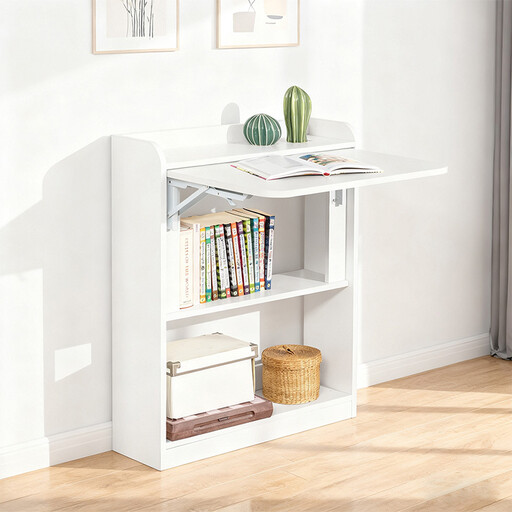
This model from SoBuy is a smart solution for rooms with limited space. The combination of a foldable computer desk and integrated shelving makes it a multifunctional piece of furniture. When folded, it has a depth of just 20 cm and blends discreetly into your living area.
Advantages
- Space-saving: The tabletop can be folded down when not in use.
- Integrated storage: Three compartments provide space for books, binders, or decor.
- Safety feature: The rounded edges of the tabletop reduce the risk of injury.
- Specifications: Material: PB(E1), Dimensions (WxHxD): approx. 64x82x58 cm, Load capacity: up to 35 kg.
Who is this model for?
This folding desk is ideal for students in small rooms, professionals who only occasionally need a workspace in their living room or bedroom, or as a compact laptop table.
For Ergonomic Work: ochama Electric Height-Adjustable Desk
Why It Stands Out
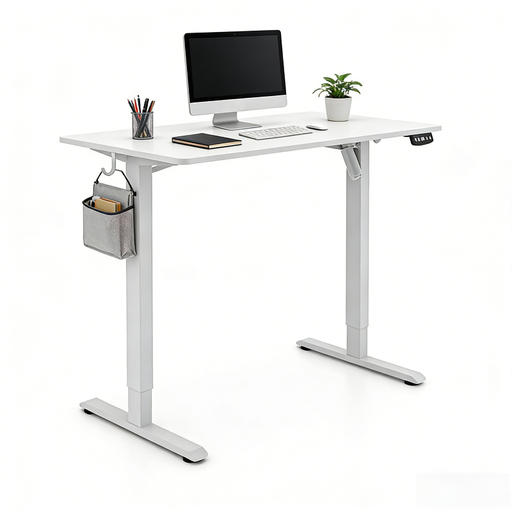
The height-adjustable desk from ochama allows for a seamless transition between sitting and standing work positions. The electric lift mechanism operates quietly and enables smooth height adjustment. Its minimalist white design complements many modern office interiors.
Advantages
- Electric height adjustment: Easily adapt the working height for an ergonomic posture.
- Sturdy construction: The steel frame supports a load of up to 70 kg, providing a secure base for monitors and other equipment.
- Quiet operation: The lifting mechanism works silently, ensuring it doesn't disturb the work atmosphere.
- Specifications: Dimensions: 120x60 cm, Material: Steel panel with aluminium alloy legs.
Who is this model for?
This office desk is an excellent choice for individuals who spend long hours in a home office and value ergonomic flexibility. It is suitable for focused office work as well as for creating a clean gaming desk setup.
For the Organisation Expert: Tribesigns L-Shaped Industrial Desk

Why It Stands Out
This corner desk from Tribesigns combines a generous work surface with extensive storage. The L-shaped design makes efficient use of room corners and can be assembled in a mirrored configuration to suit your space. The blend of rustic wood-finish panels and a black metal frame gives it a striking industrial look.
Advantages
- Ample storage: Equipped with three drawers (one for files) and two open shelves.
- Flexible assembly: The L-section can be mounted on either the left or right side to adapt to the room layout.
- Generous work surface: The 134.6 x 99.1 cm tabletop offers plenty of space for multiple monitors, a laptop, and writing materials.
- Specifications: Material: Manufactured wood and metal, Item weight: 35.8 kg.
Who is this model for?
This model is perfect for users who need a permanent, spacious workstation and place a high value on organisation. It's well-suited as a home office desk with extensive tech equipment, a gaming desk, or for creatives who require a large work area.
Discover More Options
Didn't find the perfect model for you? If you're looking for more specific solutions like dual desk home office furniture or other configurations, you can find more options tailored to different needs in our broader selection.
Discover more furniture for your home office here
Frequently Asked Questions
1. How high should a desk be?
For an ergonomic sitting posture, the desktop should be at a height that allows you to rest your forearms at a 90-degree angle while your feet are flat on the floor. For most people, this height is between 72 and 76 cm for fixed desks. Height-adjustable models offer the advantage of customising the height for both sitting and standing.
2. What's the difference between a computer desk and an office desk?
The terms are often used interchangeably. Traditionally, a computer desk was specifically designed for use with a desktop PC and often included features like a keyboard tray or a compartment for the PC tower. An office desk is typically simpler in design, offering a larger, clear work surface. Today, the lines are blurred, as many models are suitable for both purposes.
3. How much space do you need for a home office desk?
Plan for a surface area of at least 120 cm in width and 60 cm in depth for the desk itself to ensure enough space for a monitor and writing materials. Additionally, you should allow about 80 to 100 cm of free space behind the desk for your chair and freedom of movement. For a corner desk, ensure the corresponding corner dimensions are clear.