
Lunch planners who prioritise wholemeal
You want to take crispbread along as the grain component of your lunch, so you compare wholemeal labelling and fibre content. A robust rye flavour could be just right for you.
If you’re taking your own crispbread along for a BackWerk lunch, a variety specifically labelled wholemeal is a sensible choice if you want to compare wholemeal content and fibre. Whether rye or a wheat and sesame variety suits your lunch also depends on the topping, ingredients and allergens. The word ‘Digestive’ is no substitute for checking the packet.
You want to take crispbread along as the grain component of your lunch, so you compare wholemeal labelling and fibre content. A robust rye flavour could be just right for you.
You want to eat crispbread with a spread you’ve brought from home or as an addition to a lunch you’ve bought. Taste, shape and how it keeps until your break are all important when choosing.
You check the grains and sesame listed on the crispbread packet, and ask for allergen information about the specific BackWerk products you’re considering if they’re unpackaged.
First, decide whether you want to bring your own crispbread or choose your entire lunch on the spot. If you’re bringing crispbread, the next things to check are the wholemeal labelling, nutritional information and whether it goes well with your topping.
| Criteria | What to check when buying | Who it matters to |
|---|---|---|
| Wholemeal and fibre | Look for explicit wholemeal labelling and compare the fibre per 100 g. The German Nutrition Society says colour alone isn’t enough to identify wholemeal products. | If I’m taking crispbread for lunch specifically because it’s wholemeal, I want to choose the variety from the information on the packet, not its name. This is a priority for around 44% of consumers. |
| Toppings and taking it with you | Check the shape and packet format for transport, and consider whether you’d prefer to carry a moist topping separately. | I want to add my spread to the crispbread at lunchtime so it stays crisp until then. This practical consideration comes first for around 33% of consumers. |
| Ingredients and allergens | Read the ingredients and allergen information for the specific variety. For unpackaged BackWerk products, check the information provided there. | Before choosing between rye and sesame varieties, I need to know which ingredients are suitable for me. Checking allergens and ingredients is the main priority for around 23% of consumers. |
Colour isn’t a reliable way to tell whether crispbread is made from wholemeal flour. You could end up choosing a variety that doesn’t meet your actual criteria.
Look for wholemeal labelling, then compare the fibre per 100 g.
The name alone doesn’t tell you what the crispbread contains or how it fits into your whole meal. When increasing your wholemeal intake, the German Nutrition Society recommends making the change gradually and drinking enough fluids.
Compare the ingredients and nutritional information for the specific variety rather than assuming a particular effect from a word on the pack.
The Wasa varieties mentioned have different ingredients: according to Wasa, Original Crisp contains rye, while Sesame & Whole Grain contains wheat and sesame. The specific product you choose also matters when buying lunch.
Check the latest allergen labelling on the packet and the information for the unpackaged BackWerk product you’ve chosen.
With Wasa, it’s worth comparing individual crispbread varieties rather than choosing on the brand name alone.
Dark Rye is one variety to compare if you’re looking for rye crispbread with a short ingredients list.
EDEKA Bio 3 Saaten Knäckebrot is another variety you can compare using the information on its specific packet.
This selection includes rye, oat and sesame varieties to consider taking along as crispbread for lunch. To compare fibre content, check the nutritional information on each packet.
 No image available
An oat and sesame variety to take along for lunch if you enjoy these flavours.
Pack size: 230 g. Check the ingredients, allergens and fibre per 100 g on the specific packet.
 No image available
A good option if you’re specifically looking for wholemeal rye crispbread to take for lunch.
Pack size: 260 g. Compare the fibre per 100 g and check the allergen labelling if needed.
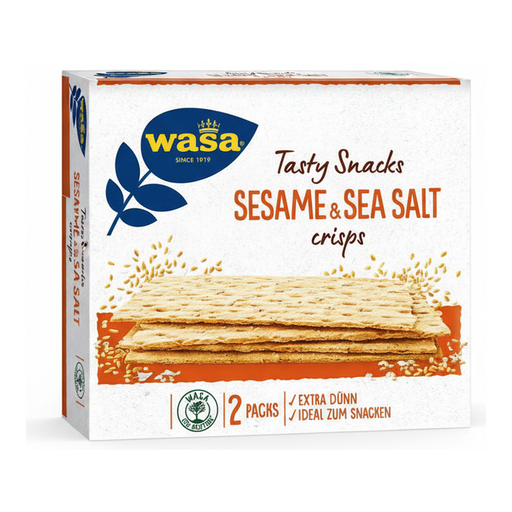 No image available
A round sesame and sea salt variety if you like this shape and flavour for lunch.
Pack size: 190 g. Compare salt and fibre per 100 g, and check the allergen information.
 No image available
A sesame and flaxseed variety for anyone who wants to take these ingredients into account when choosing lunch.
Pack size: 210 g. Check the ingredients, allergen information and fibre per 100 g on the packet.
 No image available
A good option if you’d like to take rye crispbread made with sourdough for lunch.
Pack size: 235 g. Compare the fibre per 100 g using the packet information, and check the allergen labelling.
No. You can’t infer a particular effect for yourself from the product category or the word ‘Digestive’. If you want to consider wholemeal content and fibre, compare the figures per 100 g and think of crispbread as part of your whole meal.
Look for explicit wholemeal labelling and read the ingredients list. The German Nutrition Society points out that a dark colour alone isn’t a reliable sign that a product is wholemeal.
Check the latest ingredients and allergen labelling for every crispbread variety, particularly if you need to avoid gluten-containing grains or sesame. For unpackaged BackWerk products, refer to the allergen information for the specific item you’ve chosen.
If keeping it crisp matters to you, carry the crispbread and any moist topping separately, then add the topping at lunchtime. Also follow the storage instructions on the packet.