If you’re looking for a cracker with as little declared sugar as possible for your coffee break, start by comparing the ‘of which sugars’ figure per 100 g across similar products, rather than relying on a claim on the front of the pack. Then check the salt, energy, ingredients and allergens. A low sugar figure doesn’t answer those questions, and crispbread isn’t the same as a classic cracker.
Who is this selection for?
Planners of sugar-conscious coffee breaks
You want something crunchy to enjoy with your coffee or tea, and pay particular attention to the ‘of which sugars’ figure per 100 g. You distinguish between a low stated figure and the relative marketing claim ‘reduced sugar’.
Fans of savoury crackers
You’re looking for a savoury snack to enjoy during your break. As a salty flavour doesn’t tell you anything about the sugar content, you compare the nutrition information and ingredients of different crackers.
Cracker fans who like toppings or dips
You’re planning to have cheese, a spread or a dip with your crackers. So you’ll want to check both the cracker’s information and the ingredients and nutrition of your topping. If you have allergies, check the current packaging.
What should you look for when buying?
First decide whether sugar content, savoury flavour or how well the crackers work with toppings matters most for your coffee break. Then compare similar crackers using the same serving basis, and check the rest of the information on the pack.
| Criteria | What to check | Who is it important for? |
|---|
| Sugar content |
Compare ‘of which sugars’ per 100 g across similar crackers; a relative marketing claim is no substitute for the figure itself. |
If a low declared sugar figure matters more to me than the brand or texture for my coffee break, I want to compare similar products directly. This figure is the top priority for around 38% of consumers. |
| Savoury flavour |
Check the ingredients list and sugar figure per 100 g, even for salted crackers. |
I’m looking for something savoury to have with coffee or tea, but don’t want to choose a recipe that tastes unexpectedly sweet. Around 31% of consumers prioritise a savoury snack for their break. |
| Other information on the pack |
Check the salt and energy per 100 g, as well as any ingredients and allergen information that are relevant to you. |
A low sugar figure on its own isn’t enough for me if salt, energy or certain ingredients also affect my choice. For around 23% of consumers, this more comprehensive comparison is the main reason for buying. |
| Toppings and dips |
Check that the type of cracker suits how you plan to eat it, and look at the nutrition information for the cracker and topping separately. |
If I want to top or dip my crackers, what matters most to me is how the combination fits into my coffee break. Around 8% of consumers prioritise eating crackers with a topping. |
Common mistakes when choosing
-
Assuming ‘reduced sugar’ means a low sugar figure
‘Reduced sugar’ describes a comparison. It doesn’t automatically mean the product has the lowest absolute sugar content of the crackers you’re choosing between.
Check what the claim on the pack refers to, then compare ‘of which sugars’ per 100 g across similar products too.
-
Overlooking sugar in salted crackers
Savoury crackers can also contain sugar, syrup or malt extract. So flavour alone won’t help you compare their sugar content.
Check the nutrition table first, then the ingredients list, including any allergen information that’s relevant to you.
-
Overlooking salt when choosing by sugar content
A lower sugar figure doesn’t necessarily mean less salt. To choose between two products, you need both figures on the same serving basis.
Compare ‘of which sugars’ and salt per 100 g.
-
Judging the cracker alone when you’ll add a topping
Cheese, a spread or a dip is part of what you’ll actually eat. The cracker’s nutrition information alone won’t give you the full picture of your coffee break.
Choose a type of cracker that suits how you plan to eat it, and check the cracker and topping separately.
Brands and product examples to help you choose
The information below relates to the specific products mentioned, not the brands’ entire ranges. When buying, check the details on the specific pack.
Alnatura
The Organic Spelt Sesame Cracker is an example to consider if you’re looking for a low declared sugar figure.
- EDEKA24 lists 1.2 g of sugar and 13 g of protein per 100 g for this cracker.
- The same product is listed as containing 1.8 g of salt per 100 g; its ingredients include spelt, sesame and barley malt extract.
TUC
TUC Original 3 × 100 g is included here as a classic salted cracker.
- The pack contains three 100 g portions.
- For this variety, REWE lists 7.1 g of sugar and 1.7 g of salt per 100 g. The ingredients include wheat flour, glucose syrup and egg.
Ritz
Ritz Crackers 200 g is another example of a classic cracker to compare by taste and nutrition information.
- REWE lists a 30 g portion for this variety, which can help you plan how much to eat.
- For this product, REWE lists 8.5 g of sugar and 1.3 g of salt per 100 g; the ingredients include sugar and glucose-fructose syrup.
Wasa
The Sea Salt varieties considered here may suit consumers who care about the shape and texture of their crackers.
- REWE lists Wasa Delicate Crackers Sea Salt and Wasa Tasty Snacks Sea Salt as separate products, each with its own nutrition information.
- REWE lists 10 g and 11 g of sugar, and 1.8 g and 2.38 g of salt per 100 g, respectively. Information about preparation is no substitute for comparing these figures.
Lorenz
Lorenz Clubs Crackers are a classic salted option, for example to enjoy with a topping or dip.
- You can consider this type of product in light of whether you plan to eat it on its own or with a topping.
- For Lorenz Clubs Crackers, REWE lists 7.9 g of sugar and 1.7 g of salt per 100 g. According to the ingredients list, the product also contains barley malt extract and whole milk powder.
Joybuy products for your coffee break
This selection includes one cracker and two crispbreads, which may be suitable as crunchy alternatives to enjoy with a topping. If you’re specifically looking for classic crackers, check the product type. For the Alnatura cracker variety, check the pack to confirm the exact type of grain.
 No image available
Schär Gluten-Free Dark Crispbread, 125 g
This crispbread may be a crunchy alternative if you’re looking for something to add toppings to. It isn’t a classic cracker, so check the sugar and salt information on the pack before buying.
View at Joybuy
 No image available
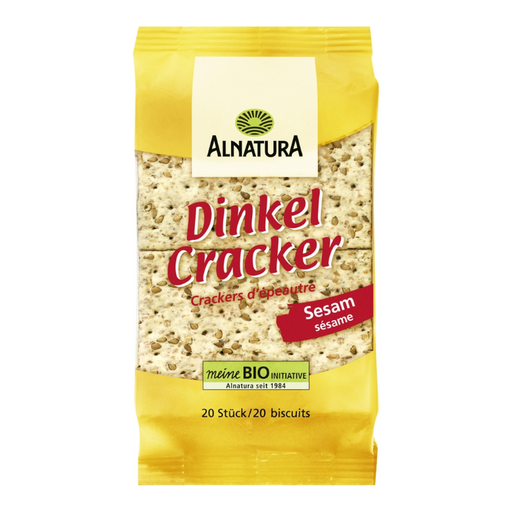
Alnatura Organic Spelt Sesame Crackers, 100 g
These crackers may suit a break with a dip or topping. Before buying, check the current pack to see whether the variety on offer contains spelt or buckwheat, then check its ingredients and nutrition information.
View at Joybuy
 No image available
Alnatura Organic Sesame Crispbread, 250 g
This crispbread is an option if you’d like something to have with a topping or dip during your coffee break. Compare it with other crispbreads, and check the sugar, salt and ingredient information on the pack rather than treating it as a classic cracker.
View at Joybuy
Frequently asked questions
Should I compare sugar in crackers per portion or per 100 g?
When comparing crackers, start with ‘of which sugars’ per 100 g, as this gives you the same basis for each product. You can then use the portion information to work out how much you’re planning to eat during your coffee break. For the Ritz and TUC products considered here, REWE lists a 30 g portion for each.
Is a cracker unsuitable if it doesn’t say ‘reduced sugar’ on the pack?
No. The actual declared sugar figure is also relevant to your choice. EDEKA24 lists 1.2 g of sugar per 100 g for Alnatura Organic Spelt Sesame Crackers. This figure alone doesn’t tell you whether a comparative marketing claim applies to a product.
Which ingredients should I check when choosing crackers to eat with a topping?
Check the ingredients and allergen information for the specific cracker, as well as the details of your topping. The products considered here have different recipes: the Alnatura spelt cracker lists spelt and sesame, while the information for the Ritz and TUC varieties includes wheat, or wheat and egg.
Why is salt important as well as sugar?
The sugar figure doesn’t tell you how much salt a cracker contains. For example, REWE lists 1.7 g of salt per 100 g for TUC Original and 1.3 g for Ritz Crackers. So compare both figures, and check energy and ingredients if needed.
