
Cooking Pots and Pans: How Home Cooks Can Choose the Right Cookware
Whether you are preparing a family meal, soup for several days or a quick pan-fried dish, cooking pots and pans need to suit your hob, household size and intended use. However, terms such as “non-stick”, “suitable for induction” or “suitable for all hob types” on product pages are not always sufficiently specific. If you focus only on the price or an eye-catching coating, you may end up buying cookware that is too small for everyday use, difficult to clean or incompatible with your hob.
Three common pitfalls when buying cooking pots and pans
1. “Suitable for all hob types” without checking the base
A pot may be suitable for gas and electric hobs without automatically working on an induction hob. The key factor is a magnetic base that sits sufficiently flat. For induction pots and induction frying pans, the manufacturer’s specifications should explicitly mention induction compatibility.
A flat base is also important on ceramic hobs. A strongly curved wok base may transfer heat less effectively or stand unstably on the cooking zone.
2. Coatings are assumed to mean easy care
A coated frying pan can make cleaning easier, but it still requires suitable care. Metal turners, abrasive sponges and very high temperatures can damage the surface. Information such as “PFOA-free” refers to one specific substance and does not replace a full check of the care instructions.
When buying non-stick cookware, you should therefore also check the maximum temperature, whether it requires hand washing or is dishwasher-safe, and which kitchen utensils are suitable.
3. Capacity and diameter are confused
A 24 cm pot is not automatically suitable for large family portions. Its shape, height and usable capacity affect how much soup or stew it can actually hold. For three to four people, a soup pot holding around 4 to 6 litres may be a sensible choice, while a smaller 1.5- to 3-litre pot is sufficient for sauces, side dishes or smaller households.
The most important selection criteria at a glance
Material: stainless steel, aluminium or cast iron?
A stainless steel cooking pot is neutral in taste and available in many versions suitable for induction, gas, electric and ceramic hobs. A multi-layer or encapsulated base helps distribute heat more evenly. Stainless steel is often dishwasher-safe, although the specific care instructions for the individual product are always decisive.
Aluminium is comparatively lightweight and conducts heat quickly. With a coated frying pan, its main advantage is that food releases more easily. The coating should not be used with metal utensils.
A cast iron pot retains heat for longer and is ideal for braising, roasting and stews. However, it is heavier and requires more care, depending on the design. Enamelled cast iron generally does not require traditional seasoning, but it should be protected from thermal shocks and aggressive cleaning products.
Hob compatibility and base
Before buying, check the following:
- Is the cookware approved for induction, gas, electric and ceramic hobs?
- Is the base flat and suitable for the size of the cooking zone?
- Can the cookware be used in the oven?
- Are the handles, lid knob and lid suitable for the stated temperature?
A cooking pot with a glass lid makes it easier to keep an eye on your food, but it may be more sensitive to knocks and sudden changes in temperature. A stainless steel lid is opaque, but robust and often easier to handle.
Shape and intended use
A frying pan is suitable for shallow frying and sautéing. A frying pan with a lid extends its use to braising and finishing dishes with liquid. A wok pan with a diameter of 28 to 32 cm offers plenty of space for vegetables, noodles or meat, but on European hobs it requires a sufficiently large, suitable heating zone.
For soups, pasta and larger quantities, a soup pot or tall cooking pot is a practical choice. A cast iron or enamelled cast iron casserole is designed for slow cooking, braising and even heat retention.
Our selection by user profile
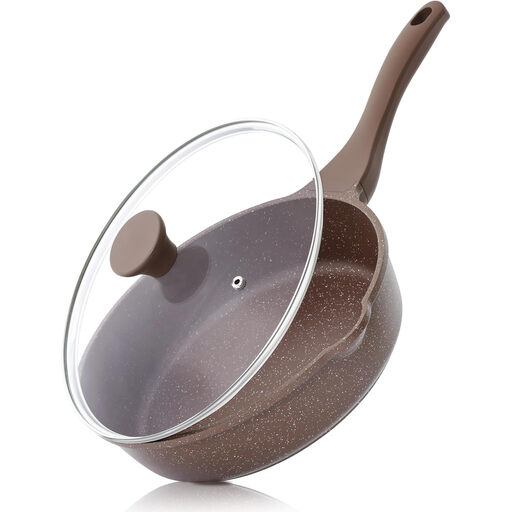
SENSARTE Non-stick Deep Frying Pan Skillet, 12-Inch Sauté Pan with Lid
Why this product suits the profile: The deep 12-inch pan is designed for sautéing, frying, stir-frying and cooking smaller quantities of liquid. According to the product specifications, it is compatible with gas, electric and induction hobs.
The manufacturer’s specifications clearly state which hobs it is compatible with. They also advise hand washing and avoiding metal utensils, making the care requirements clearer before purchase.
Aluminium body, non-stick surface, lid and ergonomic handle. According to the product description, the surface is free from PFOA, PFOS, lead and cadmium.
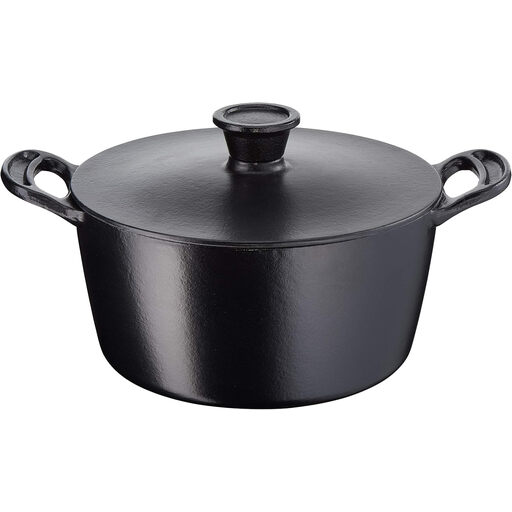
Tefal Jamie Oliver E21246 Dutch Oven 24 cm with Lid
Why this product suits the profile: This enamelled cast iron pot is aimed at households that value heat retention and versatile use on the hob and in the oven.
The product specifications state the material, lid, compatible hob types and care instructions. Hand washing and avoiding abrasive cleaners make the care requirements transparent.
Cast iron with enamel inside and out, suitable for gas, electric, ceramic and induction hobs. According to the product specifications, the pot is also suitable for use in the oven.
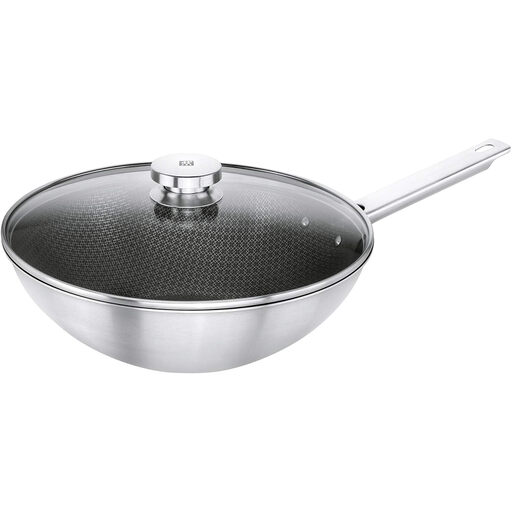
ZWILLING Joy Plus Wok Pan 18/10 Stainless Steel, 30 cm with Glass Lid
Why this product suits the profile: The 30 cm wok pan is designed for stir-fries, sautéing and steaming. According to the product specifications, it is suitable for all hob types, including induction.
The specifications explicitly state which hob types are compatible and recommend low to medium heat, as well as wooden, plastic or silicone utensils for the internal coating.
18/10 stainless steel, SIGMA CLAD3 multi-layer construction, three-layer non-stick coating and glass lid. Hand washing is recommended to care for the surface.
Looking for more options?
We have compiled a complete, regularly updated list of products that fully meet these strict selection criteria and the safety regulations applicable in the EU.
Care and lifespan in everyday use
Lifespan depends heavily on the material, temperature and cleaning method. For coated frying pans, medium heat, soft cleaning materials and wooden or silicone turners are recommended. Stainless steel can develop discolouration if overheated; water marks can often be removed with mild household products.
Cast iron and uncoated iron woks should be dried completely after washing. With non-enamelled models, regular oiling or seasoning may form part of the care routine. Glass lids should not be placed directly on a hot or cold surface if this would cause a sudden change in temperature.
FAQs about cooking pots and pans
Which cooking pots are suitable for induction?
Induction pots require a magnetic base. Look for explicit approval from the manufacturer for induction use and a surface that sits as flat as possible. Stainless steel, cast iron and many coated aluminium pots are suitable, provided the base is designed accordingly.
How long does a coated frying pan last?
There is no universally applicable lifespan. Frequent use at high heat, metal utensils and abrasive cleaning can wear a coating out more quickly. Gentle temperatures and hand washing can extend its useful life. If the coating is visibly flaking or significantly damaged, the frying pan should be replaced.
Is stainless steel or a coated frying pan more practical?
That depends on how you intend to use it. Stainless steel is suitable for high temperatures and a wide range of cooking methods, but may require more attention when searing. A coated frying pan makes it easier to release delicate foods and clean the pan, but the surface needs more careful handling. For many households, a combination of a stainless steel cooking pot and a coated frying pan is a practical choice.