
Garment Rack Buyer's Guide 2026: Find the Perfect Solution for Your Clothes Storage
Choosing the right garment storage is a functional decision that largely depends on your available space and individual needs for capacity and flexibility. Traditional wardrobes often prove to be an impractical solution, especially in urban apartments, shared living spaces, or for those who move frequently. Flexible wardrobe systems such as a garment rack, a fabric wardrobe, or a telescopic clothes rack offer a practical alternative. This article analyses the key technical criteria to consider when selecting such a system.
Buyer's Guide: What to Look for When Choosing a Garment Rack
Your choice of model should be based on an analysis of objective parameters. The following criteria are crucial for making an informed decision.
1. Material and Construction
The durability and stability of a garment rack are directly dependent on the materials used.
- Metal Tubes: Most frames consist of steel or aluminium tubes. A larger tube diameter (e.g., 16 mm or more) generally correlates with greater stability. The surface finish (e.g., powder coating or chrome plating) provides corrosion resistance.
- Connectors: Connectors are often made of PP plastic (polypropylene). This material offers adequate strength for the intended loads while being cost-effective to manufacture.
- Fabric Covers: A fabric wardrobe often uses non-woven fabric. The material density, specified in grams per square metre (g/m²), is an indicator of its tear resistance and durability. Values around 120 g/m² indicate a high-grade quality.
2. Load Capacity and Capacity
The static load capacity is one of the most important technical specifications. It indicates the maximum weight the structure can support when stationary. It is important to distinguish between the load capacity of the hanging rail and that of the individual shelves. Manufacturers typically state these values in kilograms (kg). Exceeding these limits can lead to material fatigue or structural failure.
3. Flexibility and Mobility
Different levels of flexibility are required depending on the intended use.
- Garment Racks on Wheels: Models with wheels offer maximum mobility. Look for 360° swivel castors for easy manoeuvrability and locking brakes to secure the garment stand in its final position.
- Telescopic Clothes Racks: These systems use a tension mechanism to be fixed between the floor and ceiling. Their height, and often their width, are variably adjustable, allowing for optimal adaptation to the room's dimensions without any drilling.
- Modular Systems: An open wardrobe or a clothing rack can consist of several combinable elements. This allows for gradual expansion and custom configuration.
4. Dimensions and Assembly
Precisely measure the available space before making a purchase decision. Consider not only the width and depth but also the height, especially for telescopic systems. Most modern garment racks are designed for tool-free assembly and come with illustrated instructions, which simplifies the setup process.
Our Recommendations for 2026
Based on an analysis of technical specifications and functional design, we present three distinct models here.
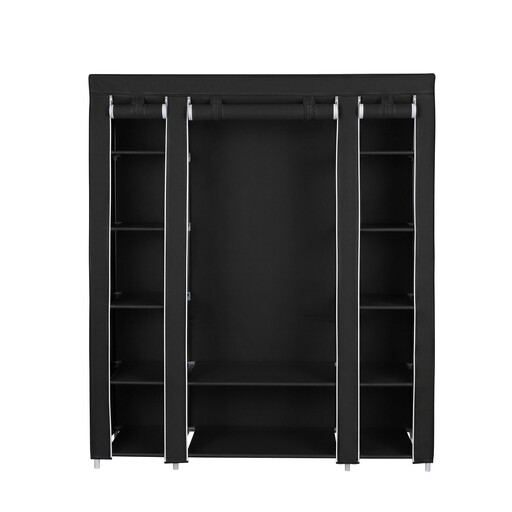
1. Ochama x SONGMICS Fabric Wardrobe with Cover
-
Why we recommend this product: This model combines the function of a hanging rail with extensive storage space in the form of shelves. The fabric cover protects clothes from dust and ensures a tidy appearance. It is a comprehensive solution for those looking for a closed, yet flexible, alternative to a traditional wooden wardrobe.
-
Pros:
- High storage capacity with one hanging rail and 12 shelves.
- Dust protection via a zip-up cover made of non-woven fabric (120 g/m²).
- Sturdy construction with metal tubes (16 mm diameter).
- Tool-free assembly thanks to a simple plug-in system.
- Static load capacity of 15 kg for the hanging rail and 5 kg per shelf.
-
Who it's for: Individuals who want to store a large amount of clothing and accessories in a dust-free, organised manner and need an all-in-one solution for the bedroom or dressing room.
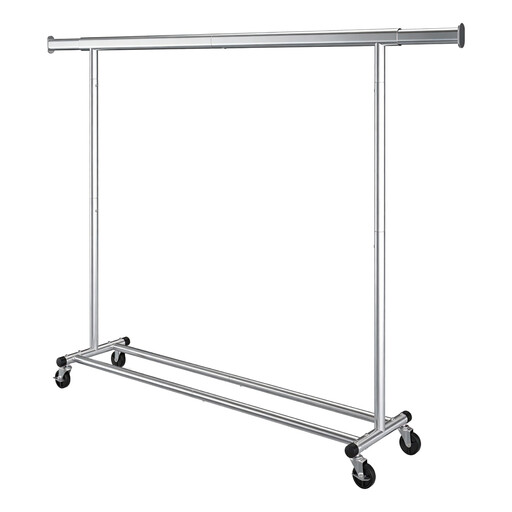
2. Ochama x SONGMICS Heavy-Duty Garment Rack on Wheels
-
Why we recommend this product: This rolling garment rack stands out for its exceptionally high load capacity and mobility. Its steel construction and extendable top bar make it a highly functional and robust option for demanding applications.
-
Pros:
- Very high static load capacity of up to 150 kg, suitable for heavy garments like winter coats.
- Extendable top bar (160-200 cm) for additional hanging options.
- Smooth-rolling castors with locking function for mobility and a secure stance.
- Bottom shelf for shoes or storage boxes.
- Simple assembly without additional tools.
-
Who it's for: Households with a large volume of clothes, individuals needing a mobile solution for the laundry room, basement, or temporary wardrobes, as well as for use in small boutiques or at events.
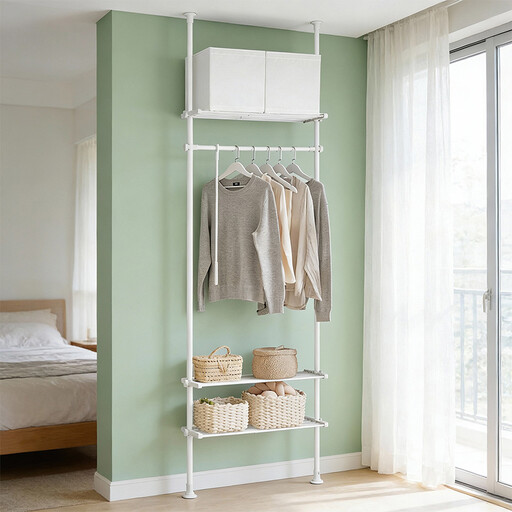
3. SoBuy Telescopic Clothes Rack, Adjustable Wardrobe System
-
Why we recommend this product: This telescopic wardrobe system offers maximum space utilisation thanks to its adjustability in height and width. It is clamped between the floor and ceiling without drilling, making it ideal for rental apartments or for use in alcoves and corners.
-
Pros:
- Flexibly adjustable: Height (233-295 cm) and width (52-80 cm) are continuously variable.
- No-drill assembly via a tension mechanism, protecting walls and ceilings.
- Combination of two rails, three shelves, and an additional rod for hangers.
- Sturdy metal construction with a total load capacity of 16 kg.
- Minimalist design that integrates unobtrusively into the room.
-
Who it's for: Renters and individuals with limited or awkward spaces who are looking for a custom-fit, non-damaging solution for an open wardrobe.
Other Wardrobe Systems and Alternatives
If the models presented do not exactly meet your requirements for size, material, or design, a broader selection of systems may offer the right solution. You can find an overview of other models and configurations in our Garment Rail Rack category.
Frequently Asked Questions (FAQ)
1. How much weight can a garment rack hold? The load-bearing capacity, also known as static load capacity, varies greatly depending on the model and construction. Basic models often support between 10 and 20 kg, while heavy-duty garment racks can be designed for over 100 kg. It is essential to check and not exceed the manufacturer's specific ratings for the hanging rail and shelves.
2. How do I assemble a garment rack? Most modern garment racks are designed for easy self-assembly. They are often plug-in systems that require no tools. Telescopic systems are secured using a tension mechanism. In all cases, read the enclosed assembly instructions carefully to ensure correct and safe installation.
3. What is the difference between a garment rack and a coat stand? Although the terms are often used interchangeably, a coat stand typically refers to a piece of furniture for the entryway, used for the temporary hanging of jackets and coats. A garment rack is a broader term for a wardrobe system intended for long-term clothes storage in a bedroom, dressing room, or basement, and it often offers more capacity and functionality (e.g., shelves, wheels).
Written by: Joybuy Product Recommendation Officer