
Clear Table Protectors: A Buyer’s Guide and Recommendations
A high-quality table made of wood, marble, or glass is often the centrepiece of a home. To preserve its surface from scratches, stains, and daily wear and tear without compromising its aesthetic, a clear table protector is a practical solution. Whether for the family dining table, the desk in a home office, or a workbench for creative projects, the right cover offers effective protection and is easy to maintain.
This article serves as your guide. It explains the key features to consider when making your selection and presents a few models to help simplify your decision.
What to Look for When Choosing a Table Protector
Finding the right transparent table protector can be overwhelming given the variety of materials, thicknesses, and finishes available. The following points will help you identify the characteristics that are most relevant to your needs.
1. Material Thickness: 1 mm vs. 2 mm
The thickness of the protector is a crucial factor for its protective capabilities and feel.
- 1 mm Thickness: These protectors are more flexible and discreet. They offer solid baseline protection against scratches and liquids and are well-suited for desks, side tables, or surfaces exposed to less stress.
- 2 mm Table Protector: A thicker protector provides enhanced protection against impacts, deeper scratches, and heat from hot dishes. Its heavier weight allows it to lie flatter on the tabletop and it also dampens the noise made when setting down glasses or plates. This version is especially recommended for heavily used dining tables.
2. Surface Compatibility and Appearance
A PVC tablecloth is not equally suitable for every table surface. On high-gloss, glass, or polished surfaces, glossy protectors can cause air bubbles to form, which can spoil the look. To prevent this, a very thin, barely visible cotton cloth can be placed underneath. Alternatively, there are protectors with a matted underside specifically designed for such surfaces. For wooden tables with a natural grain, a crystal-clear protector is ideal, as it keeps the wood's texture visible.
3. Fit and Maintenance
Many protective covers are delivered as a roll. After unrolling, they need some time to flatten out completely. Weighing them down with books can speed up this process. Pay attention to the manufacturer's specifications regarding dimensional tolerance, as PVC materials can shrink slightly over time. A good custom-cut table protector already accounts for this during production. Maintenance is straightforward: a wipeable clear tablecloth can be easily cleaned with a damp cloth and mild detergent.
Top Table Protector Picks
Here is a selection of transparent table protectors that are suited for different applications due to their specific properties.
WOLTU 2mm Table Protector with Beveled Edge, 100x200 cm
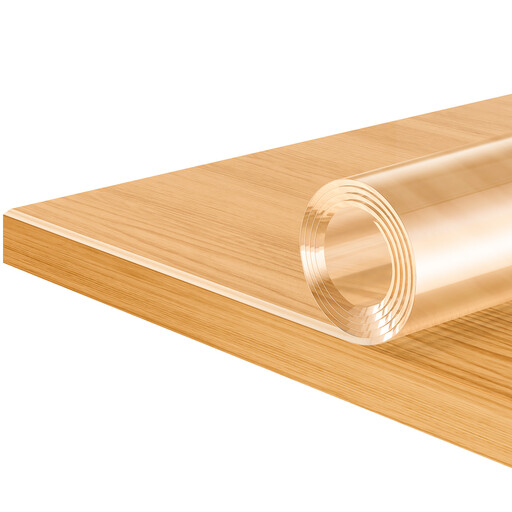
Why it stands out: This model combines a robust 2 mm material thickness with a carefully beveled edge. This detail ensures a smooth transition and prevents sharp edges, increasing comfort when using the table.
Advantages:
- Robust Material: The 2 mm thick PVC protector offers a high level of protection against scratches and impacts.
- Noise-Dampening: Reduces the sound of placing down dishes and cutlery.
- Easy to Clean: The water- and grease-repellent surface is simple to wipe clean.
- Secure Grip: A non-slip texture on the underside ensures stability on the tabletop.
Who it's for: Ideal for households and families looking for a durable and resilient protector for the dining table who also value a comfortable edge finish.
WOLTU 1mm High-Gloss Transparent PVC Tablecloth, 70x110 cm
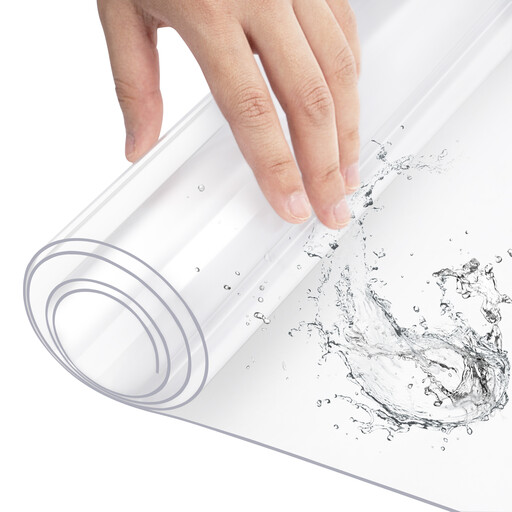
Why it stands out: This 1 mm thick protector offers a flexible and discreet protective solution. According to the manufacturer, the material contains at least 50% recycled content and is low-odour, making it a conscious choice for your living space.
Advantages:
- Flexible and Discreet: The thinner profile provides an unobtrusive look that barely alters the table's surface.
- Water- and Stain-Repellent: The smooth surface effectively protects against liquids and spills.
- Trimmable: The protector can be cut to custom dimensions if needed.
- Recycled Content: Contains certified recycled materials, according to WOLTU.
Who it's for: Suitable for desks, coffee tables, or craft areas where basic but unobtrusive protection is desired. Due to its high-gloss finish, it is not recommended for use on glass or lacquered tables to avoid air bubbles.
WOLTU 2mm Table Protector with 45° V-Cut, 80x140 cm
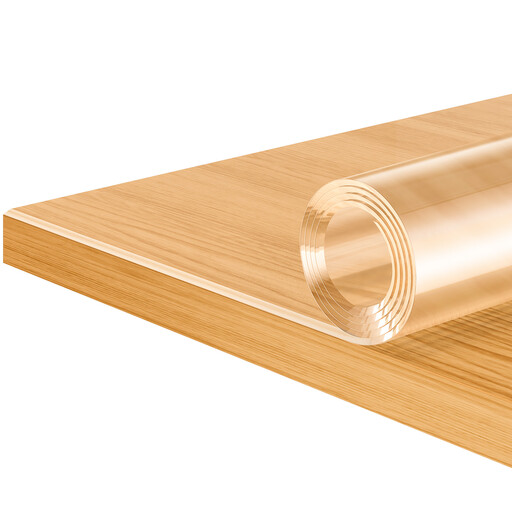
Why it stands out: Similar to the first model, this protector offers a thickness of 2 mm but is distinguished by a special 45° V-cut on the edges. This finish is designed to create an exceptionally comfortable surface for your arms to rest on.
Advantages:
- Enhanced Comfort: The 45° edge cut provides a soft resting surface and minimises pressure marks on the arms.
- High-Level Protection: The 2 mm thick PVC is resistant to wear, water, and oil.
- Crystal-Clear Finish: The transparent clarity preserves the natural appearance of the tabletop.
- Non-Slip Underside: Ensures a stable fit without sliding.
Who it's for: An excellent choice for workstations and dining tables where people sit for long periods. The special edge cut offers additional comfort for arms and wrists.
Looking for Other Options?
If the models presented here don't exactly meet your requirements, or if you're looking for different sizes and finishes, there are other alternatives to discover. A wider range of protective solutions can help you find the perfect product for your table.
Explore More Table Protection Solutions on Joybuy.de
Frequently Asked Questions (FAQ)
1. How do I get rid of air bubbles under the table protector? Air bubbles usually form on very smooth surfaces like glass or high-gloss lacquer. A simple method is to lift the protector at one corner and slowly lower it again while using a soft cloth or squeegee to push the air out to the side. For stubborn bubbles, placing a very thin, transparent fabric underneath can help.
2. Can you cut a PVC tablecloth? Yes, most PVC protectors can be trimmed. Use a sharp utility knife and a long ruler or metal straightedge to ensure a straight, clean cut. It is advisable to let the protector lie at room temperature for a few days so it can assume its final shape before you cut it.
3. How do you clean a wipeable clear tablecloth? Cleaning is very simple. Wipe the surface with a damp cloth and, if necessary, a mild dish soap. Avoid aggressive or abrasive cleaners and scratchy sponges, as they can damage the surface and cause it to become dull.