
Induction Pots: A Buying Guide to Suitable Materials, Sizes and Sets
An induction hob places different demands on cookware than a gas or electric hob. Not every stainless steel pot will automatically work on induction. At the same time, attractive coatings, space-saving designs and extensive sets can conceal important details. If you want to buy induction pots, you should therefore look beyond the price or the number of pieces.
Common Pitfalls When Buying Induction Pots
1. “Suitable for all hob types” without checking the base properly
The statement “suitable for all hob types” is only helpful if the pot base is genuinely suitable for induction. Induction hobs require a magnetic base that sits as flat as possible on the surface. A quick magnet test can provide an initial indication when checking existing cookware. When buying new cookware, you should also look for the manufacturer’s statement that it is “suitable for induction”.
A curved or overly small base can impair heat transfer. This is particularly relevant for an induction cooking pot with a large diameter: the base of the pot should match the cooking zone.
2. Coating and cleaning are not considered together
A coated pot can reduce food sticking, but it is generally more delicate to care for than uncoated stainless steel pots. Metal utensils, intense heating when empty and abrasive cleaners can damage the surface. The statement “dishwasher-safe” also does not automatically mean that frequent washing will leave the coating or handles unchanged in the long term.
You should therefore always check:
- Is the cookware dishwasher-safe, or is it intended for hand washing only?
- Which utensils are permitted?
- Can the pot be used in the oven?
- Is there a temperature limit for the pot, lid and handles?
3. A pot set is not automatically right for your household
A comprehensive induction pot set may seem attractive in terms of price, but it may contain sizes that are rarely needed. For a one- or two-person household, small pots holding around 0.9 to 1.5 litres are often more practical. Families, on the other hand, frequently need a 3- to 6-litre pot for pasta, soups or larger portions.
A pot set should also stack neatly if storage space is limited. In small kitchens, the amount of cupboard space required is just as important a consideration as the number of pieces included.
Parameters to Compare Before Buying
Induction base and hob compatibility
Look for a flat, magnetic bonded base. Multi-layer bases, such as those made from stainless steel and aluminium, can distribute and retain heat. However, the manufacturer’s specific information on suitability for induction, gas, electric and ceramic hobs remains decisive.
When choosing an induction pot, you should also consider the base diameter. A 20 cm pot is suitable for many everyday dishes, while a 24 cm or larger soup pot offers more room for family-sized portions. However, a pot that is too large for a small cooking zone may take longer to heat up.
Material: stainless steel, cast iron or aluminium
Stainless steel is uncoated, does not affect the flavour of food and is versatile enough for soups, pasta and sauces. 304 or 18/10 stainless steel are commonly used material specifications. They describe the composition of the steel, but do not replace checking the base, handles and overall construction.
Cast iron retains heat for longer and is suitable for casseroles, roasts and serving at the table. However, the material is heavier. Enamelled surfaces make cleaning easier, but should not be treated with metal scouring pads or harsh abrasive cleaners.
Coated aluminium is comparatively lightweight and can make it easier to release food. Use low to medium heat and wooden, silicone or plastic utensils, unless the manufacturer specifies otherwise.
Capacity and features
A pot should be chosen based not only on its diameter, but also on its usable volume:
- 0.9 to 1.5 litres: sauces, small side dishes and individual portions
- 2 to 3.5 litres: vegetables, rice, smaller soups and everyday dishes
- 4 to 6 litres: pasta, casseroles, family portions and hotpot dishes
A glass lid makes it easier to monitor cooking without lifting the lid. Internal measurement markings help you measure liquids. A strainer insert can make a tall pot more versatile for asparagus, spaghetti or vegetables. Wide pouring rims help reduce drips when pouring, but do not replace careful handling of hot liquids.
Our Selection by Household and Intended Use
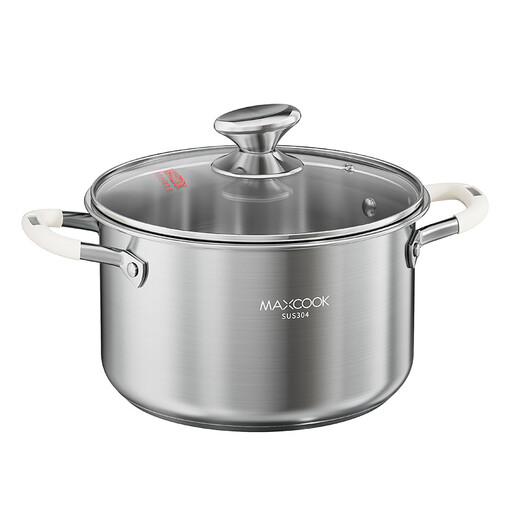
MAXCOOK 304 Stainless Steel Soup Pot, 20 cm, 3,2 l
Why this product suits this profile: With its 3,2-litre capacity, this soup pot covers everyday household tasks such as making soups, pasta and casseroles. According to the product information, its flat bonded base is suitable for induction, gas, electric and ceramic hobs.
The clearly stated hob compatibility and capacity make comparison easier. According to the specifications, the pot is intended for hand washing.
304 stainless steel, 3,2 l capacity, glass lid and heat-resistant silicone handles.
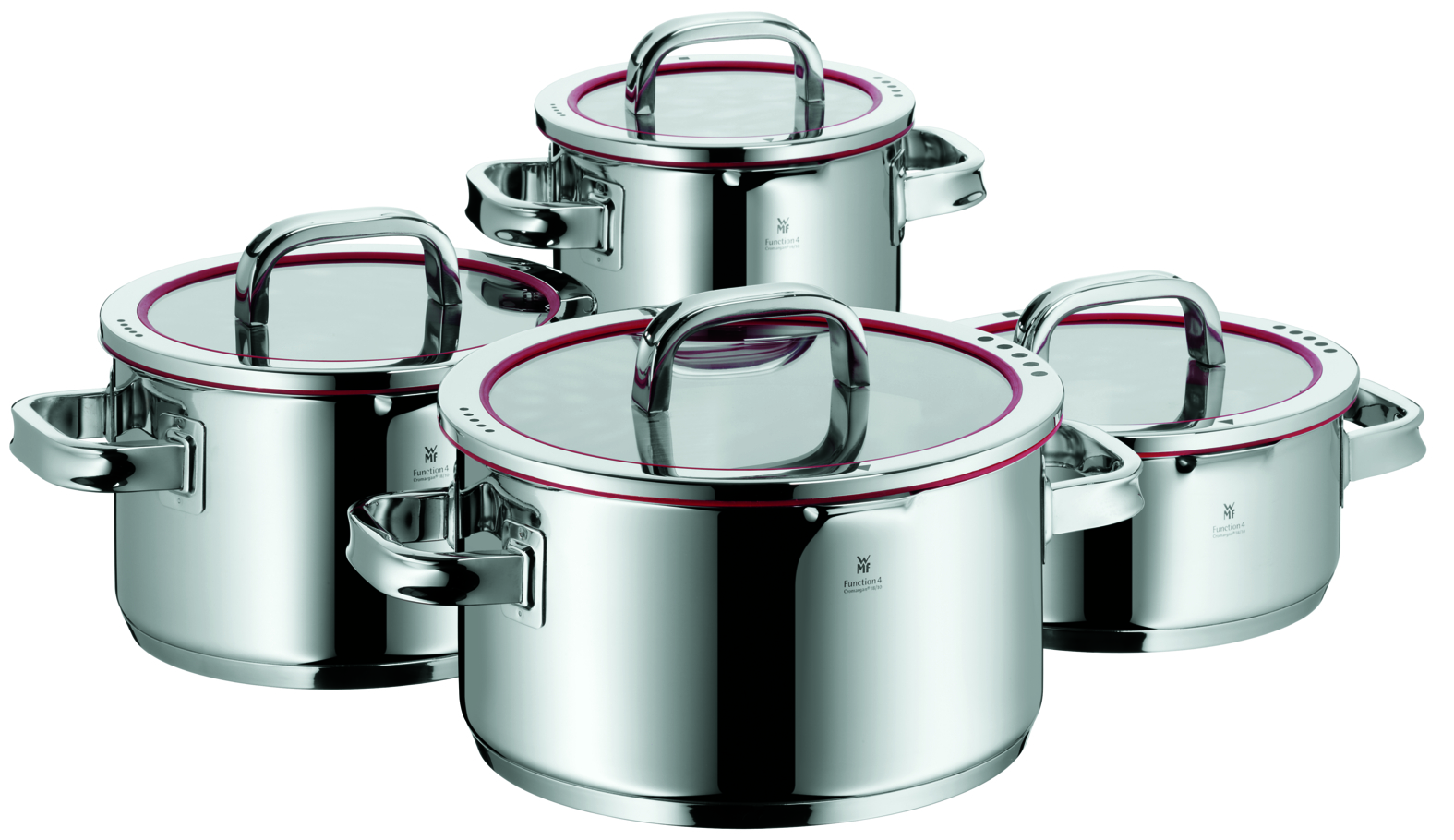
WMF Function 4 Induction Pot Set, 4 pieces
Why this product suits this profile: The set includes three pots and a frying pan with glass lids. Capacities ranging from 1,9 to 5,7 l are well suited to family kitchens and regular cooking.
The pieces are listed specifically, rather than simply promoting a high piece count. The uncoated material avoids the care requirements associated with a non-stick surface.
Cromargan 18/10 stainless steel, TransTherm base, glass lids and suitability for induction, gas, electric and ceramic hobs.
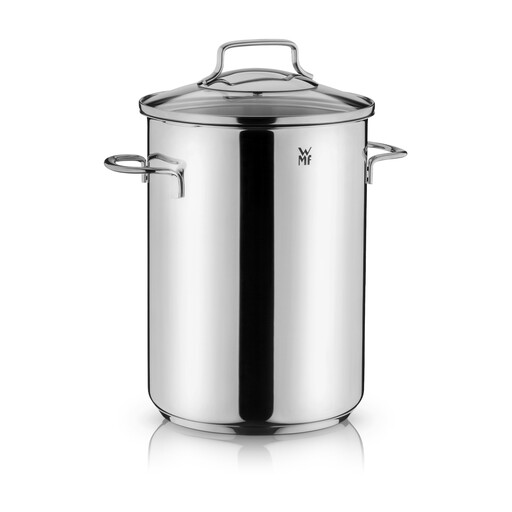
WMF Asparagus Pot with Glass Lid and Strainer Insert, 4,5 l
Why this product suits this profile: The tall, slim shape is designed for asparagus, spaghetti, pasta and vegetables. The removable wire insert makes it easier to lift out the cooked food.
Its intended use is clear from the design, rather than being based solely on a general claim of versatility. The 16 cm diameter should match the cooking zone.
Cromargan 18/10, 4,5 l capacity, TransTherm base, strainer insert and individual parts that are dishwasher-safe according to the product information.
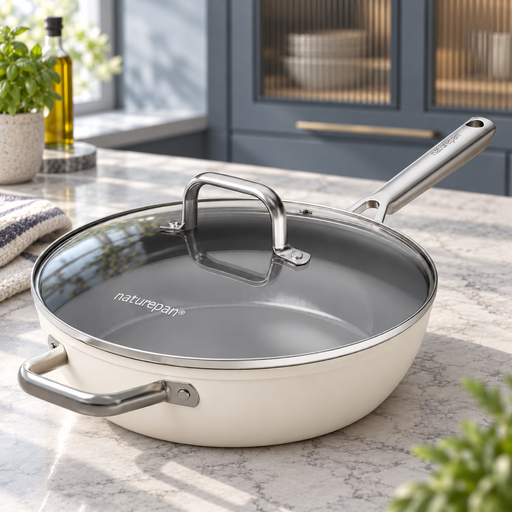
Naturepan Deep Sauté Pan, 28 cm, with Lid
Why this product suits this profile: The deep shape is suitable for frying, sautéing, braising and cooking. The ceramic coating can be practical for everyday use at low to medium heat.
The care instructions are clear: do not heat empty for extended periods, do not use metal utensils and hand wash to protect the coating, even though the product is listed as dishwasher-safe.
28 cm diameter, matching lid, induction compatibility and suitability for gas, electric and ceramic hobs.
Looking for more options?
We have put together a complete, regularly updated list of products that fully meet these strict selection criteria and the safety regulations applicable in the EU.
Care Tips for a Longer Service Life
- Clean new stainless steel pots with warm water and mild washing-up liquid before using them for the first time.
- Residue or water marks on stainless steel can be treated with a little vinegar or lemon juice.
- Clean coated models with a soft sponge and mild cleaning product.
- Do not cool hot pots immediately with cold water, as this can put stress on the material and coating.
- Check the handles, lids and temperature limits before using the pot in the oven.
- Keep the pot base clean and dry so that it sits flat on the induction hob.
Frequently Asked Questions About Induction Pots
How can you tell whether a pot is suitable for induction?
Look for the induction symbol or a clear statement from the manufacturer. If you already own the cookware, a magnet test can provide an initial indication. The base should also be flat and match the size of the cooking zone.
Are stainless steel pots suitable for induction?
Stainless steel alone is not enough to confirm suitability. Some stainless steel pots require a magnetic bonded base. Specifications such as 304 stainless steel or 18/10 stainless steel describe the material, not automatically the hob compatibility.
Is an induction pot set worthwhile for small households?
That depends on your actual cooking habits and available storage space. For smaller households, a compact set with capacities of 0.9 to 1.5 litres may be a sensible choice. If you often prepare soups, pasta or larger quantities, you may benefit more from an additional 3- to 5-litre pot. The key consideration is whether you will regularly use the sizes included.