
Chinese Cleaver Buyer's Guide: Avoiding Common Mistakes
A Chinese cleaver, also known as a Chinese chef's knife, is an impressively versatile tool in the kitchen. Its wide, rectangular blade is perfect not only for slicing and chopping but also for crushing garlic or scooping and transferring ingredients. However, the market can be confusing, and not every knife that looks like a sturdy cleaver is suited for every task. Many buyers invest in a model that doesn't meet their needs, leading to frustration and a damaged tool.
This guide will help you understand the key features and avoid the common pitfalls of buying one. We'll clarify which factors truly matter so you can find a Chinese cleaver that will perform reliably for years to come.
The 2 Most Common Mistakes When Buying a Chinese Cleaver
Before we dive into the technical details, it's important to be aware of two common misconceptions that often lead to a bad purchase.
- The "One-Knife-Fits-All" Myth: The biggest misconception is that all Chinese cleavers are the same. In reality, there are two fundamentally different types: the thin slicer (片刀, piàndāo) for vegetables and meat, and the thick, heavy chopper (斩骨刀, zhǎngǔdāo) for cutting through bone. Trying to chop bones with a delicate slicer risks chipping the blade. Conversely, a heavy cleaver is unwieldy for fine slicing tasks.
- Focusing on Vague Marketing Terms: Phrases like "laser-tested sharpness" or exotic steel names without context say little about the overall quality. A knife is a system of blade, handle, and balance. Poor construction, such as a partial tang that doesn't extend through the entire handle, can render even the highest-quality steel useless, as the knife will be poorly balanced and can break under stress.
Critical Buying Criteria: What to Look For in a Chinese Cleaver
To make the right choice, you should examine three core aspects. These determine the functionality, durability, and safety of your knife.
Blade Type and Thickness: Slicer (片刀) vs. Chopper (斩骨刀)
The most important decision relates to your intended use. This is directly reflected in the blade's thickness and weight.
- Slicer (Vegetable Knife): These knives have a thin blade (typically 2-4 mm at the spine) and are relatively lightweight. They are designed for precise cuts, dicing vegetables, and slicing boneless meat. Their sharpness allows for delicate work, but the blade is not designed for heavy impact.
- Chopper (Cleaver): These models are the true workhorses. With a blade thickness of over 5 mm and significantly more weight, they are constructed as a bone-chopping knife. The robust blade and sturdy build absorb the impact of chopping through ribs, poultry bones, or other hard materials.
Blade Steel and Hardness (HRC)
The steel is the heart of any knife. Two factors are crucial here:
- Steel Type: Common options are stainless steel and carbon steel. Stainless steel is low-maintenance and corrosion-resistant. A forged cleaver made from carbon steel can often achieve and hold a sharper edge for longer, but it requires more care (immediate drying, occasional oiling) as it can rust and will develop a patina.
- Hardness (HRC): Hardness is measured on the Rockwell scale (HRC). Softer steels (approx. 54–56 HRC) are tougher and less prone to chipping but need more frequent sharpening. Harder steels (58 HRC and up) stay sharp longer but are more brittle and can be damaged more easily with improper use (e.g., twisting while chopping).
Construction: Why a Full Tang is Important for a Kitchen Cleaver
The way the blade is secured in the handle is a key indicator of quality. A full tang means the steel from the blade runs through the entire length of the handle. This provides excellent balance and maximum stability—essential for a heavy Asian chef's knife used for powerful tasks. Cheaper knives often have only a partial or "rat-tail" tang that is glued into the handle and can break under heavy stress.
Our Picks: The Right Chinese Cleavers for Different Needs
Based on the criteria above, we have identified a few models suitable for different user profiles and applications.
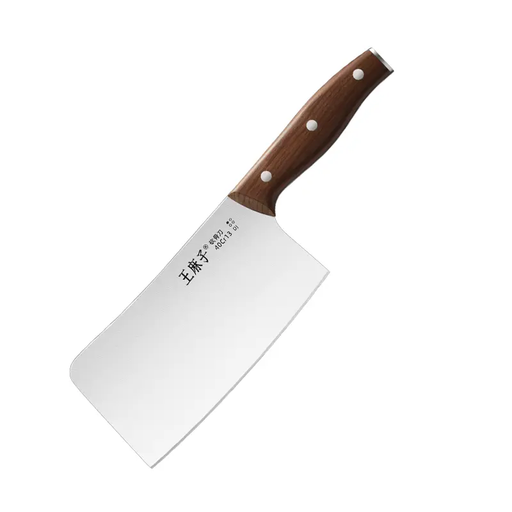
Wangmazi Forged Household Cleaver for Bones and Pork Ribs
Why This Fits Their Persona: This knife is designed for users who regularly process bone-in meat and need a tool that can withstand that level of stress. It is a pure utility tool for demanding kitchen tasks.
It is explicitly marketed as a heavy chopper. This avoids the risk of buying an unsuitable slicer for bones and damaging it.
The thick, heavy blade made of hardened steel is designed for maximum force transfer and durability when chopping bones and ribs. The full-tang construction ensures stability.

Wangmazi Shenmu Series Star Shine Cleaver - 190mm
Why This Fits Their Persona: For cooks who value traditional manufacturing, high-quality materials, and appealing aesthetics. This knife combines functionality with artisan quality for demanding daily use.
This knife delivers real quality, not just marketing hype. It's an authentically forged cleaver with a full-tang construction and a genuine wood handle, ensuring high stability and longevity.
The combination of wear-resistant steel, a full-tang construction, and an ergonomic Shenmu wood handle offers excellent balance, control, and lasting sharpness.
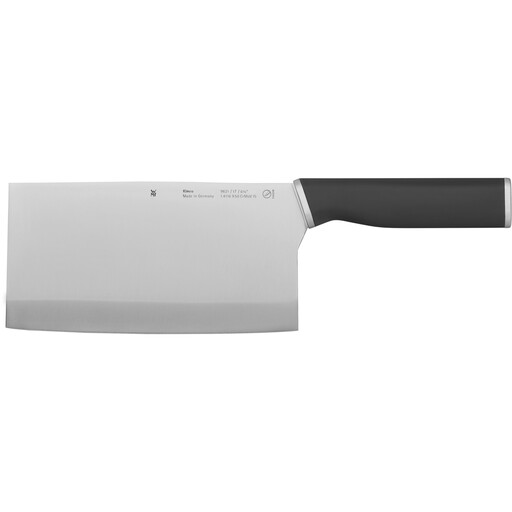
WMF KINEO Chinese Cleaver 17cm
Why This Fits Their Persona: Ideal for home cooks looking for a reliable, low-maintenance, all-purpose knife for daily slicing of vegetables and boneless meat, who also value modern design and a trusted brand.
This knife is clearly positioned as a versatile chef's knife for vegetables and meat, not as a bone chopper. This prevents improper use and protects the blade from damage.
The blade, made of hardened special blade steel with WMF Performance Cut technology, offers long-lasting sharpness. The ergonomic handle ensures good balance and comfortable handling.
Looking for More Options?
We have curated a complete, up-to-date list of products that fully meet these strict selection criteria.
Frequently Asked Questions (FAQ)
Can you chop bones with any Chinese cleaver?
No. It is crucial to distinguish between the two main types. Only a heavy chopper or cleaver with a thick, robust blade is designed to cut through bone. A lightweight slicer would very likely be damaged in the process. Pay close attention to the product description and blade thickness.
How do you care for a carbon steel cleaver?
A forged carbon steel cleaver requires a bit more attention than a stainless steel one. Clean the knife by hand with warm water immediately after use and dry it thoroughly right away. To prevent rust, the blade can be lightly coated with a neutral, food-grade oil (e.g., canola or camellia oil). Over time, a bluish-grey patina will form. This is normal and provides the steel with additional protection against corrosion.
Chinese Cleaver vs. Santoku: What's the Difference?
Although both are versatile Asian kitchen knives, there are clear differences. The Chinese cleaver has a wide, tall, and rectangular blade, which is excellent for chopping, slicing, and scooping up ingredients. The Japanese Santoku is generally lighter, has a shorter blade with a downward-curved tip ("sheep's foot"), and is particularly well-suited for fine, precise cuts on fish, meat, and vegetables. The cutting techniques also differ: a chopping motion is often used with a Chinese cleaver, whereas the Santoku is better for pulling or rocking cuts.