
Buying a children’s bike helmet: fit, safety standards and models for every activity
A children’s bike helmet needs to do more than look good. It should suit your child’s head circumference, activity and everyday needs. Many poor purchases happen because parents focus solely on age, colour or a striking extra feature. What really matters is the fit, the stated safety standard, comfort and the activities the helmet is designed for.
Common pitfalls when choosing a children’s helmet
1. Age recommendations are no substitute for measuring head circumference
The age recommendation on the packaging is only a guide. Children grow at different rates, and head shapes vary too. Even if the manufacturer recommends a helmet for a particular age, it may still fit too loosely or too tightly.
Use a flexible tape measure to measure your child’s head circumference about one to two centimetres above the eyebrows, keeping the tape level all the way round. Then compare the measurement with the size range for the model you’re considering.
2. An LED rear light is no substitute for being visible in traffic
A children’s helmet with a light or a bike helmet with an LED rear light can help your child stay visible at dusk. However, the built-in light is no substitute for full bike lights, reflective details or riding with care. Also check whether the light runs on batteries or a rechargeable battery, and how easy it is to use day to day.
3. A multisport helmet isn’t automatically suitable for every activity
A helmet for cycling and scooting may be designed for several non-motorised activities. Even so, always check the manufacturer’s guidance. A standard bike helmet isn’t automatically suitable for every sport. A children’s skate helmet or children’s inline skating helmet may have a different shape and offer different coverage. For more demanding rides, a children’s full-face helmet may be an option, although it can be heavier and warmer.
What to look for when buying
Fit and adjustment
An adjustable children’s helmet should sit level on the head. The front edge shouldn’t slip too far back, and the helmet shouldn’t obstruct your child’s vision. The adjustment mechanism at the back helps you fine-tune the fit, but it can’t make up for choosing the wrong base size.
Before each ride, check that:
- The helmet moves only slightly when your child gently shakes their head.
- The chin strap is snug without digging in.
- The buckle doesn’t sit directly on the jawbone.
- The straps form a secure V at the sides and don’t cover the ears.
- There’s only a little room between the chin and the strap.
Safety standard and intended use
For children’s bike, skate and scooter helmets, the EN 1078 marking is an important indication that the helmet has been tested. It applies to helmets for cyclists and users of skateboards and roller skates. Look for clear labelling on the product and straightforward information from the retailer.
An EN 1078 children’s helmet isn’t designed for motor vehicles. A helmet with a sporty look shouldn’t be used for climbing either if there’s a risk of it getting caught or causing strangulation.
Weight, ventilation and cleaning
A lightweight bike helmet may be more comfortable for younger children. However, weight alone tells you nothing about the fit. Ventilation holes help reduce heat build-up while riding, while removable inner pads make cleaning easier.
Check the material details. The outer shell and shock-absorbing inner layer are often made from PC or ABS and EPS foam. Replace the helmet after a significant impact, even if there’s no visible damage. Heat in the car, solvents and harsh cleaning products can damage the materials.
Our picks for different needs
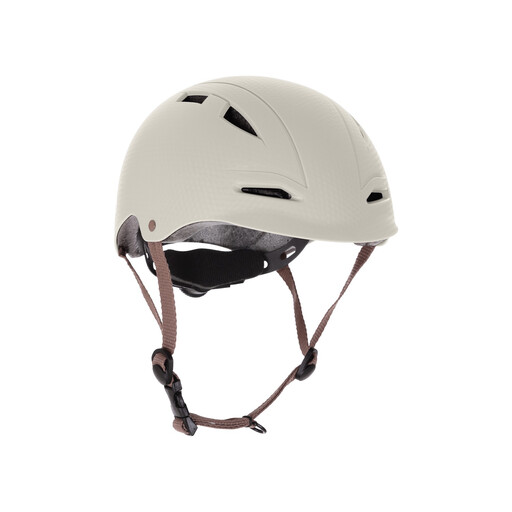
Kikka Boo Helmet Beige
Why this product suits this profile: According to the product details, this children’s helmet is designed for ages 2 to 12 and adjusts to fit head circumferences from 46 to 56 cm. It’s a good option for families looking for an adjustable everyday helmet for cycling, scooting or skating.
The adjustable fit means you don’t have to choose by age alone. Nine ventilation holes and adjustable straps are listed as features for everyday use.
Adjustable size range of 46–56 cm, nine ventilation holes and a stated weight of 0.3 kg.
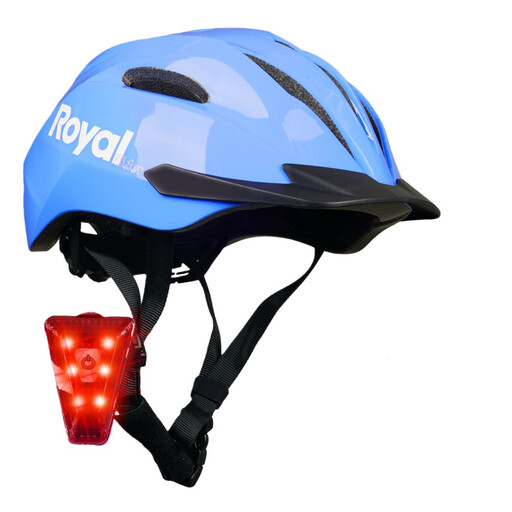
RoyalBaby Helmet Moon Blue, Net Weight 0.25kg
Why this product suits this profile: Designed for children aged around 5 to 13, this model features a PC outer shell, EPS foam, an adjustable fit and an integrated LED rear light.
Treat the light as an added feature, not a replacement for the required bike lights. The removable, washable liner makes regular care easier.
250 g in weight, six red LEDs with three modes, several ventilation holes and an integrated black visor.
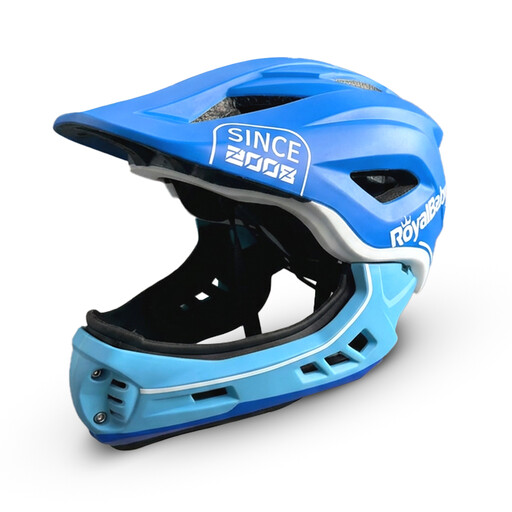
RoyalBaby Full-Face Helmet Blue, Net Weight 0.75kg
Why this product suits this profile: This 2-in-1 model is designed for children aged around 5 to 13 who switch between everyday use and activities that call for more coverage.
The detachable chin guard makes it clear that the helmet can be used in different ways. As it’s heavier, check your child’s head circumference, fit and willingness to wear it before buying.
Two ways to wear it, a size range of 20–23 inches, a washable inner lining and an integrated light on the adjustment dial.
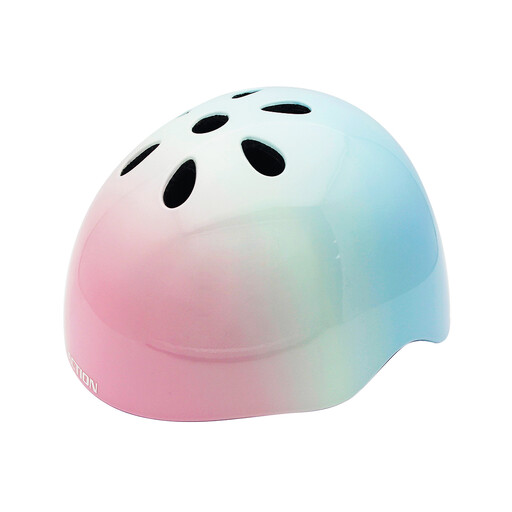
ACTION Inline Skate, PW-903-H Helmet XS
Why this product suits this profile: According to the product details, this model is designed for cycling, skating and scooting. It’s aimed at children who need a straightforward multisport helmet with an adjustable fit.
The seven listed ventilation holes and the head circumference adjustment are more useful details than a vague reference to sporty styling alone. Check the fit before use.
PC outer shell, EPS inner foam, seven ventilation holes and, according to the product details, testing to EN 1078 and CE marking.
Looking for more options?
We’ve put together a complete, regularly updated list of products that meet these strict selection criteria and fully comply with the safety regulations in force in the EU.
Frequently asked questions about children’s bike helmets
How should a children’s bike helmet fit?
The helmet should sit level on the head and shouldn’t shift noticeably when your child moves. The chin strap must be securely fastened. Check the fit every time you adjust the size, and whenever your child wears a hat underneath.
How long can a children’s helmet be used for?
There’s no set lifespan that applies to every model. Replace the helmet after a significant impact, or if you notice cracks or damaged straps. Heavily worn pads or a size range that no longer fits are also reasons to replace it. Follow the manufacturer’s care and storage instructions too.
Is a children’s helmet with a visor or LED light worth it?
A children’s helmet with a visor can shield your child’s eyes and face from the sun, splashes or loose dirt. An LED rear light can help make them easier to see in poor light. Both are extra features. Getting the right size, fastening the helmet correctly and choosing one that’s suitable for the activity should come first.