
Children’s Socks Buying Guide: Avoid 3 Common Buying Mistakes
By the Joybuy Product Recommendation Officer, July 28, 2026
Choosing children's socks might seem like a simple task. Yet, many parents soon find their drawers filled with socks that either constantly slip off, develop holes after just a few washes, or cause skin irritation. The market is saturated with products whose marketing claims often don't hold up in practice. This guide highlights the most common pitfalls and explains the objective criteria that truly matter when making your selection.
The Hidden Problems: 3 Pitfalls of Sock Shopping
Before you spend money on the next multi-pack, you should be aware of these three typical problems that often only become apparent after the purchase.
- The Fit Trap: Too Tight or Too Loose. A common annoyance is socks that either bunch up in the shoe after a few minutes or have cuffs so tight they leave uncomfortable marks on a child's sensitive skin. Both issues point to poor construction or a low-quality material blend.
- The Material Myth: "100% Cotton" Isn't Always the Solution. Pure cotton is often advertised as a mark of quality. For socks, however, it's only suitable to a limited extent. Without the addition of synthetic fibres, cotton socks quickly stretch out, lose their shape, offer little support, and are more prone to holes, especially at the heel and toes.
- The Safety Gap in ABS Socks: For babies and early walkers, non-slip socks (also known as ABS socks) are a popular choice. However, a weak point is the quality of the rubber grips. On budget-friendly models, these often come off after just a few wash cycles, causing the socks to lose their non-slip properties and their most important function.
What Really Matters: The Key Criteria for Quality Children's Socks
To avoid these traps, you should base your purchasing decision on three verifiable criteria.
1. Material Composition: The Blend Makes All the Difference
A functional sock for children rarely consists of just one material. A proven composition for comfort and durability is a mix of:
- Cotton (approx. 75-85%): Provides breathability and a comfortable feel against the skin. Look for children's cotton socks that feature a high percentage of this natural material.
- Polyamide (approx. 10-20%): This fibre makes the sock robust, abrasion-resistant, and quick-drying. It prevents holes from forming quickly in high-stress areas.
- Elastane (approx. 2-5%): Ensures stretch and shape retention. Thanks to elastane, the sock hugs the foot without stretching out or constricting it.
Additionally, a certification for harmful substances is important for direct skin contact. The Oeko-Tex Standard 100 label indicates that the product has been tested for a list of over 350 harmful substances and meets the strict limit values. Such socks are tested for harmful substances and are a great choice for sensitive children's skin.
2. Fit and Cuffs: A Secure Hold Without Pressure
A good sock cuff is wide and elastic enough to hold the sock securely on the leg without hindering blood circulation. Check that the cuff is soft and stretchy. This is especially important for baby socks, as little feet are constantly in motion and can easily kick socks off.
3. Functionality for Every Age
The requirements for socks change as a child gets older:
- For Babies and Crawlers: Here, non-slip socks with a well-designed arrangement of ABS grips on the sole and ideally on the instep (for the crawling phase) are a smart choice.
- For Active Toddlers and Schoolchildren: Durability and breathability are the priority. Kids' sneaker socks are a great option for summer and PE classes, while thicker terry socks provide warmth in winter. A 6-pack of socks often offers good value for money to keep up with high demand.
Top Picks for Every Need
Instead of generic recommendations, we present models here that are tailored to the specific needs of parents and children.
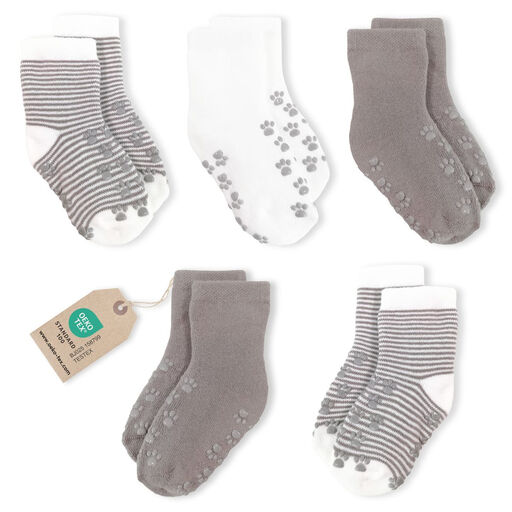
LaLoona Anti-Slip Socks 5-Pack - Size 17-18
Why it's a great fit: Ideal for babies who are starting to explore the world on smooth floors like parquet or tiles. The socks support their first attempts at crawling and standing.
The ABS grips are placed not only on the sole but also on the instep. This prevents slipping while crawling and bypasses the problem of ABS socks designed only for walking.
Tested for harmful substances according to Oeko-Tex Standard 100. The high cotton content (83%) ensures a comfortable skin climate.
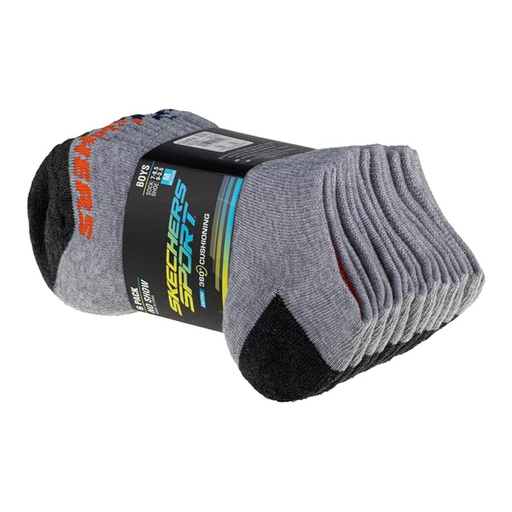
Skechers Boys' 6-Pack No-Show Socks Black 31-34
Why it's a great fit: These kids' sneaker socks are designed for daily use. The no-show cut makes them invisible in trainers, perfect for school and leisure.
The 100% polyester material is engineered for durability and shape retention through frequent washing, resisting wear and tear from active kids better than pure cotton socks.
A practical 6-pack of socks from the well-known brand Skechers, covering the weekly need and offering excellent value for money.
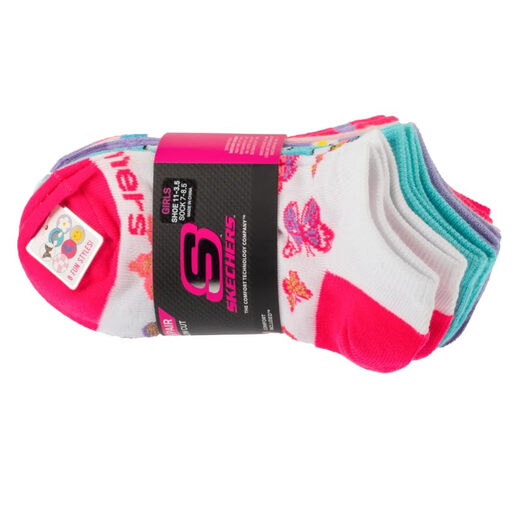
Skechers Girls' 6-Pack Butterfly Socks Multicolor 27.5-35.5
Why it's a great fit: Combines an appealing, colourful design with the functional quality of an established brand. Ideal for girls' socks that need to be not just comfortable, but fashionable too.
Unlike many purely fashion-focused socks that quickly lose their shape, the polyamide fabric here ensures durability and a consistent fit, even after many washes.
The set offers six different designs in one package, providing variety and making it unnecessary to buy multiple individual pairs.
Looking for More Options?
We've compiled a complete, up-to-date list of products that fully meet these strict selection criteria and UK safety standards.
Frequently Asked Questions About Children's Socks
What's the right sock size for my child?
Sock size is generally based on shoe size. Don't buy socks that are too big assuming your child will grow into them. Socks that are too large will slip and create folds, which can lead to friction and blisters. Measure your child's feet regularly and compare the measurements with the manufacturer's size chart.
How can I identify socks tested for harmful substances?
The most reliable indicator is an independent testing seal. The best-known label is the Oeko-Tex Standard 100. Products with this seal have been tested by an independent institute for a wide range of chemicals that are hazardous to health. The phrase "tested for harmful substances" directly on the packaging is a good sign.
How do I care for ABS socks properly so the grips last?
To maximise the lifespan of the anti-slip grips, you should turn the socks inside out before washing. Wash them at the temperature recommended by the manufacturer (usually 30°C or 40°C) and avoid the tumble dryer or set it to a low temperature. High heat can damage the rubber material of the grips and cause them to peel off.