
Changing Dresser Buyer's Guide 2026: Models and Selection Criteria
Setting up a functional and safe changing station is a cornerstone of your nursery essentials. A changing dresser combines an elevated changing surface with practical storage, making it a long-term investment for the nursery. Choosing the right model depends on criteria such as available space, safety features, material quality, and desired longevity. This article analyses the technical specifications and practical benefits of various designs to help you make an informed purchasing decision.
Buyer's Guide: What to Look for in a Changing Dresser
The decision to buy a changing dresser or a changing table should be based on an objective evaluation of four key factors: safety, material, ergonomics, and functionality.
1. Safety and Stability
Your child's safety is the highest priority. A key feature is the safety rail, provided by raised sides on the changing surface. These barriers should be high enough to prevent your baby from rolling off. The stability of the furniture is equally crucial. Models that include a wall anchor (anti-tip kit) offer additional stability and are highly recommended, especially in homes with older siblings. Look for rounded corners and edges, as well as recessed screws, to minimise the risk of injury.
2. Material and Craftsmanship
The choice of material affects both durability and ease of maintenance.
- MDF (Medium-Density Fibreboard): This material is common, cost-effective, and allows for smooth, painted surfaces. A high-quality, water-resistant finish (e.g., water-based or UV-cured) is crucial to protect the material from moisture and simplify cleaning. Products with an E1 emission class rating meet European standards for formaldehyde emissions.
- Solid Wood: Furniture made from solid wood or featuring solid wood elements is known for its superior robustness and longevity. It lends a natural aesthetic to the room. The surfaces should be treated with certified non-toxic lacquers or oils.
3. Ergonomics for Parents
The height of the changing surface is a critical ergonomic factor. A changing height between 90 and 95 cm is considered ergonomic for most adults, as it allows you to stand upright while changing your baby. A surface that is too low or too high can lead to strain and back pain over time.
4. Functionality and Longevity
A well-designed changing dresser offers more than just a changing surface. Ample storage, in the form of drawers or open shelves, is essential to keep diapers, care products, and clothing within easy reach. Models with a removable changing topper are particularly sustainable. After the diaper-changing years, the topper can be removed, and the furniture can continue to be used as a standard dresser in a child's or teen's room. This significantly extends its lifespan.
Our Top Picks for 2026
Based on the criteria above, we present three distinct solutions for your changing station. This selection focuses on technical features and practical utility.
1. Woltu Changing Topper, 80x80x10 cm
-
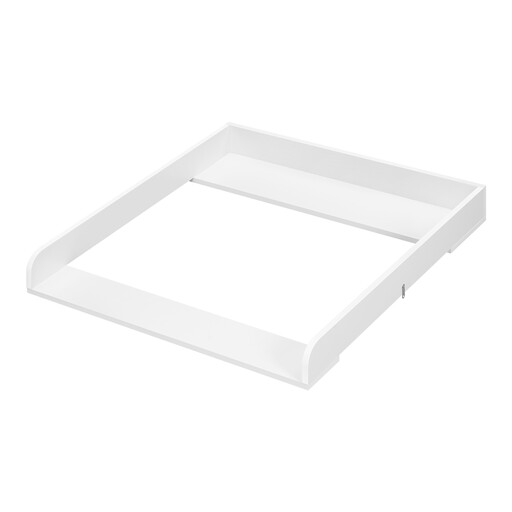
Why we recommend this product: The Woltu Changing Topper is a flexible and space-saving solution. It allows you to convert an existing dresser into a safe changing station without needing to purchase an entirely new piece of furniture. Its design focuses on the core functions of safety and compatibility.
-
Advantages (Pros):
- Adaptability: Compatible with dressers that have a depth of 46.5–50 cm and a width of up to 80 cm.
- Safety Features: Non-slip metal buckles and a rear anti-tip strap are used to secure it to the dresser. Rounded corners and recessed screws are designed for added protection.
- Easy to Clean: The E1-class MDF surface has a UV-lacquered, water-resistant finish, making it easy to clean with a damp cloth.
-
Who it's for: This product is suitable for parents who already own a compatible dresser and are looking for a cost-effective, minimalist solution. It is ideal for smaller rooms where flexibility is key.
View Product: Woltu Changing Topper
2. roba Berlin Changing Dresser with Removable Topper
-
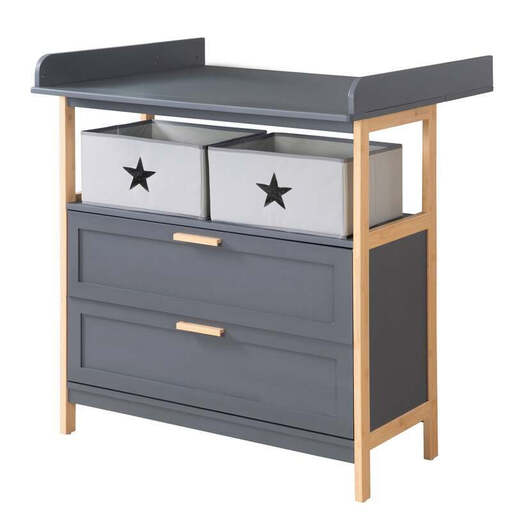
Why we recommend this product: The roba "Berlin" changing dresser combines a modern aesthetic with long-lasting functionality. The use of solid wood elements (bamboo handles) and its ability to be converted into a standard dresser make it a sustainable piece of furniture for the nursery.
-
Advantages (Pros):
- Long-Lasting Design: The changing topper is removable, allowing the unit to serve as a fully functional storage dresser after the changing years (depth reduces from 75 cm to 40 cm).
- Ergonomic Height: The 92 cm changing height promotes a posture that is easy on your back.
- Storage Concept: Two large drawers and an open compartment with two fabric boxes provide organised storage for all changing essentials.
- Material Quality: The combination of an anthracite-coloured body and solid bamboo handles creates a high-quality look and feel.
-
Who it's for: This model is aimed at parents who value design, high-quality materials, and a long-term use perspective. It is an all-in-one solution that grows with your child.
View Product: roba Berlin Changing Dresser
3. roba 'Hamburg' Changing Dresser with 2 Drawers
-
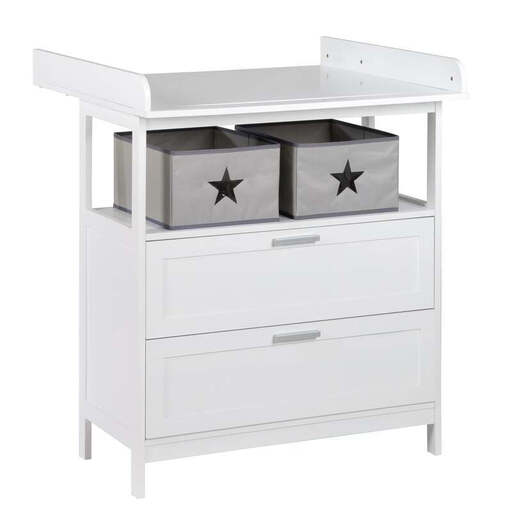
Why we recommend this product: The 'Hamburg' model from roba is an example of a classic, functional design that blends seamlessly into various interior styles. It focuses on practical storage and a smart construction for long-term use.
-
Advantages (Pros):
- Seamless Conversion: According to the manufacturer, the removable changing topper leaves no visible screw holes on the top panel, ensuring an aesthetic transition to a standard dresser.
- Ergonomic Changing Height: At 92 cm high, the dresser supports a comfortable posture.
- Practical Storage: Two drawers with modern silver handles and two canvas boxes in the open compartment offer a good mix of concealed and quick-access storage.
- Certified Materials: According to the manufacturer, the dresser is finished with a certified, water-based white lacquer.
-
Who it's for: Ideal for parents looking for a timeless, white changing dresser that offers maximum functionality and a hassle-free conversion after the changing phase.
View Product: roba 'Hamburg' Changing Dresser
Other Alternatives and Models
The products featured represent different design concepts. The market offers a wide variety of other models that differ in design, size, and storage configuration. For a broader selection, especially of models with different drawer arrangements, you can find more options in our Changing Dressers with Drawers category.
Frequently Asked Questions (FAQ)
1. How high should a changing dresser be? An ergonomic height for a changing surface is between 85 cm and 95 cm. This allows most adults to maintain an upright posture and helps prevent back pain. The roba models, for example, offer a height of 92 cm.
2. What is the difference between a changing dresser and a changing table? A changing dresser is a piece of furniture that combines a changing surface with an enclosed body (usually with drawers or doors). It offers ample storage and is often designed as a long-lasting piece of nursery furniture. A changing table often refers to a more open, shelf-like structure that is lighter and typically more budget-friendly, but offers less enclosed storage.
3. How long is a changing dresser used for? The active use as a changing station typically lasts until the child is two or three years old, depending on when they are potty-trained. Models with a removable changing topper are an economical choice, as they can be used as a regular dresser in the child's room for many years afterwards.