
Cast-Iron Dutch Oven 2026: Buying Guide for Induction, Oven and Tabletop Serving
A cast-iron Dutch oven can combine braising, searing, baking and serving in a single piece of cookware. At the same time, marketing claims such as “extreme heat retention” or “suitable for every kitchen” can quickly lead to disappointing purchases. The key factors are not just the brand name and appearance, but capacity, interior finish, hob compatibility, weight and maintenance requirements.
This buying guide from the Joybuy Product Recommendation Officer explains what cooking enthusiasts, families and discerning home cooks should look for in 2026.
Common Cast-Iron Dutch Oven Buying Mistakes
1. Choosing a Capacity That Is Too Small or Too Large
The stated litre capacity describes the total volume and does not always reflect the amount that can be used comfortably in practice. A small cast-iron pot with a capacity of 1 to 2 litres is better suited to side dishes, sauces or individual portions. For households with several people, models holding approximately 3.8 to 5.3 litres are generally more versatile.
An oversized Dutch oven requires more storage space, weighs considerably more and can be awkward to use on a small hob. Before buying, consider the number of people, available storage space and hob size.
2. Taking “Induction-Compatible” at Face Value Without Checking the Base
Cast iron is naturally magnetic and is therefore often suitable for induction. However, the actual base area should match the cooking zone. A Dutch oven with a small contact surface may not be detected evenly on a large induction zone. In addition, cookware should not be dragged across the hob, as this can damage the surface.
Models whose product specifications explicitly mention induction, gas, electric and ceramic hobs are particularly practical. The maximum oven temperature is a separate consideration and must be checked independently.
3. Overlooking Differences in Maintenance Requirements
An enameled cast-iron Dutch oven normally does not require seasoning like an uncoated cast-iron pot. The enamel makes cleaning easier and does not affect the flavour of food. Nevertheless, metal utensils, abrasive cleaners and sudden temperature changes can damage the surface.
By contrast, an uncoated cast-iron pan such as the Maxcook Mini Pan must be dried thoroughly and regularly coated with a thin layer of oil. If moisture remains, rust can form. “Dishwasher-safe” also does not mean that frequent machine washing will leave the enamel’s appearance unchanged.
Key Buying Criteria
Material and Interior Finish
Cast iron retains heat for a long time and releases it comparatively evenly. This makes it practical for braised dishes, ragouts, soups and baking bread. However, the material’s substantial mass also means considerable weight.
With enameled models, the interior finish is particularly important:
- Light-coloured enamel makes it easier to monitor browned cooking residue and sauces.
- Matt black enamel is often designed for high-heat searing.
- Damaged or chipped enamel should not be used further.
- Wooden, silicone or heat-resistant plastic utensils reduce the risk of scratching.
Diameter, Height and Lid
A round Dutch oven measuring 22 to 26 cm in diameter is suitable for many braised dishes. The shape should match the intended cooking style: a tall braising pot provides room for stews and soups, while a shallow Dutch oven makes it easier to turn larger cuts of meat.
A close-fitting lid reduces moisture loss. On some STAUB Cocottes, the inside of the lid features a structure that allows condensed water to drip back onto the food. This is a design feature, but not a reason to dismiss other models categorically.
Temperature Limits and Safety
Before using a Dutch oven in the oven, the pot, lid knob and handles must all be approved for the desired temperature. Depending on the model, stated limits may be 230, 240, 250 or 260°C, for example. The Le Creuset Dutch ovens listed in the product specifications are rated up to 260°C; the 5-litre STAUB Cocotte is rated up to 250°C.
Cast iron remains hot for a long time after the heat has been switched off. Oven gloves are essential when removing it from the oven. Because of its weight, a filled Dutch oven should ideally be carried with both hands.
Our Recommendations for Different User Profiles
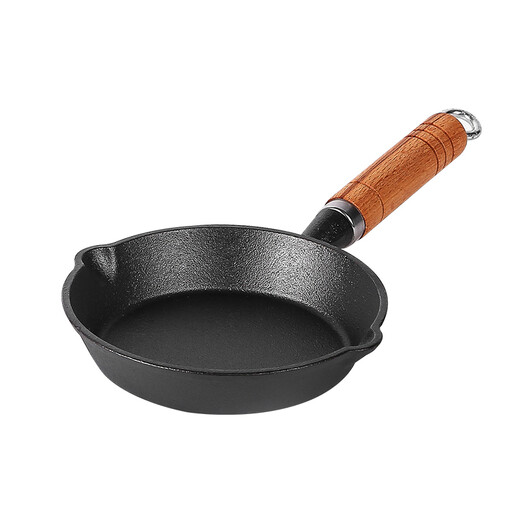
Maxcook Cast Iron Skillet, 10 cm
Why it is a good fit: This compact cast-iron pan is designed for individual portions, butter, sauces or small side dishes. According to the product specifications, it works on gas, electric, ceramic and induction hobs.
Its compact size prevents you from buying more material and storage capacity than you need for small quantities. However, seasoning, drying and oiling are required.
10 cm diameter, wooden handle and uncoated cast iron. Not dishwasher-safe; the handle must be checked separately before oven use.
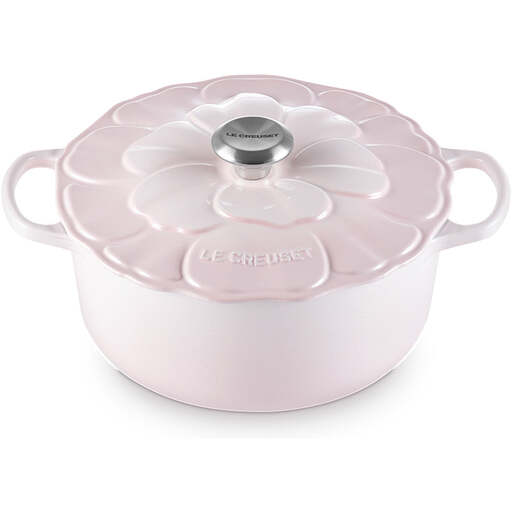
Le Creuset Cast Iron Dutch Oven, 26 cm, 5.3 L
Why it is a good fit: With its generous capacity, this model is well suited to family meals, bread, soups and braised dishes. The decorative floral relief on the lid adds an elegant finishing touch.
The product specifications explicitly state a 5.3-litre capacity, induction compatibility and oven use up to 260°C. This allows you to verify both capacity and temperature limits before buying.
Enameled cast iron, 26 cm diameter, lid and compatibility with all the hob types listed. Its substantial weight should be taken into account when transporting it.
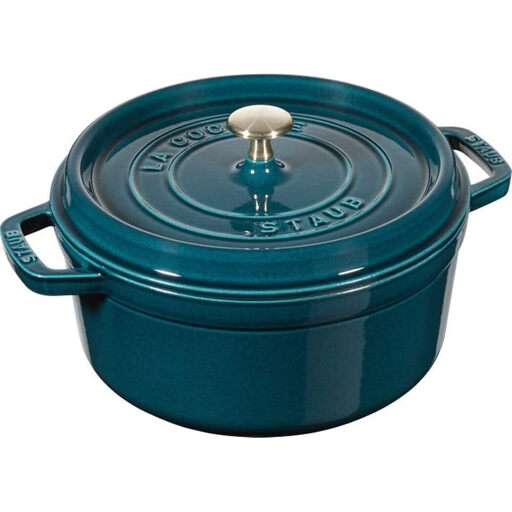
STAUB Cocotte, 26 cm, 5.0 L, Petrol Blue
Why it is a good fit: Its capacity is suitable for several portions. According to the product specifications, the Cocotte works on all hob types, including induction, and can be used in the oven up to 250°C.
The technical specifications state not only the hob compatibility, but also the 5-litre capacity and temperature limit. This provides a clearer basis for comparison than general claims of versatility.
Enameled cast iron, a lid with a condensation-return structure, large handles and a stated weight of 5.7 kg.
Care and Ongoing Running Costs
An enameled cast-iron pot does not require special seasoning maintenance, but it should be cleaned with warm water and a soft sponge once it has cooled. Frequent dishwasher use can alter the enamel’s lustre. An uncoated model does not require replacement coatings, but it does need regular oiling and careful drying.
When cooking, a low to medium heat setting is usually sufficient because cast iron retains heat for a long time. On induction, increase the power gradually, particularly when using small pans. This helps prevent unnecessary overheating.
Looking for more options?
Our regularly updated selection features cast-iron Dutch ovens, Cocottes and frying pans, organised by size, capacity and hob compatibility.
Frequently Asked Questions About Cast-Iron Dutch Ovens
What size cast-iron Dutch oven is best for a family?
For several people, a capacity of around 3.8 to 5.3 litres is often the most versatile choice. You should also consider the desired fill level, the space available in your oven and the weight of the filled vessel.
Can a cast-iron Dutch oven be used on induction?
Many models are induction-compatible. Before buying, check the manufacturer’s specifications for induction compatibility, base dimensions and oven temperature limits. Always lift the Dutch oven on a glass hob rather than sliding it across the surface.
How long does an enameled cast-iron Dutch oven last?
Its service life depends on the quality of its construction, care and handling. Enamel can be damaged by impacts, metal utensils or thermal shock. Heating the Dutch oven gradually, avoiding intense heating while empty and cleaning it carefully will help reduce common causes of wear.