
Cast Iron Dutch Oven Buyer’s Guide: Avoid Costly Mistakes
A high-quality cast iron Dutch oven is an investment for years, if not a lifetime. It's the centrepiece of many kitchens, ideal for braises, crispy roasts, and even baking bread. But the market is flooded with products whose quality doesn't always match the price. Before you invest, it's crucial to know the common pitfalls that often lead to disappointment and an unused, heavy pot in the cupboard.
As your Joybuy Product Recommendation Officer, I'll help you separate the wheat from the chaff. We will focus on the objective features that define a durable and functional Dutch oven, and ignore overblown marketing claims.
The 3 Most Common Mistakes When Buying a Cast Iron Dutch Oven:
- The Low-Quality Enamel Trap: Many budget-friendly models advertise a colourful enamel layer. However, this coating is often paper-thin and unevenly applied. The result: after just a few uses or a slight knock, the enamel chips off. This not only looks unsightly but can also impair functionality and promote rust on the cast iron core.
- Ignoring Lid Fit and Handle Design: A cast iron casserole thrives on its ability to lock in moisture and flavour. A poorly fitting, lightweight lid allows precious steam to escape, leading to dry results. Similarly, handles that are too small or poorly shaped quickly become a safety hazard, making it difficult to safely lift the heavy, hot pot, especially with oven mitts.
- Misinterpreting "Induction-Ready" Claims: Nearly every cast iron Dutch oven today is advertised as "suitable for induction". However, the crucial factor isn't just the material, but the base flatness. An uneven or overly thin base only makes partial contact with the hob. This leads to inefficient, slow, and uneven heat distribution, which negates the main advantage of cast iron and increases energy consumption.
What Really Matters: The Decisive Quality Features
To avoid these mistakes, you should focus on three core technical parameters. These define the performance and longevity of your cookware.
1. Material Quality and Enamel Type
A quality Dutch oven is made of thick-walled cast iron that absorbs heat slowly but distributes it with extreme uniformity and retains it for a long time. This is the foundation for energy-efficient cooking at low to medium temperatures.
The coating is just as important. Look for a multi-layer enamel. This is more resistant to chipping and thermal shock. An enamelled cast iron pot with a light-coloured interior offers a practical advantage: you can monitor the browning of the food at all times and prevent burning. Dark interiors, often found in a pure cast iron skillet, are excellent for high-heat searing but make observing the cooking process more challenging.
2. Base Construction and Shape
For induction hob users, a perfectly flat, thick base is essential. This is the only way to ensure full contact and maximum energy transfer. Check the manufacturer's specifications for base thickness and finishing.
The shape—round or oval—is a matter of primary use:
- Round Dutch Ovens (Cocottes): Universal for stews, soups, goulash, or as a pot for baking bread.
- Oval Dutch Ovens: Ideal for longer foods like whole chickens, goose legs, or large roasts.
3. Lid Construction and Ergonomics
A heavy, tight-fitting lid is the hallmark of a good cast iron braiser. It ensures that moisture circulates inside the pot, keeping the food juicy and tender. Some manufacturers integrate special textures on the underside of the lid to distribute condensation evenly over the food.
Also, look for large, sturdy handles that provide a secure grip even with thick oven mitts. The significant weight of cast iron requires thoughtful ergonomics to ensure safe handling from the hob to the oven and to the table.
Cooking Picks for Every Need
Based on these objective criteria, we have identified several models suitable for specific user profiles.
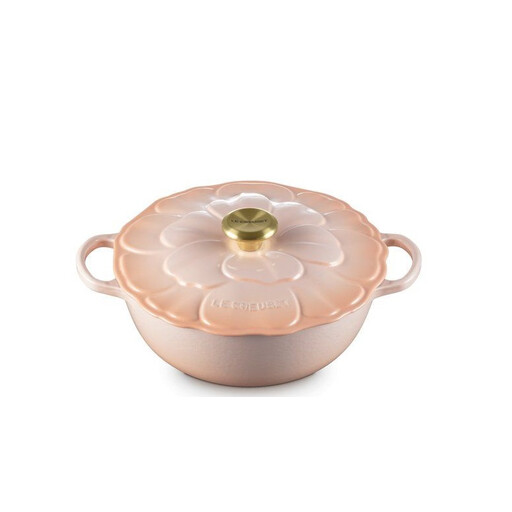
Le Creuset La Marmite "Blume" Cast Iron Casserole 26cm 4.1L Peche
Why This Fits Their Persona: For home cooks who view cookware as part of their kitchen decor and value exceptional design. This model is an eye-catcher that can go directly from the hob to the dining table.
Le Creuset's high-quality, multi-layer enamel is renowned for its durability and resistance to chipping. The heavy, artfully embossed lid seals tightly, ensuring succulent results.
Combines proven cast iron cooking performance with a unique, decorative design. The curved sides make it easier to stir soups and stews.

Le Creuset Signature Cast Iron Dutch Oven, Oval, 29 cm, 4.7 L, Volcanic
Why This Fits Their Persona: Ideal for family cooks who need a versatile and robust workhorse for preparing larger meals. The oval shape and volume are perfect for roasts, whole poultry, or large stews.
The solid, machine-finished base ensures optimal performance on all hob types, including induction. The large Signature handles provide a secure grip even with mitts, bypassing the problem of clumsy designs.
The oval shape is extremely versatile for longer cuts of meat. The light-coloured interior enamel makes it easy to monitor the cooking process. A classic Le Creuset Dutch oven for the highest standards.
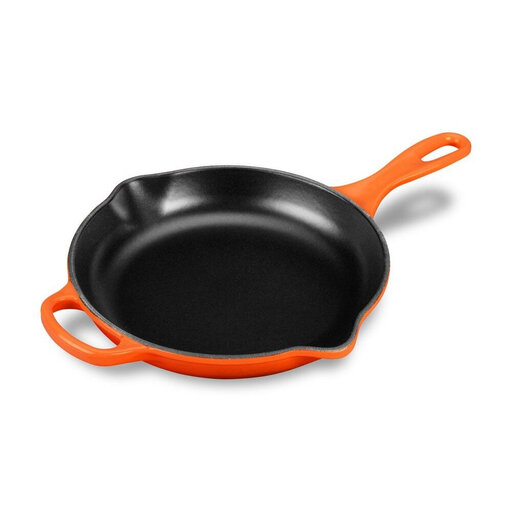
Le Creuset Signature Cast Iron Frying and Serving Pan, ? 23 cm, Flame
Why This Fits Their Persona: For anyone who wants to achieve a perfect crust on steaks, fish, or vegetables and is looking for a pan that goes straight from the hob to the table. This cast iron skillet is designed for high temperatures and precise searing results.
The robust enamel is specially designed for high-heat searing and resists discolouration. The helper handle ensures secure handling and avoids the balance problem of heavy pans.
Excellent and even heat distribution for perfect browning. The two pouring spouts make it easy to drain excess fat. Ideal as a frying and serving pan in one.
Looking for more options?
We have compiled a complete, up-to-date list of products that fully meet these strict selection criteria and German safety regulations.
Frequently Asked Questions (FAQ)
1. How do I properly care for an enamelled cast iron pot to maximise its lifespan? Proper care is straightforward. Always let the pot cool down after use before cleaning it with water to avoid thermal shock and cracks in the enamel. Clean it by hand with a soft sponge and mild washing-up liquid. Afterwards, dry it thoroughly, especially on the un-enamelled rims, to prevent surface rust. Use wooden or silicone utensils to protect the enamel surface.
2. Can you really bake bread in a cast iron cocotte? Yes, absolutely. A cast iron Dutch oven is an excellent pot for baking bread. Thanks to its excellent heat retention and tight-fitting lid, it creates an environment inside similar to a steam oven. This results in a fantastic crust and a moist crumb. Make sure to choose a model with a heat-resistant lid knob that can withstand oven temperatures of at least 250°C (482°F).
3. Is a heavier cast iron Dutch oven always higher quality? Weight is an indicator of material thickness, which is crucial for good heat retention. A heavier weight often correlates with better performance. However, it is not the only factor. Quality also depends on the uniformity of the cast, the grade of the enamel, and the ergonomic design. An extremely heavy pot without good balance and secure handles can be impractical for daily use.