
Camping Gas Stove Selection Guide and Tips
A warm coffee in the morning or a hearty meal after a long day of hiking—a reliable gas stove is indispensable for camping. But the market is flooded with models whose marketing promises often create more confusion than clarity. Many buyers invest in devices that prove to be impractical, unstable, or inefficient in the field. Before you make a decision, it's crucial to understand the most common pitfalls to avoid a bad investment.
This guide focuses on the objective criteria that truly matter, helping you make the right choice for your outdoor activities.
The 3 Most Common Traps When Buying a Camping Stove
The selection can be overwhelming. Many products entice with impressive specs and modern designs, but the devil is often in the details. Here are three common problems that can lead to frustration:
- The Power Illusion: A high wattage looks good on paper but is often useless without effective wind protection. Strong wind can drastically reduce the efficiency of an unprotected stove, drive up gas consumption, and significantly extend cooking time.
- The Stability Trap: Small stoves that screw directly onto the canister can quickly become top-heavy and unstable with a larger pot. A tipping stove not only means a lost meal but also poses a significant safety risk.
- The Compatibility Dead-End: Not every stove fits every gas canister. If you're not careful, you might find yourself abroad or in a remote region without the right fuel because your stove uses a rare or proprietary connection system.
Crucial Criteria: What to Look for Before You Buy
To avoid these traps, you should base your selection on three core parameters. These will help you find a camping gas stove that truly fits your needs.
Power vs. Efficiency: More Than Just Wattage
The power of a gas stove is specified in watts (W). A higher value theoretically means a faster cooking time. In practice, however, efficiency is more critical. An outdoor stove with integrated wind protection or a heat exchanger system can bring water to a boil faster with lower wattage than a more powerful burner fully exposed to the elements. For trips in windy or colder regions, integrated stove systems (gas stove with pot) are often the better choice as they minimise fuel consumption.
Weight and Pack Size: The Trade-Off Between Comfort and Portability
Weight and pack size are especially crucial for hikers and backpackers. There are two main categories here:
- Ultralight Gas Stoves: These models often weigh under 50 grams and are extremely compact. They are the first choice for minimalists and long-distance hikers where every gram counts. However, this type of
small gas stoveusually offers less stability and no wind protection. - System Stoves and Separate Stoves: A
portable gas stovewith a separate base and a hose connecting to the canister provides a lower centre of gravity and thus more stability for larger pots. Cooking systems, where the pot and burner form a single unit, are heavier but score points for their high efficiency and convenience.
Gas Canister Compatibility: The EN 417 Standard
Most modern gas stoves for trekking and camping use screw-on canisters with an EN 417 thread. This system is widely available in Europe and North America and ensures a reliable fuel supply. When buying, make sure the stove is compatible with this standard. Some models offer adapters to use other canister types (e.g., pierceable canisters or 1-pound propane bottles), which increases flexibility when travelling.
Our Picks: The Right Gas Stoves for Different Needs
Based on the objective criteria mentioned above, we have selected a few models for specific user profiles.
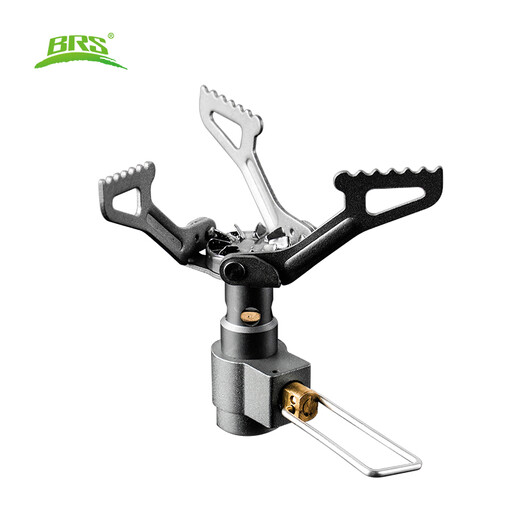
BRS 3000T Ultralight Titanium Alloy Stove 26g
Why This Fits Their Persona: For users where every gram counts. At just 26 grams, this stove is a minimalist solution for solo hikers and thru-hikers who primarily heat water for dehydrated meals or drinks.
It bypasses the stability trap by being designed for small pots and deliberate, careful handling. The user specifically chooses this model for its minimalism, not for complex cooking tasks.
Extremely low weight (26 g) and a tiny pack size. The titanium alloy construction is robust for its weight.
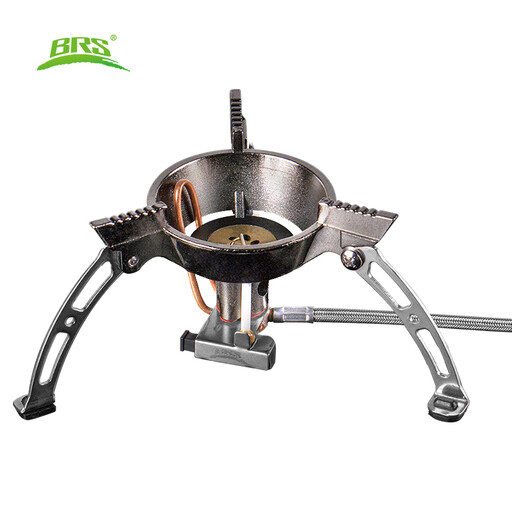
BRS 11-Series Camping Gas Stove with Carry Bag
Why This Fits Their Persona: Ideal for weekend campers and festival-goers looking for a robust, powerful, and versatile stove. It offers a great balance of performance, stability, and portability for various scenarios.
It solves the stability trap with its wide, foldable pot supports and a separate stand for the canister. The compatibility dead-end is avoided with the included adapter for different gas bottles.
High power (3240 W) for fast cooking and a stable, wide base for pots up to 5 kg. The integrated wind guard increases efficiency.
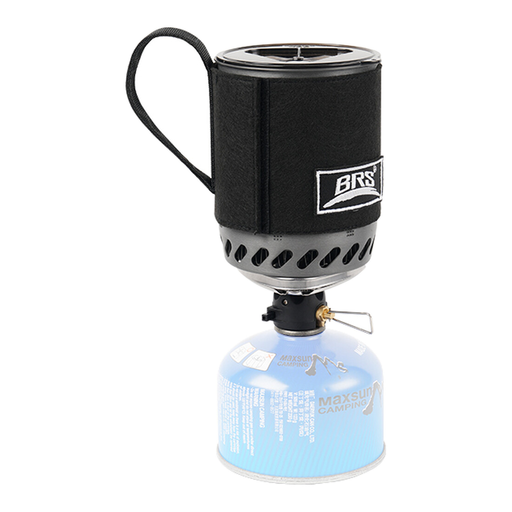
BRS Outdoors 61 Series Camping and Backpacking Stove Cooking System
Why This Fits Their Persona: Perfect for solo travellers who want a compact, efficient, and straightforward all-in-one system. All components can be stored inside the pot, saving space in the backpack.
This system solves the power illusion. Although the wattage (1500 W) is moderate, the integrated design with a heat exchanger ensures extremely high efficiency and fast cooking times, even in wind.
All-in-one system (`gas stove with pot`) that is very fuel-efficient thanks to the heat exchanger. Low total weight (0.36 kg) for a complete cooking set.
Looking for More Options?
We've compiled a complete, up-to-date list of products that fully meet these strict selection criteria and safety regulations.
Frequently Asked Questions (FAQ)
How long does a gas canister last?
The burn time depends on the size of the canister (typically 100 g, 230 g, or 450 g), the stove's power setting, and the ambient conditions (wind, temperature). As a rough guide, a 230 g canister can burn for about 60-90 minutes at medium power. Efficient system stoves can significantly extend this time.
Which gas stove is best for windy conditions?
For windy conditions, cooking systems with integrated wind protection and a heat exchanger are the best choice. Alternatively, a separate, foldable aluminium windscreen can significantly improve the efficiency of any gas stove. Stoves with a hose connection and a low centre of gravity are also more stable in the wind.
Can I use any pot on a gas stove?
On stoves with wide pot supports, you can use most outdoor pots. However, pay attention to stability. For very small, lightweight screw-on stoves, only small and light pots should be used to prevent tipping. System stoves are specifically optimised for the included pot and often work less efficiently with other pots.