
Camera Lens Protector Buyer’s Guide
By the Joybuy Product Recommendation OfficerDate: July 28, 2026
The cameras on modern smartphones are technological marvels, but their exposed position makes them vulnerable to scratches and damage. Repairing camera lenses can easily cost several hundred pounds. A camera lens protector seems like a simple and affordable solution. However, many products on the market are not only ineffective but can even degrade photo quality. Before you make a purchase, you should be aware of the three most common pitfalls that lead to a bad investment.
- The "9H Hardness" Myth: Many manufacturers advertise a 9H hardness rating, giving the impression of extreme scratch resistance. In reality, this rating refers to the pencil hardness scale, not the Mohs scale of mineral hardness. A 9H protector can resist scratches from a very hard pencil, but it offers no guaranteed protection against harder materials like grains of sand or keys in your pocket.
- Quality Loss from Reflections and Blurring: A low-quality lens protector can significantly compromise image quality. Poor glass quality or a lack of anti-reflective coatings leads to light scattering, lens flares, and a visible decrease in sharpness—especially in night shots or when using the flash.
- Improper Fit and Case Incompatibility: A lens protector that isn't precisely cut for the camera module can lift at the edges. This not only creates unsightly air bubbles but also allows dust and dirt to get underneath, which can then scratch the original lenses. Furthermore, many protectors are not compatible with common phone cases and get pushed up at the edges.
What Really Matters: The Key Selection Criteria
To avoid these problems, you should base your choice on objective technical features. A good phone camera protector must meet three core requirements.
1. Material and Construction: Tempered Glass vs. Film
The choice of material is fundamental to the level of protection.
- Camera Protector Film: These thin, flexible films made of plastic (usually PET or TPU) offer basic protection against fine scratches. However, they are largely ineffective against impacts or deeper scuffs.
- Tempered Glass Camera Protector: Tempered glass is the more robust option. It offers significantly higher resistance to scratches and can absorb impact energy during a fall, often meaning only the protector shatters while the original lens remains unharmed. Models with an additional aluminium frame provide enhanced structural stability.
2. Optical Properties: Light Transmittance and Coatings
The primary function of the camera must not be compromised. Look for the following specifications:
- High Light Transmittance: A value of over 99% transparency ensures that enough light reaches the sensor and image quality does not suffer.
- Anti-Reflective (AR) Coating: This coating minimises reflections on the glass surface, which is crucial for preventing lens flares, especially in backlit conditions or during night photography.
- Oleophobic Coating: An oil-repellent layer reduces fingerprints and makes it easier to clean the lens surface.
3. Fit and Compatibility
A protector is only as good as its fit.
- Model-Specific Design: Only choose a protector explicitly designed for your smartphone model, whether it's an iPhone 17 camera protector or a Samsung S25 camera tempered glass. This is the only way to ensure precise coverage of all lenses and sensors.
- Case-Friendly: Many manufacturers state whether their product is "case-friendly." This means the design is sized to be used with most common protective cases without causing conflicts at the edges.
Choose Based On Need
Based on these criteria, we have identified several products suitable for different needs and user profiles.
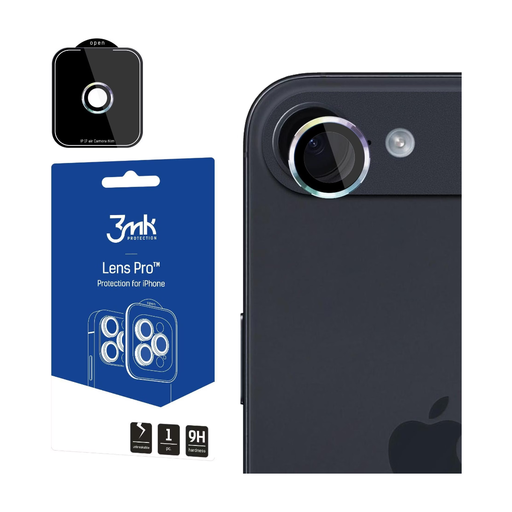
3mk Lens Protection Pro Tempered Glass for iPhone 17 Air - Multicolor
Why This Fits Their Persona: For users who see protection not just as a necessity, but as a fashion statement. The multi-coloured aluminium frame adds a personal touch to the iPhone 17 Air without being obtrusive.
The combination of 9H tempered glass and a sturdy aluminium frame provides robust protection, while its precise manufacturing ensures high light transmittance, thus avoiding the pitfall of reduced image quality.
Combines effective protection with aesthetic customisation. The included installation frame allows for easy and precise application.
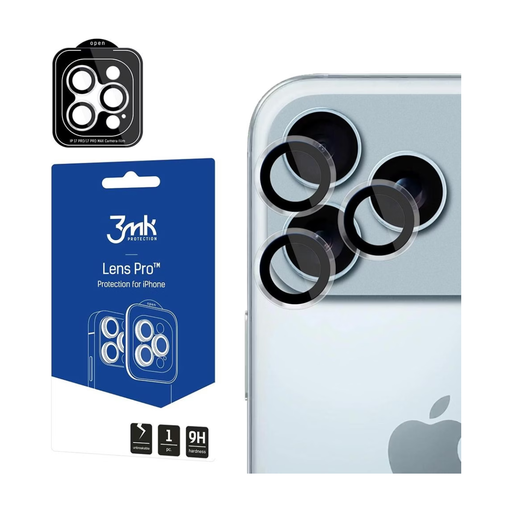
3MK Lens Protection Pro Camera Glass for iPhone 17 Pro Max / 17 Pro Transparent
Why This Fits Their Persona: Ideal for users who want to maximise their device's value retention without altering the smartphone's original design. The focus is purely on invisible yet effective protection.
This protector is designed for optimal clarity, directly addressing the pitfall of reduced image quality. Its model-specific fit for the iPhone 17 Pro and Pro Max prevents compatibility issues with cases and the ingress of dust.
Offers effective scratch and impact protection with maximum transparency to fully preserve the camera's original image quality. The bubble-free application is straightforward.
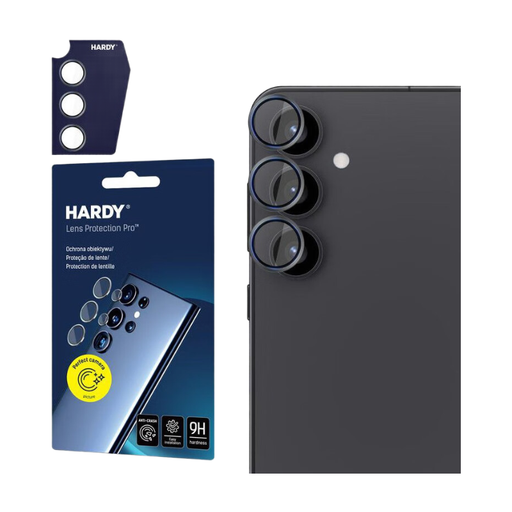
3MK HARDY Lens Protection Pro – Camera Lens Protector – Samsung Galaxy S25 – Black
Why This Fits Their Persona: A user of a Samsung flagship like the S25 is looking for a reliable, functional, and straightforward protective solution. The black design integrates seamlessly with the device's aesthetics.
The included mounting frame ensures precise, bubble-free positioning, actively countering the problem of an improper fit (pitfall #3). The durable glass effectively protects against scratches.
Specifically designed for the Samsung Galaxy S25. The mounting frame significantly simplifies installation and guarantees a perfect result, even for inexperienced users.
Looking for More Options?
We have compiled a complete, up-to-date list of products that fully meet these strict selection criteria.
Frequently Asked Questions (FAQ)
Does a camera lens protector affect photo quality?
A high-quality camera lens protector with high light transmittance and an anti-reflective coating generally does not affect image quality. However, cheap products without these features can lead to blurriness, colour casts, or increased reflections, especially in low-light conditions or when using the flash.
How long does a tempered glass camera protector last?
The lifespan of a tempered glass camera protector depends heavily on usage. It is designed as a sacrificial layer. With everyday use, it can last for many months or even years. However, if it cracks from a fall or a hard impact, it has done its job and should be replaced immediately to maintain protection and avoid scratching the original lens with glass shards.
Can you use a camera lens protector with any phone case?
Not necessarily. Some protectors, especially those that cover the entire camera island, can conflict with very tight-fitting cases. It is advisable to look for products labelled as "case-friendly." These are dimensioned to be compatible with most protective cases.