
Effective Cable Management: How to Conquer Cable Clutter for Good
A glance under the desk or behind the TV stand often reveals a familiar sight: a tangled mess of cables and power adapters, commonly known as cable clutter. This chaos is not only unsightly but can also make cleaning difficult and create potential tripping hazards. A well-thought-out cable organization strategy ensures a tidy aesthetic, greater safety, and a clearer overview of your electronic devices.
This guide introduces various approaches and products for successful cable management. The goal is to provide you with objective information to help you find the perfect solution for your needs—whether it's for your home office, living room, or workshop.
What to Look for When Choosing Cable Organization Solutions
Before you decide on a product, the following considerations will help you make the right choice.
1. Application and Flexibility
The intended location determines the type of solution. Do you primarily want to secure loose charging cables on your desk? Then flexible desk cable holders or magnetic cable clips are a great choice. To hide a power strip completely, a cable management box is ideal. For a permanent and invisible installation of cables along a wall or under a tabletop, a rigid cable raceway is often the right solution. Also, consider how often you change your setup. Reusable systems like hook and loop cable ties offer more flexibility than single-use zip ties.
2. Material and Capacity
Pay attention to the material quality, especially for products that enclose power adapters and power strips. Materials like HIPS (High Impact Polystyrene) are durable and offer good stability. Capacity is also crucial. A cable box must be large enough to accommodate your power strip along with its plugged-in adapters. For cable holders and ties, the maximum cable diameter is an important specification to ensure all your cables will fit.
3. Installation and Handling
Installation should be straightforward. Self-adhesive solutions are convenient but require a clean, dry surface for optimal adhesion. Check if the adhesive surfaces can be removed without leaving residue in case you want to reposition the holders later. Magnetic systems are particularly easy to handle, as cables can be quickly inserted and removed.
Top Picks for Tidy Homes
Here is a selection of products suitable for various cable management needs.
Self-Adhesive Hook and Loop Cable Ties for Data Cables
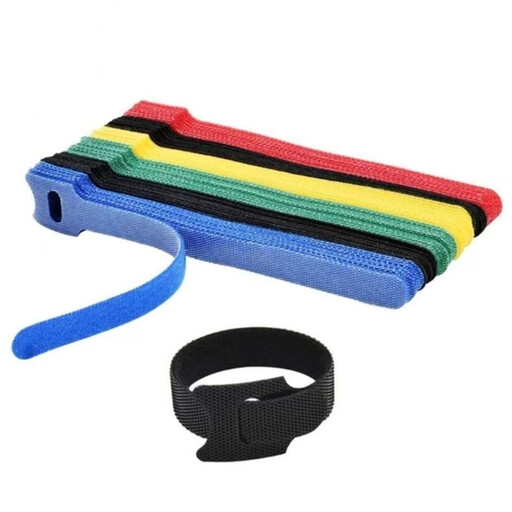
Why It Stands Out These hook and loop cable ties combine the flexibility of Velcro with a practical, self-adhesive backing. This allows cables not only to be bundled but also to be fixed directly to surfaces like the underside of a desk, walls, or inside cabinets. The system is fully adjustable and reusable.
Advantages
- Reusable: Can be opened and closed as many times as needed.
- Flexible: The strap can be cut to the required length.
- Self-Adhesive: The backing adheres to many smooth surfaces.
- Residue-Free: Can be removed when needed without leaving sticky traces.
Who It's For For users looking for a flexible solution to bundle and secure cables that are changed frequently. Ideal for cable organization at a computer workstation, for network cables, or for tidying up charging cables in a drawer.
JOYROOM JR-ZS368 Magnetic Cable Organizer (6 Pcs)
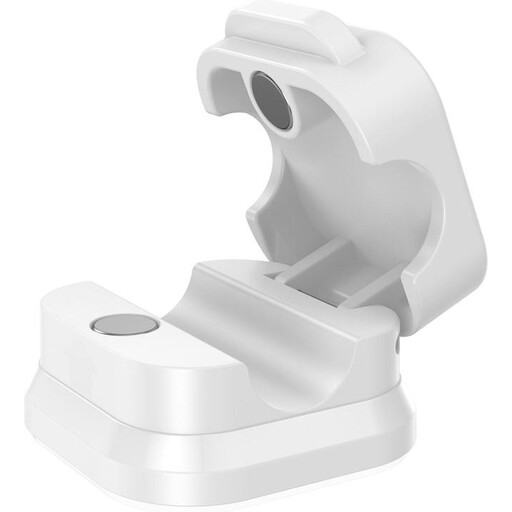
Why It Stands Out These handy gadgets use a magnetic mechanism to hold individual cables securely in place. The base is attached to a surface with strong acrylic adhesive tape, while the magnetic clip grips the cable. This allows for quick, one-handed insertion and removal.
Advantages
- Magnetic Closure: Allows for extremely easy handling.
- Strong Adhesive Base: Adheres reliably to wood, walls, or marble.
- Compact Design: Measuring approx. 1.5 x 2.2 cm, the clips are very discreet.
- Set Contents: The package includes 6 individual organizers.
Who It's For Perfect for anyone who wants to keep individual, frequently used cables like smartphone chargers, headphones, or USB connections within reach and neatly organized on a desk or nightstand. An excellent solution to prevent cables from falling.
Cable Management Box
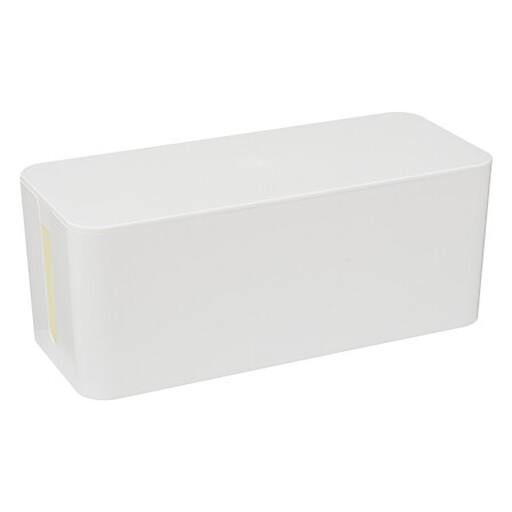
Why It Stands Out This box is a simple yet highly effective method for hiding an entire power strip, along with unsightly power adapters and excess cable lengths. With side openings for cable routing, it creates a clean, organized look and protects electronics from dust.
Advantages
- Complete Concealment: Hides power strips and eliminates cable clutter by making them invisible.
- Enhanced Safety: Reduces tripping hazards and protects plugs from dust and accidental pulling.
- Durable Material: Made from HIPS (High Impact Polystyrene).
- Generous Dimensions: With a length of 32 cm, it fits most standard power strips.
Who It's For For anyone who wants to create a clean and safe environment at the TV stand, under the desk, or in the living area. Especially recommended for households with children or pets to restrict access to electrical connections.
Explore More Options
The products featured here already cover many use cases. However, sometimes a project requires a different approach, such as a flexible cable sleeve for bundling multiple cable runs or a permanently installed cable raceway for wall mounting.
Looking for a more specific solution? Discover our entire range of cable management solutions and find the right product for your project.
Frequently Asked Questions (FAQ)
1. What's the best way to eliminate cable clutter on my desk? A combination of different products is often most effective. Use a cable management box or a cable raceway under the desktop to hide the power strip and larger cables. On the desk surface, desk cable holders or magnetic cable clips help keep charging and peripheral cables organized and within reach. You can also use hook and loop cable ties to bundle cable runs and improve clarity.
2. Are cable management boxes safe? When used correctly, cable management boxes are a safe solution. Look for models made from durable materials like HIPS. It's important not to overload the box with too many heat-generating power adapters and to ensure some air circulation to prevent overheating. They enhance safety by protecting plug connections from dust, liquids, and accidental contact.
3. What's the difference between single-use zip ties and hook and loop cable ties? Traditional zip ties are usually made of plastic and are designed for single use; they must be cut to be opened. Hook and loop cable ties, on the other hand, are reusable. Their Velcro-style closure can be easily opened and closed again. This makes them ideal for cable organization in areas where cables are frequently added, removed, or rearranged.