
Buying a Football: Avoid Common Mistakes and Choose the Right Ball
Choosing a new football seems simple at first glance. But anyone who's ever bought a ball that wore out after just a few games on a rough surface, or felt like a wet sponge in the rain, knows that the details are crucial. Poor material choices and incorrect sizes not only lead to frustration but also to unnecessary expenses. As your Joybuy Product Recommendation Officer, I'll help you navigate the common pitfalls and make an informed decision.
The Most Common Pitfalls When Buying a Football
Before we dive into the key features, let's look at the two most common mistakes that cost buyers money and frustration:
- Ignoring Size and Weight: Many people buy a standard size 5 ball without considering the player's age or intended use. A ball that is too large or heavy can hinder a child's technical development and increase the risk of injury. A lightweight kids' football is essential for the youngest players.
- Underestimating Material and Build Quality: A cheap ball with machine-stitched panels and a basic PVC surface might suffice for an occasional kickabout in the garden. However, its weaknesses quickly become apparent during regular training, especially on hard courts or in wet conditions. The result is water absorption and rapid wear. A water-resistant football with a durable surface is often the smarter choice for use in climates like the UK or Northern Europe.
What Really Matters: The Core Parameters for Your Football
To find the right ball, focus on three objective criteria. These will help you distinguish marketing promises from genuine performance features.
1. Official Ball Size and Recommended Weight
The size of a football is standardised and directly linked to the player's age. Choosing the correct size is fundamental for developing ball control and shooting technique.
- Size 5 Football: The standard ball for adults and youths aged 12 and up. It has a circumference of 68–70 cm and a weight of 410–450 g. This is the size used in professional football and most amateur matches.
- Size 4 Football: A so-called junior ball for children aged 8 to 12. With a circumference of 63.5–66 cm and a weight of 350–390 g, it's lighter and smaller, enabling better ball control for young players.
- Size 3 Football: The ideal kids' football for players under 8 years old. It has a circumference of 58.5–61 cm and a weight of 290–340 g. These balls are often softer and help reduce any fear of ball contact.
- Mini-Football: These balls (size 1 or 2) are not intended for regular play but are excellent for skills training in tight spaces or as fan memorabilia.
2. Surface Material and Construction
The ball's outer shell largely determines its durability, flight characteristics, and how it performs in wet conditions.
- Outer Material: Modern footballs are typically made of polyurethane (PU) or thermoplastic polyurethane (TPU). PU is softer and offers a better ball feel, similar to leather, while TPU is extremely robust and abrasion-resistant, making it ideal for a long-lasting training ball.
- Construction:
- Machine-Stitched: A cost-effective method sufficient for recreational balls. The seams are visible and can absorb water.
- Hand-Stitched: Offers deeper, more robust seams and greater durability.
- Thermally Bonded (Seamless): On high-end balls like the Champions League ball, the panels are thermally fused. This creates a nearly seamless surface that absorbs minimal water and ensures a stable flight path.
3. The Bladder: The Heart of the Ball
The bladder inside is responsible for shape retention and air pressure. A butyl bladder retains air significantly longer than a latex bladder. This means less frequent inflation and more consistent performance, which is a particular advantage for a training ball.
Top Picks for Every Need
Here are some recommendations tailored to specific user profiles that avoid the pitfalls mentioned above.
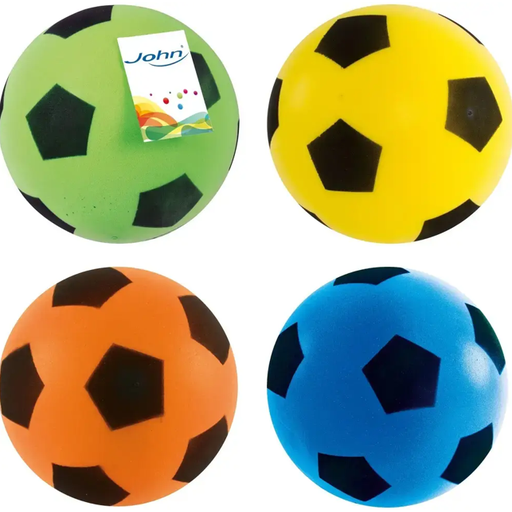
John GmbH 50750 Soft Soccer Ball
Why This Fits Their Persona: Ideal for parents looking for a safe first ball for their children. The soft material minimises the risk of injury and makes it perfect for play both indoors and in the garden.
It avoids the pitfall of incorrect size and hardness. Instead of a scaled-down adult ball, this is a ball specifically designed for toddlers, prioritising safety and fun.
Safe, lightweight foam/plastic material. Promotes coordination and motor skills in young children.
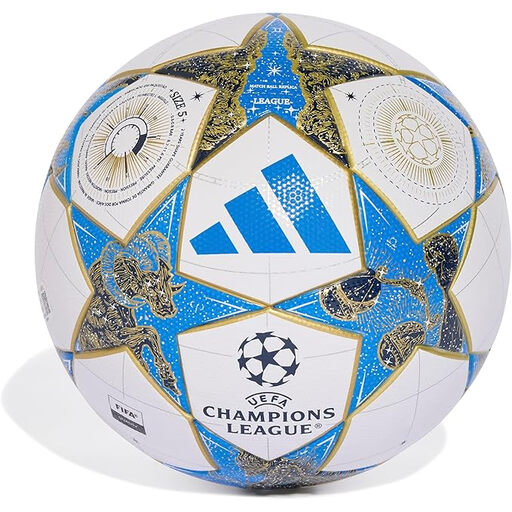
Adidas UCL League 25/26 League Stage Ball
Why This Fits Their Persona: For players who want a high-quality training ball with the characteristics of an official match ball. This Adidas football offers an authentic feel for ambitious training sessions.
This ball solves the problem of poor material quality. Its seamless, thermally bonded construction minimises water absorption and ensures high durability, even with intensive use.
Seamless construction for low water uptake. Butyl bladder for excellent air retention.
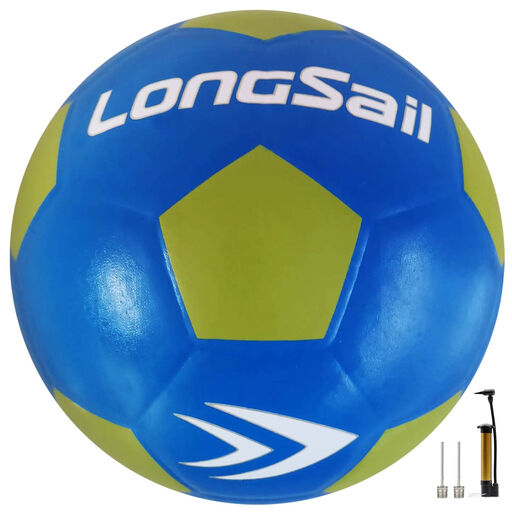
LONGSAIL High-Quality Rubber Soccer, Size 4
Why This Fits Their Persona: A robust and reliable training ball for youth players. The rubber surface is extremely durable and waterproof, ideal for training in all weather and on various surfaces.
This ball has the correct size 4 and the appropriate weight for this age group. It is also designed as a water-resistant football, which solves the problem of water absorption and rapid wear.
Seamless, waterproof foam rubber shell. High durability and good air retention. Comes as a complete set with a pump.
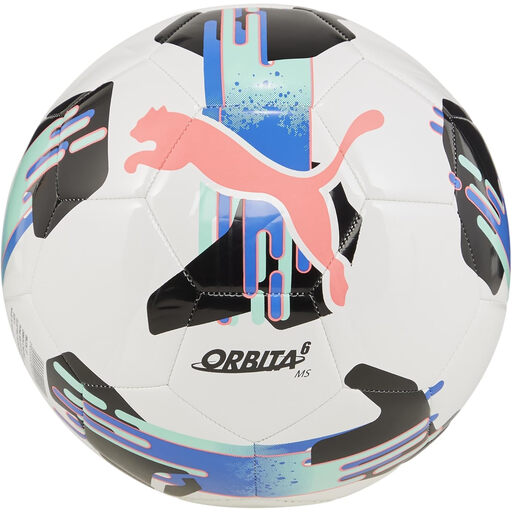
PUMA Orbita 6 MS
Why This Fits Their Persona: A solid all-rounder from a well-known brand. This PUMA football is perfect for regular casual play or as a training ball that offers a great balance between price and performance.
It avoids the trap of overpaying for a casual ball. You get the quality and design of a top brand without having to pay the price of a professional match ball.
Durable TPU outer shell for good longevity. Machine-stitched construction for reliable shape retention in training.
Looking for More Options?
We've compiled a complete, up-to-date list of products that fully meet these strict selection criteria and relevant safety regulations.
Frequently Asked Questions (FAQ)
1. How do I choose the right football size? The choice depends on the player's age. As a rule of thumb:
- Size 5: For players aged 12 and up, and adults.
- Size 4: For children between 8 and 12 years old.
- Size 3: For children under 8 years old. Always check the manufacturer's specifications, as there can be slight variations.
2. How do I properly care for my football to make it last longer? Clean the ball with a damp cloth after use to remove dirt. Store it in a cool, dry place, avoiding direct sunlight or extreme temperatures. Check the air pressure regularly and only inflate the ball with a moistened needle to avoid damaging the valve.
3. What is the difference between a training ball and a match ball? A training ball is designed for maximum durability and abrasion resistance, often featuring a more robust TPU surface and a machine-stitched or hand-stitched construction. An official match ball is optimised for superior flight characteristics and a precise ball feel. It often uses higher-quality materials and a thermally bonded construction but is typically more expensive and less abrasion-resistant. For regular training, a good training ball is usually the more economical and durable choice.