
Buying paprika sauce: how to choose the right flavour, heat and use
If you’re looking to buy paprika sauce, you’ll find a wide selection online, from Hungarian paprika sauce and spicy paprika sauce to dips and international seasoning pastes. However, the product name alone tells you little about whether a sauce is suitable for barbecues, serving on the side or cooking. The key things to check are the ingredients, nutritional information, level of heat, pack size and storage instructions.
Common pitfalls when buying paprika sauce
1. “Spicy” doesn’t have a clear definition
A spicy paprika sauce may get its heat from chilli, pepper or a concentrated spice blend. Many ready-made sauces don’t provide a standardised heat rating like some chilli sauces do. So check the ingredients list:
- Is chilli listed near the top of the ingredients list?
- Does it say only “spices”, or does it specifically mention chilli or chilli pepper?
- Does the sauce also contain sugar or fruit ingredients to round out the flavour?
A sauce with a noticeable amount of chilli is better suited to spicy dishes. For guests who prefer milder flavours, a fruity Hungarian paprika sauce with less chilli may be a better choice.
2. It’s easy to confuse the paprika content with the tomato base
The name paprika sauce doesn’t automatically mean the product has a high paprika content. Some products are mainly made with tomato purée, with paprika as an additional ingredient. That’s not necessarily a drawback, but it does result in a different flavour and consistency.
If you’re looking for a pronounced paprika flavour, check the percentage amounts. For example, Kühne Hungarian Style Pepper Seasoning Sauce lists 10% paprika and 50% tomato purée. Homann lists 9% paprika and 43% tomato purée. These figures help you look beyond the marketing terms.
3. Larger bottles aren’t always better value
A 500 g bottle may look like good value at first glance. But if you only use the sauce as an occasional dip, a smaller pack may be more practical. Many products need to be refrigerated once opened. So check:
- Net quantity in millilitres or grams
- Price per 100 ml or 100 g
- How soon to use the product after opening
- Storage instructions before and after opening
Key criteria at a glance
Ingredients, allergens and dietary information
The ingredients list shows whether a sauce is more tomatoey, sweet, spicy or creamy. Also check the sugar and salt content per 100 ml. For example, Homann lists 14 g of sugar and 2.6 g of salt per 100 ml, while Kühne lists 17 g of sugar and 2.5 g of salt.
Allergen information is particularly important if you have allergies. Depending on the product, gochujang paste often contains soya and wheat. Paprika pesto may contain milk and egg. Fish products in paprika sauce must also be clearly labelled as containing fish. Always follow the information on the product’s packaging.
Consistency and how you’ll use it
For paprika sauce for barbecues, spreadable or slightly runny sauces are usually a good choice to serve with meat, vegetables or bread. A paprika sauce as a dip should be ready to serve straight from the pack. A seasoning paste such as gochujang, on the other hand, is more concentrated and is often adjusted with water, oil or vinegar.
Other product types serve different purposes:
- Pepper sauce: a more peppery flavour, often suited to meat dishes
- Chilli sauce: often hotter, with a runnier consistency
- Paprika pesto: usually creamy, for pasta or spreading on bread
- Fish in paprika sauce: a ready meal or cold side dish, not to be confused with a pure seasoning sauce
Packaging and storage
Depending on the product, unopened sauces can be stored at room temperature or in a cool, dry place. Once opened, they often need to be refrigerated. Fish products usually need to be used sooner. Frozen products such as the Iglo MSC Picante Taster Fillet must be kept at at least -18 °C until you’re ready to prepare them and must not be refrozen after thawing.
Our picks for different types of shoppers
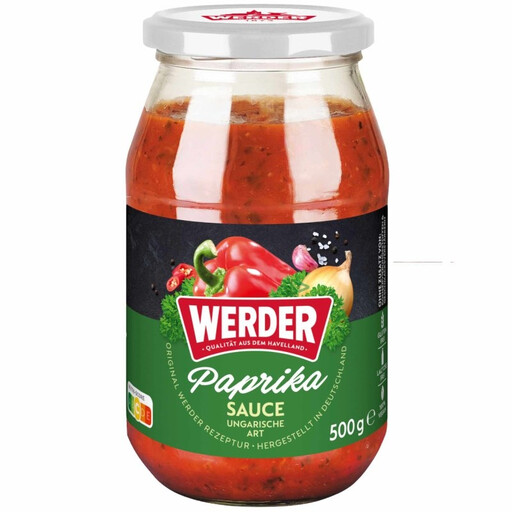
Werder Hungarian Style Pepper Sauce 500g
Why this product suits this shopper: The 500 g pack is a good choice for households that want to enjoy Hungarian paprika sauce regularly with side dishes, meat or vegetables.
The listed quantities show 9% paprika and 15% tomato purée. This makes it easier to understand what the product is made from before you buy.
500 g pack; 77 kcal and 2 g of salt per 100 g, according to the product information.
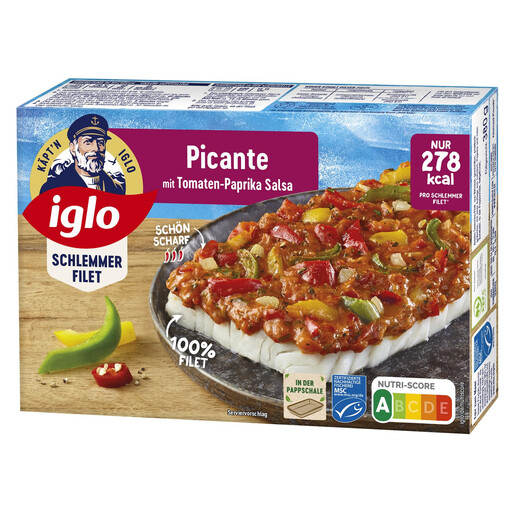
Iglo MSC Picante Taster Fillet – With Tomato and Paprika Salsa 380 g
Why this product suits this shopper: A good option if you’re looking for fish in paprika sauce as a complete frozen meal, rather than as a separate seasoning.
The product description lists 52% Alaska pollock fillet and 48% tomato and paprika salsa. Preparation and storage instructions are clearly stated.
MSC-certified wild-caught fish, according to the product information; 380 g total; can be cooked from frozen.
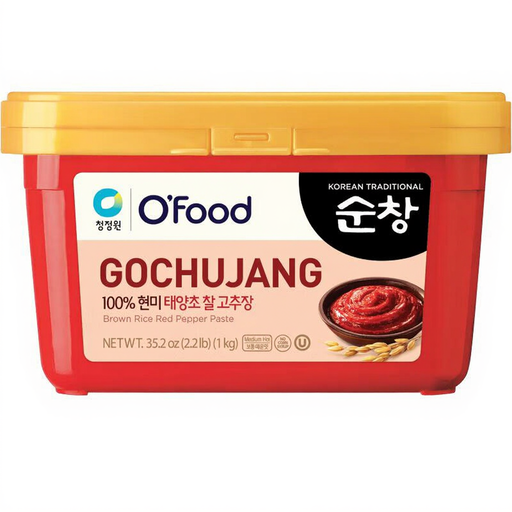
O'Food Gochujang Hot Red Pepper Paste x 1 kg
Why this product suits this shopper: This large pack of gochujang paste is aimed at frequent cooks who enjoy international cuisine. Use it in bibimbap, marinades, soups and Korean sauces.
The 1 kg pack is designed for regular use. With 6.4 g of salt and 25 g of sugar per 100 g, it’s best used sparingly.
1 kg pack; fermented Korean chilli paste, according to the product description; contains soya.
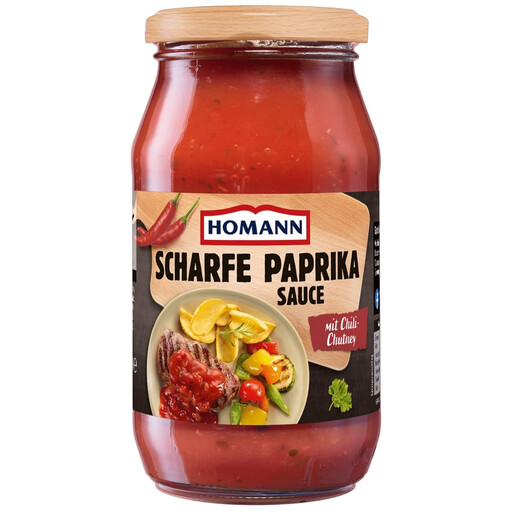
Homann Spicy Hungarian Style Paprika Sauce 400 ml
Why this product suits this shopper: Its creamy consistency and suggested uses as a dip, sauce or marinade make it a good match for barbecues and easy-to-prepare sides.
The product description mentions chutney and a subtle chilli note. This gives you a better idea of the flavour to expect than a vague claim about heat.
400 ml pack; suitable as a dip, sauce or marinade; refrigerate after opening.
Looking for more options?
We’ve put together a complete, regularly updated list of products that meet these strict selection criteria and fully comply with the safety regulations in force in the EU.
FAQs about buying paprika sauce
Which paprika sauce is best for barbecues?
Ready-to-serve sauces with a creamy or slightly thick consistency are handy for barbecue dishes. According to the product information, Homann can be used as a dip, sauce or marinade. A more tomato-based sauce such as Werder or Kühne also goes well with meat, vegetables and side dishes. The right choice depends on how spicy or sweet you like it, and how much salt you want.
How long does paprika sauce keep after opening?
It depends on the product. Many long-life sauces need to be refrigerated after opening and used within a certain time. Fish in paprika sauce often has a shorter shelf life; Appel, for example, recommends eating opened portions within two days. Always follow the packaging instructions and use-by or best-before information.
What’s the difference between paprika sauce and gochujang paste?
Paprika sauce is usually ready to serve and used as a side or dip. Gochujang paste is a concentrated, fermented chilli paste with a sweet and savoury flavour. It’s often used in small amounts for cooking, marinating or making your own sauces. With gochujang, pay particular attention to information about soya, wheat, sugar and salt.