
Buy Konjac Jelly: What to Look for in Flavour, Ingredients and Texture
Konjac Jelly combines fruity flavour with a springy, chewy texture. These little jelly snacks are perfect for on the go, a break at work, or sharing with friends. The range includes classic konjac jelly, Japanese jelly snacks and plant-based fruit gums.
If you're looking to buy konjac jelly, don't let flavours like Grape Jelly, Peach Jelly or Mango Jelly be your only guide. Details on fruit content, energy value, ingredients and packaging give you a much better idea of whether a product suits your own snacking profile.
Common Pitfalls When Buying Konjac Jelly
1. "Fruity" doesn't automatically mean high fruit content
An intense fruit flavour can come from flavourings, acidity regulators and colourings. That's why it's worth checking the ingredients list and the quantitative ingredient declaration. For example, the Cool Strong Konjac Jelly Red Grape states a blended fruit juice made from red grape pulp, red grape juice and apple juice, with a fruit content of at least 40%. In contrast, the WANT WANT Konjac Jelly Orange lists concentrated orange juice at just 0.1%.
Both products may taste fruity, but they are not directly comparable when it comes to the declared juice content.
2. "Low-calorie" is not a synonym for sugar-free
Always refer to the nutritional information per 100 grams. This makes it easier to compare different pack sizes. The WANT WANT varieties Orange, Strawberry and Apple give 89 and 89.4 kcal per 100 g respectively. The TARAMI Oishii Konjac Jelly Muscat states 54 kcal per 100 g.
However, a low energy content doesn't automatically mean it's sugar-free. The TARAMI Jelly lists 11.5 g of sugar per 100 g. Even with a low-calorie snack, the ingredients list and nutrition table remain essential decision-making tools.
3. Texture varies from one jelly to another
Konjac powder, pectin and other gelling or thickening agents all affect the mouthfeel. Some products are softer and smoother, while others are noticeably more elastic. If you prefer a chewy jelly, look for specific texture descriptions rather than relying solely on the product name.
For jellies in individual portions, the safety warning is also crucial: several products advise that the contents should be chewed carefully and not swallowed whole. They are not suitable for young children. Lids or packaging parts should also not be put in the mouth.
These Parameters Should Be Checked Before You Buy
Fruit content and flavour
The selection ranges from classic Grape Jelly through Peach Jelly and Strawberry Jelly to Orange Jelly, Mango Jelly and Muscat Jelly. To make an informed choice, ask yourself the following questions:
- Does it contain fruit juice, fruit pulp or just flavouring?
- What is the declared fruit content?
- Does the product contain additional apple or grape components?
- Does a sweet or more tart profile suit how you plan to eat it?
For example, the Cool Strong Konjac Jelly Peach states a fruit content of at least 25%, while the Strawberry and Red Grape varieties each declare at least 40% blended fruit juice.
Nutritional values and portion size
A 120 g pack is ideal for a single snack portion. Depending on the variety, the Cool Strong Konjac Jelly ranges from 107 to 111 kcal per 100 g according to the product information. A 200 g pack offers more for stocking up or sharing. The WANT WANT varieties Orange and Strawberry show 89.4 kcal per 100 g.
Japanese fruit gums tend to have a higher energy content: the KASUGAI Frutia Grape Gummy contains 347 kcal per 100 g according to its nutritional information, and the KASUGAI Frutia Peach Gummy 343 kcal per 100 g. These products are therefore better classified as classic fruit jellies with a konjac-like, chewy feel, or as plant-based sweets, rather than as low-calorie jelly alternatives.
Ingredients, allergens and plant-based suitability
"Plant-based" should always be verified against the product information. Both KASUGAI Frutia Gummies are described as plant-based and contain apple juice, concentrated fruit juice and pectin, among other ingredients. For the other products, you'll need to check the recipe separately.
None of the 14 major EU allergens are automatically excluded from every product. The TARAMI Oishii Konjac Jelly Muscat does not list any of the 14 major EU allergens in its recipe, but it does mention possible traces of various ingredients. If you have allergies or intolerances, always refer to the current packaging label.
Our Selection for Different User Profiles
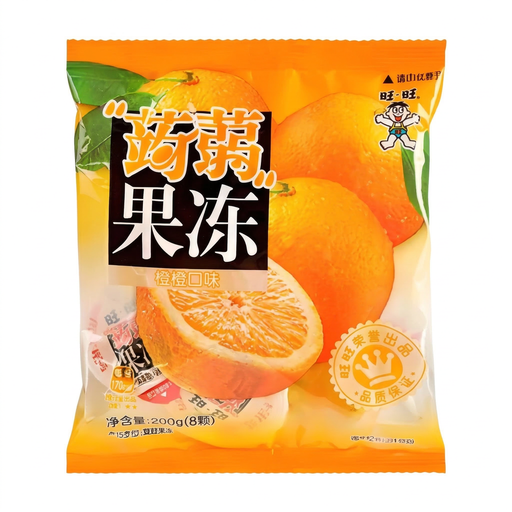
WANT WANT Konjac Jelly Orange Flavor 200g
Why this product fits the profile: The 200 g pack offers a larger quantity for stocking up or sharing. At 89.4 kcal per 100 g, the declared energy content is relatively low within this selection.
The nutritional information and pack size are clearly stated, making it easy to compare the contents with smaller 120 g portions.
200 g content, orange flavour and a smooth, chewy consistency according to the product description.
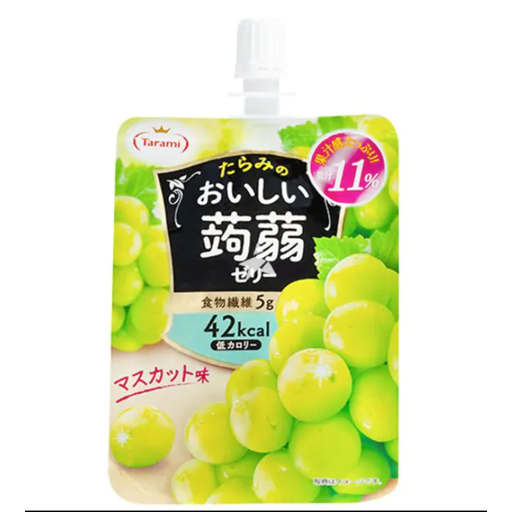
TARAMI Oishii Konjac Jelly Muscat 150g
Why this product fits the profile: The Muscat flavour, Japanese origin and detailed ingredient and nutritional information appeal to buyers who carefully compare product details before purchasing.
The energy content of 54 kcal per 100 g is listed alongside 11.5 g of sugar and 1.2 g of fibre, preventing a one-sided focus on calorie count alone.
150 g portion, Muscat grape flavour and an elastic consistency thanks to the declared konjac powder.
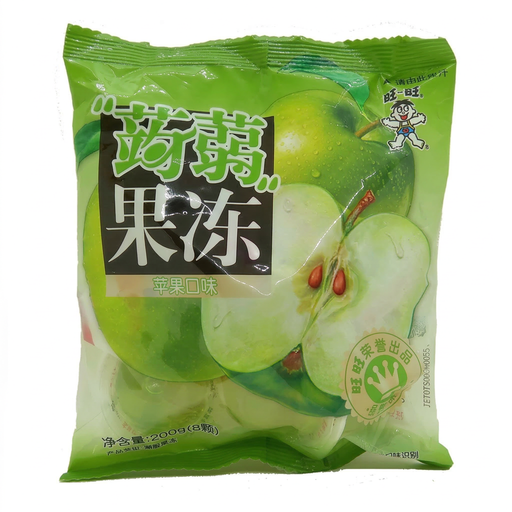
WANT WANT Konjac Jelly Apple Flavor 200g
Why this product fits the profile: The portable 200 g pack is designed for regular snack breaks, the desk drawer or sharing occasions.
The product information states 89 kcal per 100 g and the recommended method: open, chew carefully and do not swallow whole.
Apple flavour, chewy texture and 200 g net weight in a resealable snack format.
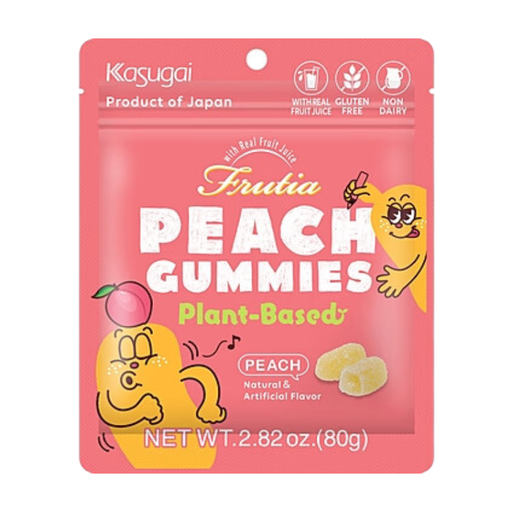
KASUGAI Frutia Peach Gummy (Plant-Based) 80g
Why this product fits the profile: The recipe is described as plant-based and combines peach juice with pectin. The format is ideal for lovers of classic, firm fruit gums.
This selection does not confuse plant-based with low-calorie: 343 kcal and 71 g of sugar per 100 g are clearly stated in the nutritional information.
Plant-based recipe according to the product description, peach flavour and an 80 g bag with a resealable closure.
Looking for more options?
We've put together a full, regularly updated list of products that fully meet these strict selection criteria and the safety regulations in force in the EU.
FAQ about Konjac Jelly
Is konjac jelly a low-calorie snack?
That depends on the recipe and variety. In this selection, the values range from 54 kcal per 100 g for the TARAMI Muscat to 111 kcal per 100 g for several Cool Strong varieties. Plant-based fruit gums like KASUGAI Frutia are significantly higher at over 340 kcal per 100 g. The nutrition table is therefore the deciding factor, not just the name "jelly".
How should konjac jelly be eaten?
The product is usually ready to eat and can be consumed straight from the packet. According to the product descriptions, some varieties taste particularly good when chilled. The contents should be chewed slowly and carefully. Do not swallow the jelly whole and always follow the safety instructions on the packaging.
How long does konjac jelly keep?
The best-before date is printed on each individual pack. Unopened products should be stored according to the storage instructions, usually in a cool, dry place away from direct sunlight. Once opened, reseal the bag and consume the contents promptly. If any information differs, always follow the labelling on the specific product.