
Buying Jam and Fruit Spread: How to Choose the Right Products for Breakfast and Baking
Anyone looking to buy jam and fruit spread will find a wide choice of fruit varieties, jar sizes and recipes online. However, products such as strawberry jam, apricot jam, raspberry jam, orange marmalade and exotic varieties can differ considerably. Terms such as ‘less sugar’, ‘vegan’ or ‘organic’ should also be checked against the ingredients list and nutritional information.
For households in Germany, three questions are particularly important: How high is the fruit content? How sweet is the spread really? And are the consistency and jar size suitable for the intended use?
Common pitfalls when buying jam and fruit spread
1. Do not confuse fruit imagery with fruit content
An eye-catching image of strawberries, raspberries or oranges says little about the actual recipe. The key information is the quantitative ingredients declaration, such as ‘50 g of fruit per 100 g’. For products containing several fruits, check the order in which they are listed: the fruits named first generally make up the largest proportions.
For example, a strawberry spread may contain 40% strawberries and 10% redcurrants. A forest fruit spread, meanwhile, may be made with raspberries, blueberries, blackberries and other fruits. The product name alone does not always describe the exact composition.
2. ‘Less sugar’ does not mean sugar-free
A reduced-sugar jam may contain less sugar than a traditional recipe while still having a considerable sugar content. For comparisons, the nutritional table per 100 g is the most important reference. For example, a fruit spread containing 37.4 g of sugar per 100 g has a lower value than a recipe containing around 48 to 55 g, but it is not sugar-free.
Sugar syrups, glucose-fructose syrup and maltose syrup should also be taken into account when checking the ingredients list. Ingredients are generally listed in descending order by quantity.
3. Do not underestimate jar size and usage time
A large jar can be practical for families or regular baking. However, if you only occasionally use fruit spread for bread and breakfast, you should consider its shelf life once opened. Opened jam, jelly and fruit spread should generally be stored in the fridge. Using a clean, dry spoon reduces the risk of introducing additional moisture or food residue into the jar.
Three important selection criteria
Fruit content and recipe
First, compare the fruit content and the type of fruit used. A spread containing 55% raspberries has a different composition from a traditional preserve with a significantly higher sugar content and lower fruit content. In apricot jam, pieces of fruit can provide a coarser texture, while smooth varieties are finely puréed and sold without stones.
Consistency is particularly important for baking recipes:
- Chunky jam is suitable for toast, bread rolls and fillings with visible pieces of fruit.
- Smooth fruit spread can be spread evenly over dough, pancakes or pastries.
- Jelly is usually made from fruit juice and has a smooth, spreadable consistency.
- A forest fruit spread combines several berry flavours and can be used as a topping for yoghurt or desserts.
Sugar content and nutritional values
In addition to carbohydrates and sugar, you can compare energy, salt and fibre. The values are given per 100 g, allowing you to compare products directly regardless of jar size.
If you are looking for vegan jam, you should also check the labelling and ingredients. Pectin is a commonly used gelling agent of plant origin. Even so, a vegan claim should be confirmed directly on the product or in the product information.
Organic labelling, packaging and storage
For an organic fruit spread, look for the EU organic logo or the relevant inspection body number. For example, Alnatura Organic Raspberry Fruit Spread lists the inspection body as AT-BIO-301. The product description also highlights its organic ingredients, vegan properties and lactose-free status.
Jam in a glass jar can be reused after the contents have been consumed and protects the contents during storage. Before buying, however, compare the net quantity with your expected consumption. For a single-person household or a small breakfast household, 170 to 270 g may be suitable; families and frequent users are more likely to prefer 380 to 450 g.
Our selection by user profile
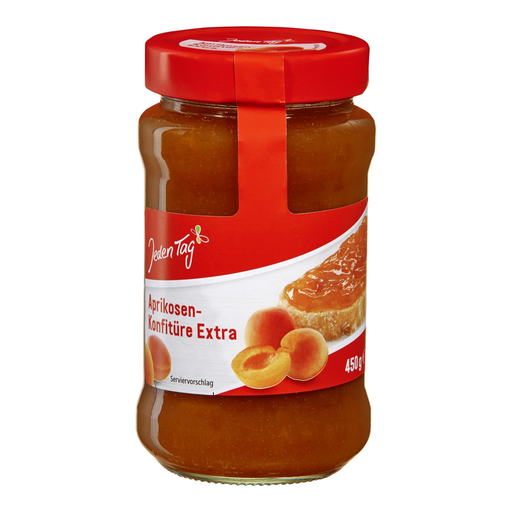
Jeden Tag Apricot Extra Jam 450g
Why this product suits the profile: The 450 g jar is designed for regular use and offers a chunky apricot recipe with 50 g of fruit per 100 g.
The quantity of fruit is clearly stated in the product information rather than being conveyed solely through the imagery.
450 g of contents, glass packaging and a chunky consistency; refrigerate after opening.
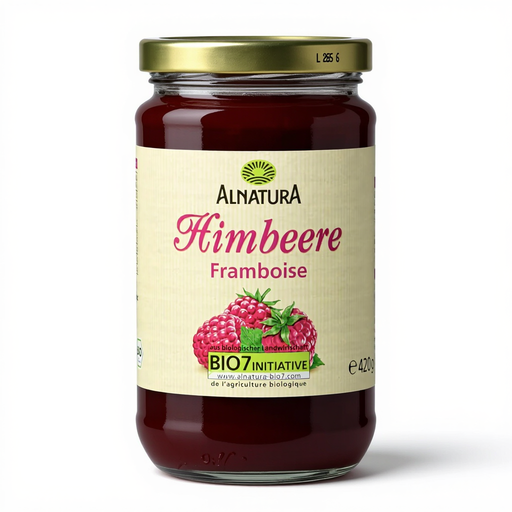
Alnatura Organic Raspberry Fruit Spread 420g
Why this product suits the profile: According to the product information, the spread contains 55% raspberries and is made from organically farmed ingredients.
The organic status, fruit content and nutritional values are listed separately in the product information and can be checked before purchase.
420 g jar, 55% raspberries, organic-certified, vegan and lactose-free according to the product description.
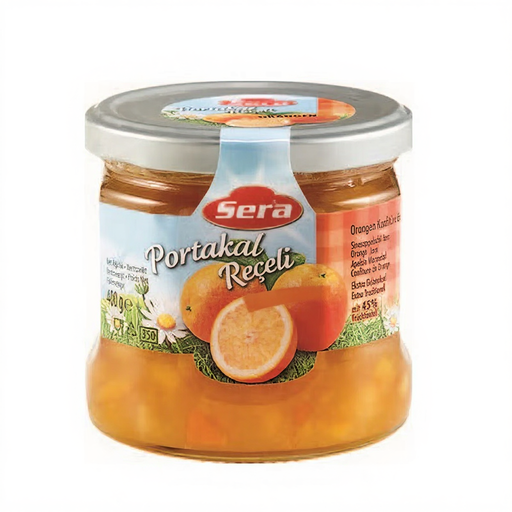
Sera Orange Jam 400g Turkish
Why this product suits the profile: This Turkish orange marmalade adds an international speciality to the selection and is also suitable for pastries and desserts.
The product description states the fill quantity, carbohydrate content and storage instructions, making it easier to assess the expected flavour and intended use in advance.
400 g jar, visible orange pieces according to the description, and versatile enough for bread, cakes and desserts.
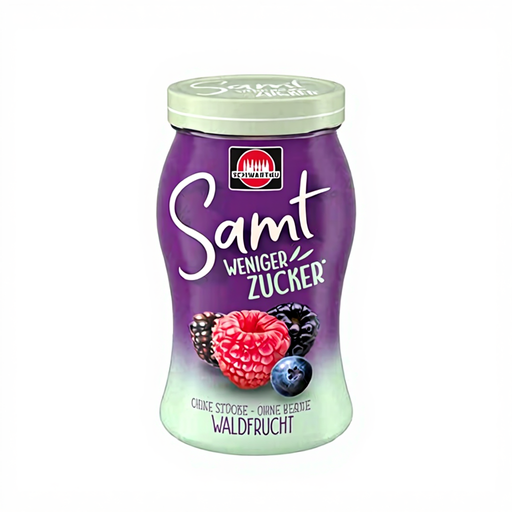
Schwartau Samt Less Sugar Forest Fruits Fruit Spread 255g
Why this product suits the profile: According to the product information, the recipe contains 30% less sugar than the classic Schwartau Samt variety.
The comparison refers to a specifically named reference recipe; the sugar value per 100 g is also provided.
50% fruit blend, 36.7 g of sugar per 100 g and 255 g of contents; refrigerate after opening.
Looking for more options?
We have put together a complete, regularly updated list of products that fully meet these strict selection criteria and the safety regulations applicable in the EU.
More flavours for your basket
Depending on your preferences, you can expand your selection with:
- Strawberry jam: ideal for toast, bread rolls, pancakes and households with children.
- Raspberry jam: often has a delicate sharpness; seedless varieties are practical for creams and fillings.
- Cherry jam: a good match for quark, cakes, waffles or savoury combinations.
- Jelly: a smooth texture made from fruit juice, for example as a bread spread or glaze.
- Vegan jam: check the labelling and ingredients list, as not every recipe is automatically vegan.
- Fruit spread for bread and breakfast: match the consistency, jar size and refrigeration instructions to your daily consumption.
FAQ about buying jam and fruit spread
How long does jam last after opening?
This depends on the recipe, the manufacturer’s instructions, hygiene and storage. Opened jars should be kept tightly sealed in the fridge and used within the period recommended on the packaging. Use a clean spoon and check the smell, appearance and lid before using the product again.
What is the difference between jam, preserve, jelly and fruit spread?
‘Jam’ is a widely used general term in everyday German. By law, specific names such as preserve, jelly and jam are subject to defined requirements concerning the type and composition of the fruit. Depending on the recipe, a fruit spread may differ from these products and is often described by its fruit content, consistency or special ingredients.
What jar size is suitable for a household?
For occasional use, 170 to 270 g is often sufficient. Families, households that have breakfast regularly and people who bake with jam may find it easier to plan with 380 to 450 g. The key consideration is whether the jar can be stored hygienically after opening and used within the recommended period.