
Body Fat Scale Buyer's Guide 2026: A Technical Guide
A body fat scale, also known as a body composition scale or diagnostic scale, is an instrument for the detailed analysis of your body composition. Unlike a conventional bathroom scale that only measures total weight, this type of scale uses bioelectrical impedance analysis (BIA) to determine additional health-related metrics. This process involves sending a weak, imperceptible electrical impulse through the body. Since different tissue types like fat, muscle, and water offer different levels of resistance to the current, the device can calculate their respective proportions.
Modern devices offer a wide range of measurements, including body fat percentage, muscle mass, water percentage, bone mass, and Body Mass Index (BMI). Many models are designed as smart scales and can connect to an app-connected scale on your smartphone via Bluetooth or Wi-Fi to track and analyse progress over the long term.
Selection Criteria for a Body Composition Scale
Choosing the right scale depends on your individual needs regarding measurement accuracy, feature set, and connectivity. The following technical parameters should be considered when making your decision.
Measurement Method and Number of Electrodes
The accuracy of the BIA measurement is significantly influenced by the number and position of the electrodes.
- 4-Electrode System: Standard models have four electrodes on the standing platform. Here, the electrical current is primarily limited to the lower body. The composition of the upper body is then extrapolated based on statistical data, which can lead to discrepancies.
- 8-Electrode System: Advanced models use an additional handle with four more electrodes. This enables a segmental analysis, where the arms, legs, and torso are measured separately. The result is a more nuanced and precise assessment of body composition.
Connectivity: Bluetooth Scale vs. Wi-Fi Scale
The method of data transfer to the companion app is a key convenience feature.
- Bluetooth: A Bluetooth scale requires the smartphone to be nearby with the app open for synchronisation. Data is transferred directly from the device to the phone.
- Wi-Fi: A Wi-Fi scale connects directly to your home network and automatically syncs measurement data to a cloud server. The user can access the data at any time via the app, without the smartphone needing to be within range during the weigh-in.
Features and Metrics
The range of data analysed varies by model. Basic metrics include weight, body fat, and a BMI calculator. Advanced models also measure:
- Muscle mass percentage
- Body water percentage
- Bone mass
- Visceral fat (abdominal fat)
- Basal Metabolic Rate (BMR) and Active Metabolic Rate (AMR)
- Metabolic age
- Heart rate
App Integration and User Profiles
The quality of the software is crucial for practical usability. A good app should offer a clear presentation of historical data, enable goal setting, and allow for the management of multiple user profiles. This is particularly relevant for families or training groups, as the scale automatically assigns the measurements to the correct profile.
Our Top Body Fat Scale Picks for 2026
Based on technical specifications and practical utility, we present three models with different specialisations.
Beurer Smart Bluetooth Analyser scale
-
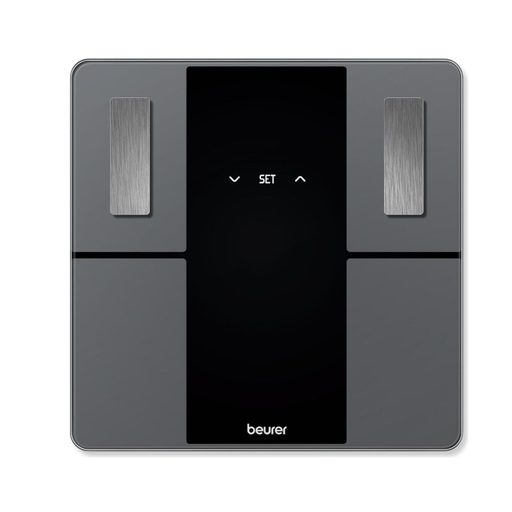
Product Feature Analysis: The Beurer BF 500 is a bathroom scale with body analysis that focuses on the essential functions for health monitoring. It measures weight, body fat, body water, muscle percentage, and BMI via stainless steel electrodes on the platform. Data is transferred via Bluetooth to the "Beurer HealthManager Pro" app. A special design feature is the "Magic LED display," which is only visible during measurement. The automatic user recognition for up to eight people makes it suitable for family use.
-
Advantages:
- Automatic data synchronisation via Bluetooth
- Supports up to 8 users with automatic recognition
- Modern design with an invisible display
- Safety glass platform for stability
- Maximum weight capacity of 180 kg
-
Best for: This model is ideal for beginners and families looking for a reliable smart scale to track basic body metrics, who also value ease of use and an established brand.
RENPHO Elis Nova Smart Wi-Fi Body Fat Scale
-
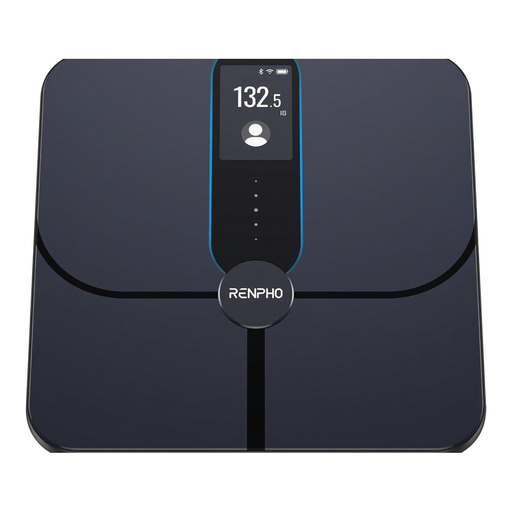
Product Feature Analysis: The RENPHO Elis Nova stands out with its dual connectivity. It supports both Wi-Fi for fully automatic synchronisation and Bluetooth as an alternative. The large TFT colour display shows multiple metrics directly on the scale, without needing to open the app. It measures 13 different body metrics and is conveniently charged via a USB-C cable.
-
Advantages:
- Dual connectivity (Wi-Fi & Bluetooth) for maximum flexibility
- Large TFT colour display for direct viewing of metrics
- Rechargeable via USB-C
- Measures 13 body composition values
- Special modes for athletes and babies
-
Best for: This device is aimed at tech-savvy users who appreciate the convenience of automatic Wi-Fi synchronisation and want to read their key data directly on a clear display, without having to grab their smartphone for every measurement.
8-Electrode Smart Body Fat Scale with TFT Colour Screen
-
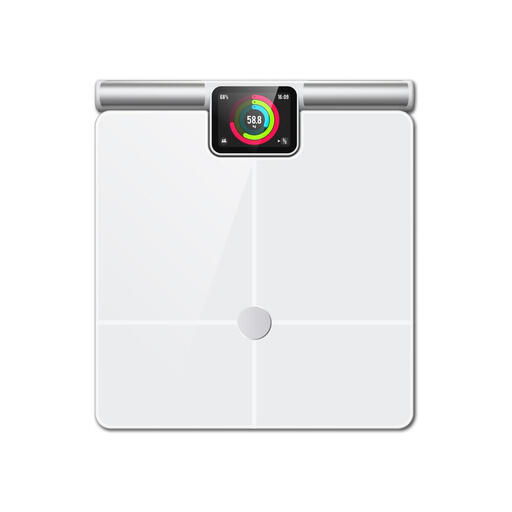
Product Feature Analysis: This model uses advanced 8-electrode technology with dual-frequency BIA. With its additional handle, it enables a segmental five-compartment analysis of the body (arms, legs, torso) and provides 56 detailed metrics. The results are displayed on a 3.36-inch TFT colour screen. Connectivity is also dual (Wi-Fi + Bluetooth). Additionally, it includes a sensor for measuring static heart rate.
-
Advantages:
- 8-electrode system for a segmental and detailed body analysis
- Dual-frequency BIA for enhanced measurement precision
- Comprehensive analysis with 56 different metrics
- Integrated static heart rate measurement
- Dual connectivity (Wi-Fi & Bluetooth) and a large colour display
-
Best for: This device is designed for ambitious athletes, fitness enthusiasts, and data-driven individuals who require the most detailed and segmented analysis of their body composition to optimise their training and nutrition.
Discover More Models
The market for body composition scales is diverse, offering devices for a wide range of needs and budgets. If the models presented here don't fully meet your specific requirements, you can find a broader selection of devices with various feature sets in our main category.
Discover more body composition scales on Joybuy.de
Frequently Asked Questions (FAQ)
1. How accurately can a body fat scale measure body fat? The accuracy of scales using bioelectrical impedance analysis (BIA) depends on several factors. 8-electrode models tend to provide more nuanced results than 4-electrode models due to segmental measurement. For consistent and comparable results, it is important to always take measurements under the same conditions: ideally in the morning, after using the restroom, on an empty stomach, and with a similar hydration status. The absolute values may differ from professional medical measurement methods (e.g., a DEXA scan), but they are well-suited for tracking trends and changes over time.
2. What is the difference between a body fat scale and a regular bathroom scale? A regular bathroom scale measures only total body mass (weight). A body fat scale is a diagnostic scale that, in addition to measuring weight, analyses the body's composition. It provides values such as the percentage of body fat, muscle mass, water, and bone mass. This allows for a more qualified assessment of weight changes, as an increase in muscle mass with a simultaneous decrease in fat, for example, would not be visible on a regular scale.
3. When is the best time to take a measurement with a body composition scale? For the highest comparability of measurement data, it is recommended to always weigh yourself at the same time of day and under the same conditions. The optimal time is right after waking up and after the first visit to the restroom, before breakfast or drinking any liquids. Measurements taken after exercise, after large meals, or when dehydrated can distort the electrical resistance results and thus the calculated body composition values.