
Bluetooth Headphone Purchase Guide: Avoiding Common Pitfalls
The search for the right Bluetooth headphones can quickly become overwhelming. The market is flooded with technical specs, marketing promises, and a bewildering number of models. As a Joybuy Product Recommendation Officer, I see the most common pitfalls every day and how clever marketing can lead users to make a purchase they later regret.
This guide is designed to help you navigate these traps. We won't focus on exaggerated advertising slogans, but on the critical features that separate a great pair of headphones from an unsuitable one. The goal is for you to make an informed decision that fits your daily life—whether for your commute, outdoor workouts, or focused hours at the office.
The 3 Most Common Traps When Buying Wireless Earbuds
Before we dive into the technical details, let's highlight the three most common issues that lead to disappointment:
- Misleading Battery Life Claims: Many manufacturers advertise impressive figures like "50 hours of playback." However, this number often refers to the total time including multiple recharges in the charging case. The crucial metric is the battery life on a single charge. If this is too short, you'll constantly have to interrupt your music or phone calls.
- "Noise Cancelling" That Doesn't Work: The term "noise cancellation" is used loosely. True Active Noise Cancellation (ANC) uses microphones and counter-frequencies to actively block out ambient sounds. Many budget-friendly models only offer passive isolation through their in-ear fit, which is hardly sufficient in loud environments like a subway.
- Poor Microphone Quality for Calls: Excellent audio for music playback doesn't automatically mean you'll be understood clearly on phone calls. Many True Wireless Earbuds struggle to isolate your voice from background noise, making them unusable for professional calls.
What Really Matters: The Key Parameters
To avoid the pitfalls mentioned above, you should carefully examine three technical specifications. These reveal the true everyday performance of a pair of headphones.
1. Active Noise Cancellation (ANC) and Its Variants
Headphones with noise cancelling are often a necessity for commuters and professionals in noisy environments. Look for the term "Active Noise Cancellation". Some models even offer adaptive ANC, which automatically adjusts the level of cancellation to your surroundings—ideal for moving between the office, the street, and public transport. Manufacturer claims about reduction in decibels (dB) can be an indicator of effectiveness but should always be considered in context.
2. Battery Life and Charging Features
Check two values: the runtime of the earbuds themselves and the total runtime with the charging case. For a typical workday, 5–7 hours of continuous playback is a good benchmark. A long battery life becomes especially valuable when a fast-charging feature is included. Functions like "10 minutes of charging for 2 hours of playback" can be a game-changer in daily use.
3. Form Factor and IP Rating
The choice of form factor heavily depends on your intended use:
- In-Ear Headphones: Offer good passive noise isolation and a secure fit when properly sized. They are a great choice for immersive music and concentration.
- Open-Ear Headphones: Rest outside the ear canal, allowing you to remain aware of your surroundings. This makes them a safe choice for sports headphones worn while running or cycling outdoors.
- The IP rating indicates how well a device is protected against the ingress of dust and water. For sports, they should be at least IPX4 (protection against splashing water from all directions) or, even better, IPX5 (protection against water jets) to withstand sweat and rain. So-called waterproof headphones for swimming require a higher classification like IPX7 or IPX8.
Recommended For Your Needs
Here are some models that represent a smart choice for specific user groups, based on objective features.
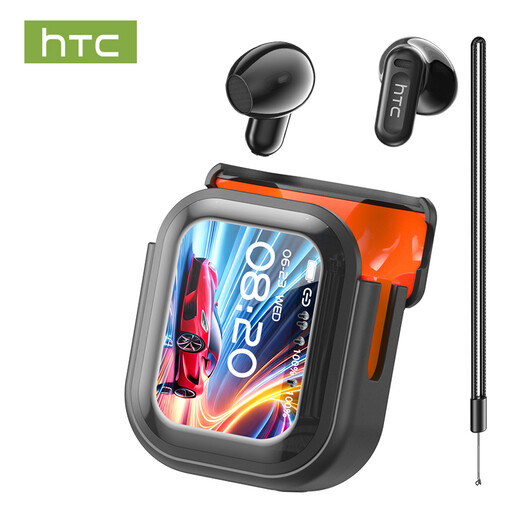
HTC NE20 Wireless Bluetooth 5.4 Earphones
Why it's a good fit: Engineered for changing environments. The adaptive noise cancellation automatically adjusts to places like cafés or public transport, while the long total battery life is sufficient even for long journeys.
This model counters the "ineffective noise cancelling" trap with a specified adaptive hybrid ANC technology that, according to the manufacturer, reaches up to -50 dB and intelligently adapts to the environment.
The charging case features an LED display for direct control of functions, making it easier to operate without a smartphone. The total runtime of up to 55 hours is a clear benefit for users who are always on the go.
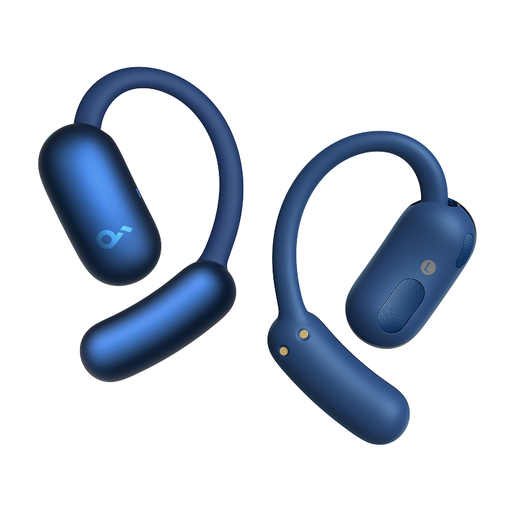
Soundcore AeroFit 2 by Anker Open-Ear Headphones
Why it's a good fit: The open-ear design ensures that ambient sounds like traffic remain audible. Adjustable ear hooks and an IP55 rating make it a reliable companion for intense workouts in any weather.
Instead of an insecure in-ear fit, this model offers a stable hold with adjustable hooks. The IP55 certification is a clear, verifiable specification for protection against dust and water jets, making it more meaningful than vague marketing claims.
The combination of an open-ear design for safety and a long battery life of up to 10 hours per charge (42 hours with the case) is specifically tailored to the needs of endurance athletes.
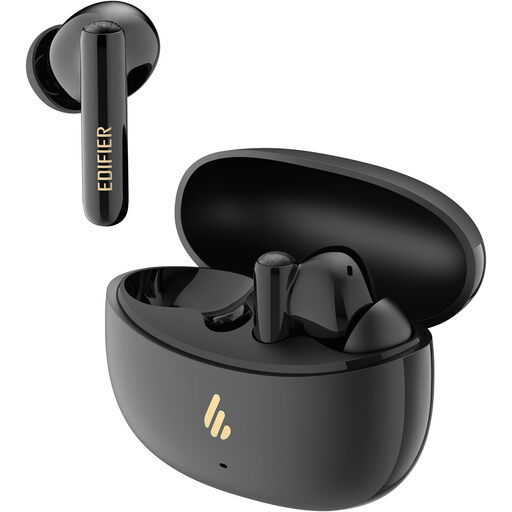
Edifier X5 Pro Active Noise Cancelling Earbuds
Why it's a good fit: A versatile all-rounder that covers the most important features for modern daily life: hybrid ANC for focused work, an AI-powered microphone system for clear calls, and solid battery life.
This model directly addresses the poor call quality trap by highlighting an "AI algorithm for clear calls." Furthermore, its hybrid ANC is a more specific claim than a generic "noise cancelling" promise.
The combination of ANC, good call quality, IP55 protection, and app customisation offers a high degree of functionality for various scenarios, from the office to light sports, all in a single product.
Looking for more options?
We have compiled a complete, up-to-date list of products that fully meet these strict selection criteria and UK safety regulations.
Frequently Asked Questions (FAQ)
What does the IP rating on headphones really mean? The IP (Ingress Protection) rating consists of two digits. The first digit (0-6) describes protection against foreign objects like dust, while the second (0-9) describes protection against water. For headphones, often only the water protection is specified (e.g., IPX4).
- IPX4: Protection against splashing water from all directions. Sufficient for sweat during sports.
- IPX5: Protection against water jets (e.g., heavy rain).
- IPX7: Protection against temporary immersion in water.
How important is the Bluetooth version (e.g., 5.3 vs. 6.0)? A newer Bluetooth version (like 5.3 or higher) typically offers advantages in connection stability, energy efficiency (which contributes to longer battery life), and lower latency. Some newer standards also enable features like connecting to two devices simultaneously (Multipoint). For everyday use, the differences between the latest versions are often minor, but for a future-proof purchase, a current version is beneficial.
Can open-ear headphones compete on sound quality? Open-ear headphones are a compromise. Since they don't seal the ear canal, bass response is naturally less intense, and there is no isolation from external noise—which is intentional. However, modern models use advanced drivers and sound processing to create a clear and balanced soundstage. For audiophile enjoyment in a quiet environment, closed in-ear or over-ear models are more suitable. But for sports and situations where environmental awareness is important, they are an excellent choice.