
2026 Pen Guide: Technical Criteria for the Office, School, and Creative Work
Choosing a pen is a decision that depends on specific application requirements and technical parameters. Whether for daily office use, taking notes in school, or for precise creative projects, a pen's functionality is determined by the interplay of its ink, tip, and barrel material. This guide analyses the essential features of pens to help you make an informed choice.
Buyer's Guide: What to Look for When Choosing a Pen
An objective evaluation of a pen is based on measurable characteristics. The following criteria are crucial for most use cases.
A Comparison of Ink Types
The chemical composition of the ink affects the script's appearance, drying time, and the longevity of documents.
- Water-Based Ink: Typically found in fineliners and rollerball pens. It provides a smooth, rich colour laydown and is often washable from most textiles. However, its lower viscosity can lead to bleed-through on very thin paper.
- Oil-Based Ink: The standard medium for ballpoint pens. This ink is more viscous, dries quickly, and is generally waterproof and archival-safe, making it suitable for official documents. The writing flow may feel less smooth than that of water-based inks.
Tip Material and Line Width
The tip is the critical component for precision and writing feel.
- Fibre Tips: Used in fineliners, these are made of porous polyester material. Models with pressure-resistant reinforcement prevent the tip from being pushed in under heavy writing pressure.
- Metal-Encased Tips: This design protects very fine-tipped pens and fineliner tips (often around 0.3 mm) from fraying or bending. They are particularly suitable for working with rulers and stencils.
- Ceramic Ball Tips: In ballpoint pens, a hard ball made of tungsten carbide or ceramic ensures a consistent ink flow and high wear resistance.
The line width, measured in millimetres (mm), defines the intended use:
- < 0.5 mm: Ideal for detailed drawings, annotations in small spaces, and very fine handwriting.
- 0.5 mm – 0.7 mm: A standard range for everyday writing tasks in the office and at school.
- > 0.7 mm: Suitable for bold lines, highlighting, and for those who prefer a strong stroke.
Barrel Material and Ergonomics
The barrel affects the pen's feel and durability. Materials like polypropylene (PP) are common. Recycled plastic, certified under standards like ISO 14021, is also increasingly used. Ergonomic shapes, such as a triangular barrel, are designed to promote a relaxed grip and reduce fatigue during long writing sessions.
Our Product Selection for 2026
The following selection represents various technical profiles for different needs.
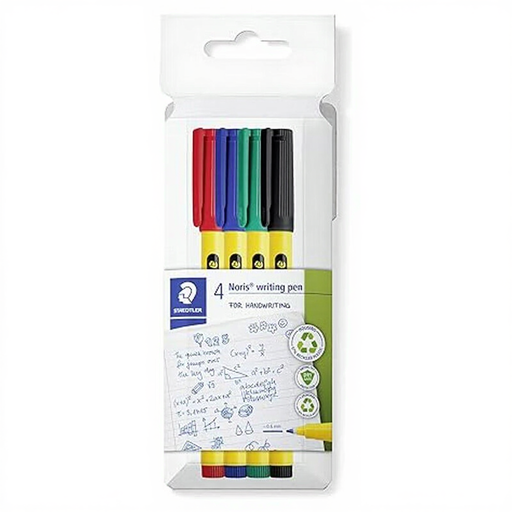
Fineliner Noris writing pen, 4 pcs
-
Why We Recommend This Product: This pen set from Staedtler combines a robust design with a focus on sustainability. According to the manufacturer, the barrel is made of 97% recycled plastic. The pressure-resistant tip is specifically designed for intensive use in schools and offices, where higher pressure is often applied when writing.
-
Pros:
- Pressure-Resistant Fibre Tip: Prevents the tip from retracting and ensures a consistent line.
- Sustainable Material: The barrel is made of 97% recycled plastic (in accordance with ISO 14021).
- Washable Ink: The water-based ink can be removed from most textiles.
- Standard Line Width: The line width of approx. 0.6 mm is versatile for writing and colour-coding.
-
Who It's For: Students and office workers who need a reliable set of basic colours for notes and organisation, and who value durable and eco-consciously produced stationery.
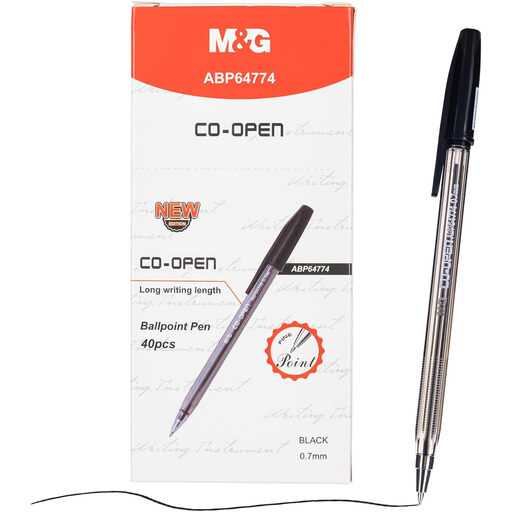
M&G Ballpoint Pens, 40 Pcs, Black Ink
-
Why We Recommend This Product: This product stands out for its excellent cost-effectiveness. The bulk pack of 40 ballpoint pens is geared towards the needs of institutions and bulk purchasers. The oil-based black ink and 0.7 mm ceramic ball tip deliver consistent performance for standard writing tasks.
-
Pros:
- Economical Bulk Pack: The 40-pen set offers an excellent price-to-performance ratio for high-consumption environments like offices or educational institutions.
- Reliable Ink: The oil-based black ink is stable and fade-resistant, making it suitable for documents.
- Standardised Tip: The 0.7 mm ceramic ball tip produces a clear, highly legible line for everyday use.
- Functional Design: The simple plastic barrel is lightweight and functional.
-
Who It's For: Purchasers for offices, schools, training providers, and government agencies, as well as anyone needing a large supply of basic yet reliable black ballpoint pens.
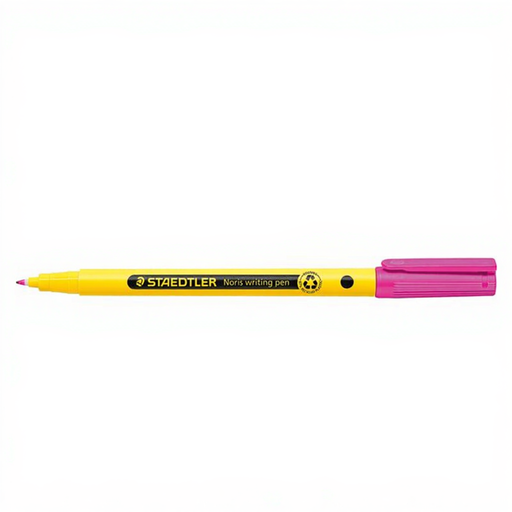
STAEDTLER Noris Fineliner Wr. Pen - Magenta
-
Why We Recommend This Product: This Staedtler pen is engineered for precision. Its superfine, metal-encased tip with a line width of approx. 0.3 mm allows for extremely detailed writing and drawing. The DRY SAFE technology, tested according to ISO 554 as per the manufacturer, prevents it from drying out even when the cap is left off.
-
Pros:
- Superfine Metal-Encased Tip: Ideal for technical drawing, use with stencils, and fine handwriting. The metal casing protects the tip.
- DRY SAFE Technology: The pen can be left uncapped for days without drying out.
- Ergonomic Triangular Barrel: Promotes a relaxed grip during extended creative or writing-intensive tasks.
- Vibrant Colour: The water-based magenta ink provides high contrast for highlighting and creative design.
-
Who It's For: Creative users for bullet journaling, mandalas, or sketching; architects and designers; as well as students and teachers who need fine-tipped pens for precise colour-coding and annotations.
Discover More Options and Stationery
The selection presented here covers specific use cases. For a more comprehensive overview that includes other ink types, brands, and sets for various budgets and requirements, you can explore our entire range of pens.
Frequently Asked Questions (FAQ)
What is the difference between a fineliner and a ballpoint pen?
The main difference lies in the ink and the tip. Fineliners use a liquid, water-based ink and a fibre tip, resulting in a rich, consistent line. Ballpoint pens use a viscous, oil-based ink paste and a rolling ball tip. Their ink is often archival-safe and dries faster.
Which line width is suitable for fine writing?
For very fine and detailed writing, such as in small calendars or for technical drawings, line widths of 0.4 mm or less (e.g., 0.3 mm) are recommended. For general everyday notes, a line width between 0.5 mm and 0.7 mm offers a good balance of legibility and precision.
Are pens made from recycled plastic durable?
A pen's durability depends less on the recycled origin of the plastic and more on the quality of the material itself and the pen's construction. High-quality recycled polypropylene (PP), as used in some brand-name products, has comparable stability and durability to new plastic. Features like a reinforced tip or a robust cap mechanism are more critical to the pen's lifespan.