
Toaster Buying Guide: Key Technical Criteria Explained
Selecting a toaster involves analysing its performance, capacity, and material quality. These parameters determine the appliance's efficiency, functionality, and durability in daily use. A systematic comparison of technical specifications enables an informed decision based on the specific needs of your household.
Buying Guide: What to Look for in a Toaster
The choice of a model should be based on an objective evaluation of the following technical features.
Capacity and Design: 2-Slice vs. 4-Slice
The number of toasting slots is a primary criterion that directly relates to your usage volume.
- 2-Slice Toasters: These models are compact and ideal for individuals, couples, or households with limited kitchen space. They are typically more energy-efficient for single use.
- 4-Slice Toasters: For families or shared living spaces where several people have breakfast at the same time, a four-slice model is advantageous. It allows for preparing a larger quantity of toast in less time. Some models offer separate controls for each pair of slots, which increases flexibility.
Material and Build Quality
The housing material affects the appliance's durability, heat insulation, and ease of cleaning.
- Stainless Steel Toasters: Stainless steel is robust, corrosion-resistant, and gives the appliance a premium look. The surface is often easy to clean. A potential drawback is heat build-up on the housing; double-walled or heat-insulated designs can minimise this issue.
- Plastic Housing: Plastic models are often lighter and available in a wider variety of colours, such as a black toaster. High-quality, heat-resistant plastic (often referred to as "cool-touch" housing) heats up less on the exterior, which enhances handling safety.
Core Functions and Additional Features
Modern toasters offer useful additional functions beyond basic toasting.
- Adjustable Browning Levels: Precise control over the browning level is a standard feature. The number of settings (often 6 to 8) indicates the precision of the adjustment. Even heat distribution, often supported by automatic bread centring, is crucial for a consistent result.
- Toaster with Defrost Function: This function allows you to toast frozen bread slices directly. The toasting process is extended to first gently thaw the bread and then brown it.
- Reheat Function: Already-toasted bread can be warmed up again without further browning.
- Toaster with Warming Rack: An integrated or removable rack allows you to warm up buns, croissants, or other baked goods using the rising heat.
- Crumb Tray: A removable tray at the bottom of the appliance catches falling crumbs and makes cleaning significantly easier.
Power and Safety
The power consumption, specified in watts, affects the speed of the toasting process. Typical values range from 800 to 1500 watts. A higher wattage does not necessarily lead to a better result, but it is an indicator of a potentially faster heat-up time. Safety features such as an automatic shut-off for jammed toast and a stop button to manually cancel the process are important aspects.
Toasters for Every Kitchen
The following products have been selected based on their technical specifications and range of features.
CAMRY CR 3215 Stainless Steel Toaster
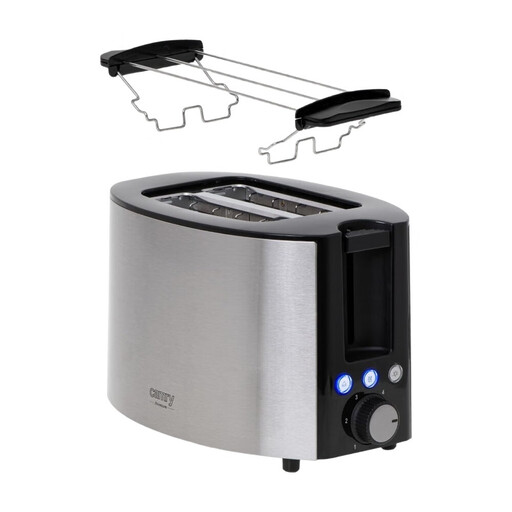
- Why we recommend this product: The CAMRY CR 3215 combines a solid 1000-watt power consumption with a comprehensive feature set. Its stainless steel and plastic housing offers a balance of durability and design.
- Pros: The appliance covers all essential functions, including a defrost function, a reheat function, and an integrated warming rack. The removable crumb tray simplifies maintenance.
- Who it's for: This model is a practical choice for users looking for a versatile 2-slice appliance with all the common convenience features for daily use.
Braun PurShine HT1510GY 2-Slice Toaster
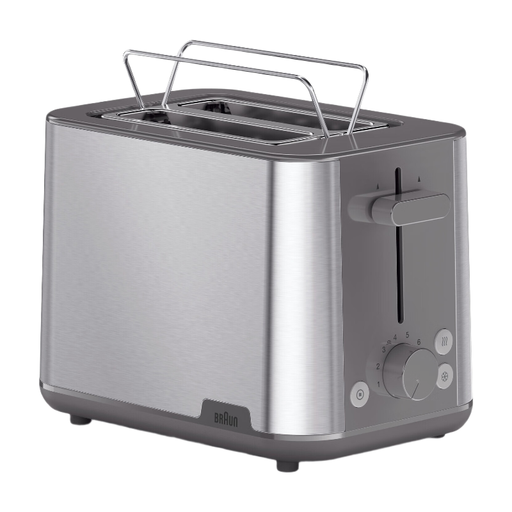
- Why we recommend this product: The Braun PurShine HT1510GY stands out for its precise control. With eight adjustable browning levels and automatic bread centring, it delivers very even toasting results.
- Pros: The manual lift function makes it easier to remove smaller slices of bread. Illuminated buttons for the defrost and reheat functions improve usability. The power consumption is 900 watts.
- Who it's for: Users who place a high value on precise browning control and consistently even toasting will find this to be a suitable appliance.
DSP KC2046 4-Slice Toaster
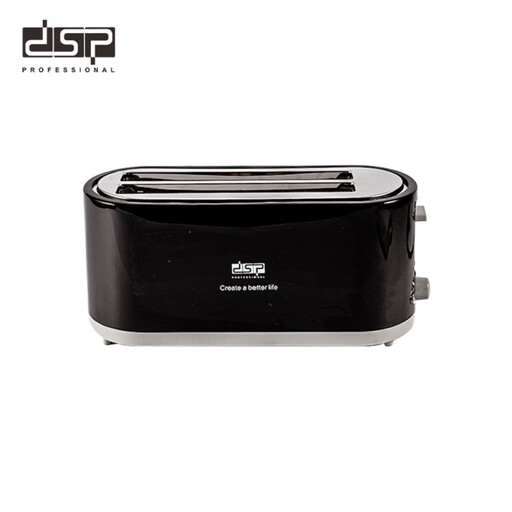
- Why we recommend this product: With a four-slice capacity and a high power output of 1400 watts, this model is designed for efficiency and high throughput. The seven browning levels allow for individual adjustment.
- Pros: The high capacity makes this 4-slice toaster ideal for family use. Safety features like automatic pop-up and anti-jam protection are integrated. The black design with a stainless steel finish is modern, and the cord storage keeps things tidy.
- Who it's for: This model is aimed at families and multi-person households that need a powerful appliance to quickly prepare multiple servings of toast, bagels, or waffles.
Other Alternatives and Kitchen Appliances
If the models presented here do not meet your specific requirements, you can find a wider selection of household helpers in our Kitchen Drawer category. There you will find other appliances with different specifications and designs.
Frequently Asked Questions (FAQ)
1. How do you clean a toaster correctly and safely? Always unplug the appliance from the power outlet and let it cool down completely. Remove and empty the crumb tray. Turn the toaster upside down and gently shake it over a sink or rubbish bin to remove any remaining crumbs. The exterior can be wiped with a slightly damp cloth. Never use metal objects to remove jammed bread crumbs from inside.
2. What does the defrost function on a toaster do? The defrost function is designed for toasting frozen bread. When activated, the appliance adjusts the heating cycle: it first thaws the bread slice at a lower heat and then toasts it to the selected browning level. This prevents the bread from burning on the outside while it is still frozen on the inside.
3. How many watts should a toaster have? The power consumption, measured in watts, for most toasters ranges between 800 and 1500 watts. A higher wattage can lead to a faster heat-up time and shorter toasting cycles. However, the evenness of heat distribution from the heating elements and the precision of the controls are more crucial for the quality of the result than the wattage alone. An appliance with 900–1000 watts is sufficient for most households.