
Stainless Steel Food Storage Container Buying Guide
As a Joybuy Product Recommendation Officer, I see countless products every day. My job is to give you objective and practical advice so you can make informed decisions, free from marketing hype. Today, we're tackling the topic of stainless steel food storage containers—a popular choice for health- and eco-conscious households. But not every set lives up to its promise.
The search for durable, plastic-free alternatives leads many to stainless steel. The advantages are obvious: no plastic, no stains from tomato sauce, and no unpleasant odours. However, there are crucial quality differences that often only become apparent after a few weeks of use.
The 3 Most Common Pitfalls When Buying Stainless Steel Food Containers
Before you invest, you should be aware of the typical weaknesses that can render an otherwise good product useless.
- Misleading Material Specifications: The term "stainless steel" is not regulated. Cheaper products often use inferior alloys that are susceptible to rust spots or corrosion from salty or acidic foods (like salad dressings or fruit).
- Leaky Lids: The biggest weakness of many sets is the lid. A container is only as good as its seal. Poorly fitting lids or gaskets that become brittle will cause containers to leak and food to spoil faster.
- False Expectations for "Metal Tins": Often, decorative tins made of simple sheet metal are marketed as robust storage solutions. These are neither airtight nor suitable for the dishwasher or refrigerator and are primarily intended for storing dry goods.
What Really Matters: The Decisive Parameters
To avoid a bad buy, focus on these three verifiable criteria. They are the key to a functional and long-lasting stainless steel food storage container set.
1. The Stainless Steel Grade: The Difference Between 304 and 316
Not all stainless steel is created equal. Most housewares are made from 18/8 or 18/10 grade stainless steel (also known as Type 304). This material is sufficient for many purposes. However, when it comes to the long-term storage of food, especially for stainless steel meal prep boxes, a higher quality is beneficial.
Look for the 316 stainless steel specification. Due to its high corrosion resistance, it is also used in medical technology. It contains molybdenum, which makes it more resistant to salts and acids. This means less risk of material degradation and greater food safety, especially if you marinate foods or store salty dishes.
2. Lid Construction and Sealing Mechanism
A good storage container set with lids must close reliably. Examine the lid's design:
- Silicone Gasket: A continuous, ideally removable, food-grade silicone gasket is essential for an airtight and watertight seal.
- Locking Mechanism: Simple press-on lids are rarely completely sealed. Systems with side clamps (clips) offer a much more secure hold and are better suited for transport as a dishwasher-safe stainless steel lunch box or metal bento box.
3. Practical Features for Everyday Use
A set must integrate seamlessly into your daily routine. Pay attention to the following features:
- Dishwasher-Safe: Uncomplicated cleaning is essential. Check whether both the containers and the lids are suitable for the dishwasher.
- Freezer-Safe: For long-term food storage or freezing leftovers, being freezer-safe is a must.
- Stackability: Efficient use of space in the fridge and cupboards is important. Nesting containers save valuable storage space.
Find Your Perfect Pick
Based on these objective criteria, we have selected a few products from our range for different needs.
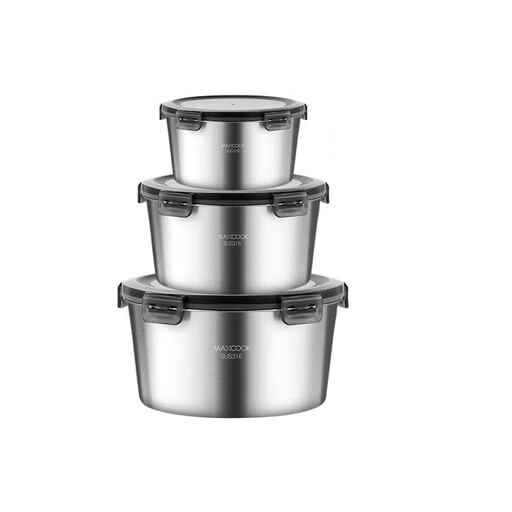
Maxcook Set of 3 316 Stainless Steel Food Containers with Lids
Why it's a good fit: Ideal for those who prioritise the highest material quality. The set of three different sizes is perfect for preparing entire meals, storing leftovers, or as a robust lunch box for on the go.
The set is made of 316 stainless steel, directly addressing the pitfall of inferior materials. It offers high resistance to corrosion from food.
The combination of high-quality 316 stainless steel containers, various sizes, and being dishwasher and freezer safe makes it a versatile solution.
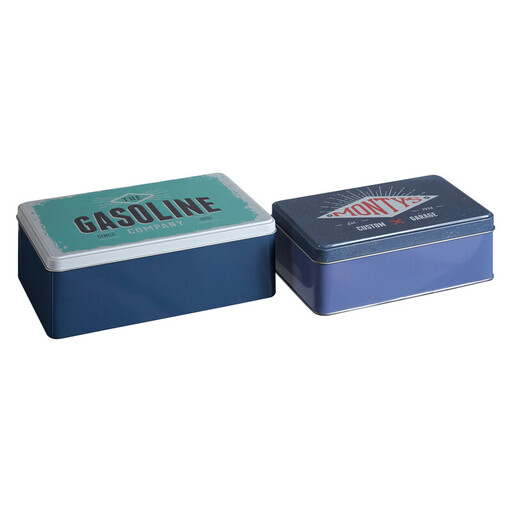
Premier Housewares Set of 2 Hot Rod Storage Tins
Why it's a good fit: For anyone looking for a decorative solution for an open kitchen or pantry. Ideal for storing dry foods like coffee, tea, sugar, or biscuits.
This product clarifies the difference from true food storage containers. It is made of sheet metal and is intended for dry goods, not for airtight storage in the refrigerator.
The eye-catching retro design makes it a decorative element. The tins are lightweight and stackable, saving space when not in use.
Looking for more options?
If you're looking for more storage solutions that meet our objective criteria, you can find a broader selection here.
Frequently Asked Questions (FAQ)
1. Are stainless steel food containers truly leak-proof? The leak-proof quality depends entirely on the lid's construction. Models with a high-quality silicone gasket and securely-fastening side clamps are generally suitable for transporting soups or sauces. Simple press-on lids without a gasket do not offer this protection. Always check the product description for the term "leak-proof".
2. Can you use stainless steel food containers in the microwave? No, metal must never be placed in a microwave oven under any circumstances, as this can cause sparks and severe damage to the appliance. However, many high-quality stainless steel containers are oven-safe (without the lid). Always refer to the manufacturer's instructions for this. They are, however, very well-suited for freezing food.
3. What is the best way to clean a stainless steel food container set? Most containers are dishwasher-safe, which makes cleaning much easier. For stubborn residue or slight discolouration, a paste of baking soda and water can help. Do not use abrasive sponges or steel wool, as these can damage the polished surface of the stainless steel.