
Roaster Buyer's Guide 2026: An Analysis of Materials and Functions
A roaster, often called a Dutch oven or cocotte, is a piece of cookware designed for cooking with even, sustained heat. Selecting the right model depends significantly on its materials, construction, and intended use. This guide breaks down the technical specifications and functional differences of popular roaster types to help you make an informed choice.
Buyer's Guide: A Material Analysis for Roasters
The choice of material directly impacts the cookware's performance, including heat conduction, heat retention, and responsiveness.
Enamelled Cast Iron
Cast iron is characterised by its high material density, which provides excellent heat retention. Once heated, it releases warmth slowly and evenly into the food. This is ideal for braised dishes that cook at low to medium temperatures over a long period. The enamel coating creates a non-porous, smooth surface that reduces sticking and simplifies cleaning. Furthermore, the enamel is non-reactive and will not interact with acidic foods. Some cast iron roaster lids, like those on Staub models, feature a special texture on the underside that causes condensation to form and drip evenly back onto the food. This promotes a moist cooking process.
- Properties: High heat retention, even heat distribution, durability.
- Best for: Braising, roasting, baking (e.g., bread).
- Notes: Heavy, slower to heat up.
Stainless Steel
A stainless steel roaster is significantly lighter than cast iron and heats up more quickly. High-quality models feature a multi-layered base, often called a sandwich base (e.g., the SIGMA Classic base from Zwilling), which contains an aluminium or copper core. These materials conduct heat more effectively than stainless steel alone, ensuring fast and even heat distribution across the entire base. Stainless steel is durable, hygienic, and dishwasher-safe. Multi-functional lids that can be used separately as a pan or serving platter add to its versatility.
- Properties: Lighter weight, fast heat conduction, easy to clean.
- Best for: Searing at high temperatures, cooking large cuts of meat, versatile one-pot meals.
- Notes: Lower heat retention compared to cast iron.
Stoneware
Stoneware is a type of ceramic fired at high temperatures, making it dense and durable. A stoneware baking dish is primarily designed for use in the oven. It distributes heat evenly, ensuring consistent baking and cooking results. The glazed surface is scratch-resistant and prevents the absorption of fats or odours. Stoneware is often suitable for a wide temperature range, from the freezer to a hot oven.
- Properties: Even heat distribution in the oven, high temperature resistance, aesthetic presentation.
- Best for: Casseroles, gratins, desserts, side dishes.
- Notes: Not intended for direct use on hobs/stovetops.
Our Product Selection for 2026
The following selection is based on an analysis of the products' technical specifications and functional design.
Staub Cocotte Cast Iron Roaster with Lid 18 cm 1.7 L
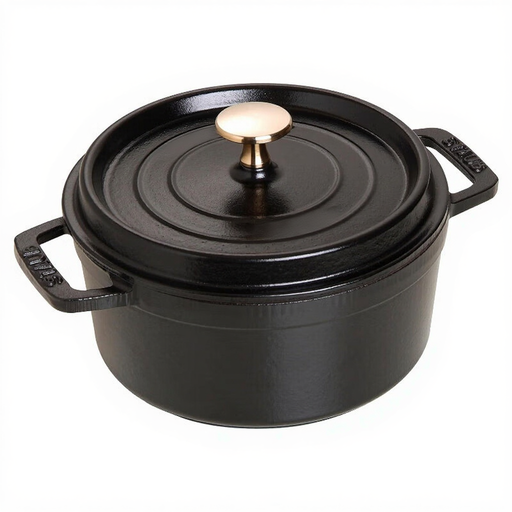
Why we recommend this product The Staub Cocotte embodies the classic characteristics of a cast iron roaster. Its enamelled cast iron construction ensures superior heat retention. A key feature is the lid with its 'self-basting spike' structure, which provides continuous moisture for the food, leading to exceptionally succulent results.
Advantages
- Material: Enamelled cast iron for maximum heat retention and distribution.
- Lid Function: Special drip structure for a self-basting effect.
- Compatibility: Suitable for all hob types, including induction, and oven-safe up to 260°C.
- Manufacturing: Made in France.
Who it's for For users who focus on braised dishes and slow cooking and are looking for durable cookware with traditional cooking properties. The compact 1.7-litre size is ideal for smaller households or side dishes.
Zwilling Plus Series Stainless Steel Roaster with Lid - 38cm - 8.5L
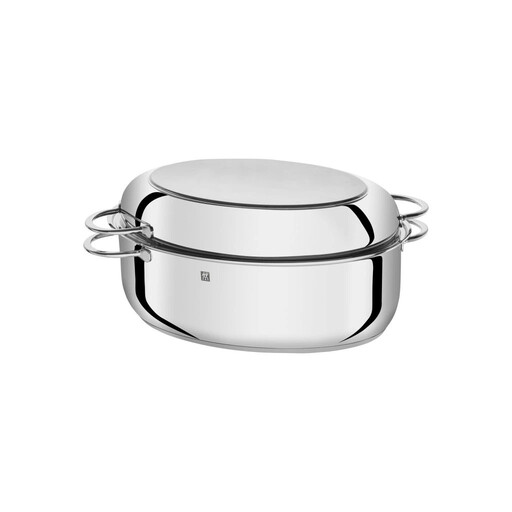
Why we recommend this product The Zwilling Plus Roaster is an example of versatile stainless steel cookware. Its SIGMA Classic sandwich base ensures fast and even heating. The standout feature is its multi-functional lid, which can be used as a separate, shallow roasting pan or serving dish, effectively doubling the set's utility.
Advantages
- Material: Polished 18/10 stainless steel with a SIGMA Classic sandwich base for efficient heat conduction.
- Multi-functionality: The lid can be used as a standalone pan or serving platter.
- Capacity: With an 8.5-litre volume, it is designed for large roasts or complete one-pot meals.
- Handling: Ergonomic stainless steel handles for secure transport.
Who it's for Home cooks who need large, versatile cookware for preparing poultry, large cuts of meat, or meals for several people, and who prefer the lighter handling of stainless steel.
Le Creuset Traditional Round Casserole Dish Set 20/24 cm Nectar
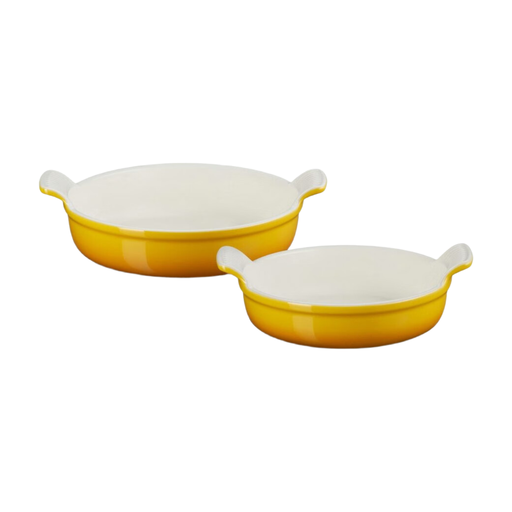
Why we recommend this product This set from Le Creuset is made of high-quality stoneware and is designed as a classic casserole dish. It offers even heat distribution for optimal baking results. The durable glaze is scratch-resistant and non-reactive. The set of two sizes offers flexibility for different dishes and portion sizes.
Advantages
- Material: High-quality stoneware for even cooking in the oven.
- Temperature Range: Suitable for use from -23°C to +260°C (freezer, microwave, and oven safe).
- Care: The glazed surface is easy to clean and dishwasher-safe.
- Design: The shape and colour are also suitable for serving directly at the table.
Who it's for For users seeking specialised cookware for oven dishes like gratins, lasagne, or desserts, and who value an appealing presentation.
Other Options and Alternatives
The selection presented covers different materials and primary use cases. Depending on individual cooking habits and existing kitchen equipment, other models or sizes may also be suitable. For a wider selection of cookware, especially for oven dishes, you can find more models in our Casserole Dish with Lid category.
Frequently Asked Questions (FAQ)
1. What is the difference between a roaster and a Dutch oven? The terms roaster and Dutch oven are often used to describe similar cookware. Both refer to a deep pot with a lid, suitable for cooking in the oven and on the hob. The term cocotte is the French word for this type of pot, typically referring to a round or oval cast iron roaster.
2. Which material is best for a roaster? The choice of material depends on the primary use. Cast iron is ideal for slow-cooking and braising due to its excellent heat retention. Stainless steel is a lighter, versatile alternative that works well for searing at high heat and for large roasts. Stoneware is specialised for oven use, perfect for casseroles and gratins.
3. Can any roaster be used on an induction hob? No, induction compatibility depends on the material. Cookware must have ferromagnetic properties to work on an induction hob. Roasters made of cast iron and many stainless steel roasters with a magnetic base are generally induction-compatible. Models made of pure copper, aluminium, or glass are not. Always check the manufacturer's specifications for hob suitability.