
Portable Air Conditioners: A Guide to Flexible Cooling
Rising summer temperatures are making the search for an effective and flexible cooling solution a priority for many. Whether in an attic, a home office, or even an RV, a permanently installed air conditioner isn't always a practical option. This is where portable air conditioners offer a flexible alternative.
As your Joybuy Product Recommendation Officer, my goal is to provide you with clear and objective guidance in the portable air conditioner market. This article introduces different types of units, explains key purchasing criteria, and presents a selection of models for various use cases to help you make an informed decision.
What to Look for When Buying a Portable Air Conditioner
Choosing the right unit depends on your specific needs. The following three points will help you understand the technical specifications and find the right model for your requirements.
1. Device Type: Monobloc, Split, or Battery-Powered?
Portable air conditioners can be divided into three main categories, which differ in their design and application:
- Monobloc units: This is the most common type. All components are housed in a single casing. The warm air is vented outside through an exhaust hose that is routed through a window or door opening. They are easy to install and ideal for flexible use in different rooms.
- Portable split air conditioners: These units consist of two parts: an indoor unit and an outdoor unit, connected by a flexible line. The noisy compressor is located in the outdoor unit, which makes for a quiet air conditioner for your home. They are often more efficient but slightly less flexible in their setup than monobloc units.
- Battery-powered air conditioners: These models offer maximum portability. Such a portable AC unit does not rely on a power outlet, making it an excellent air conditioner for an RV, camping, or other off-grid situations.
2. Cooling Power and Energy Efficiency
Cooling power is specified in BTU (British Thermal Unit) or Watts and should match the size of the room. As a rule of thumb, for a 25 m? room (approx. 63 m?), a power output of about 2,500 watts (approx. 8,500 BTU) is recommended. Pay attention to the energy efficiency class. A unit with an A++ energy efficiency rating consumes significantly less power than a lower-rated model, which makes a noticeable difference in long-term operating costs.
3. Additional Features: Heating and Smart Control
Some models offer more than just cooling. An air conditioner with a heating function operates on the heat pump principle and can be an efficient heating alternative during the transitional seasons. Modern units can also often be controlled via an app, allowing you to set timers, modes, and temperatures remotely.
Top Portable Air Conditioner Picks
Based on the criteria mentioned, we have compiled a selection of units for different requirements.
EcoFlow WAVE 3 Portable Air Conditioner
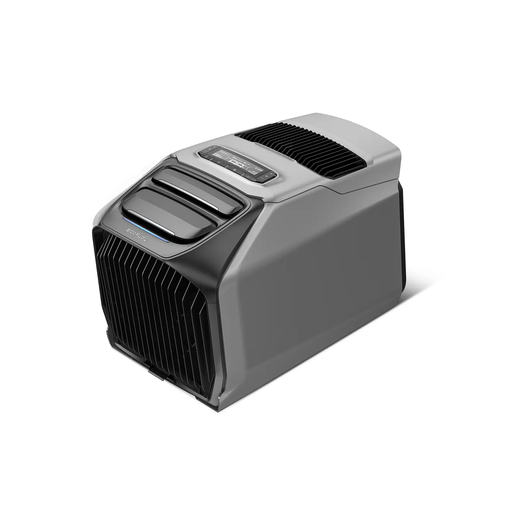
What makes it stand out: The EcoFlow WAVE 3 is designed for maximum flexibility. With a cooling capacity of 1800W (6100 BTU) and a heating capacity of 2000W (6800 BTU), it is highly versatile. Its standout feature is the optional add-on battery, which allows for up to 8 hours of off-grid operation. According to the manufacturer, it can lower the temperature in a small room by 8°C within 15 minutes. App control and a quiet sleep mode at 44 dB complete the package.
Pros:
- Cooling and heating functions in one unit
- Optional battery operation for on-the-go use
- Fast charging options (AC, solar, car)
- Compact design and app control
- Uses the more environmentally friendly R290 refrigerant
Who it's for: Ideal for campers, van life enthusiasts, and RV owners looking for a powerful and off-grid air conditioning solution. It is also a practical option for small rooms, tents, or workshops.
De’Longhi Pinguino PAC AP120 GentleJet Mobile Air Conditioner
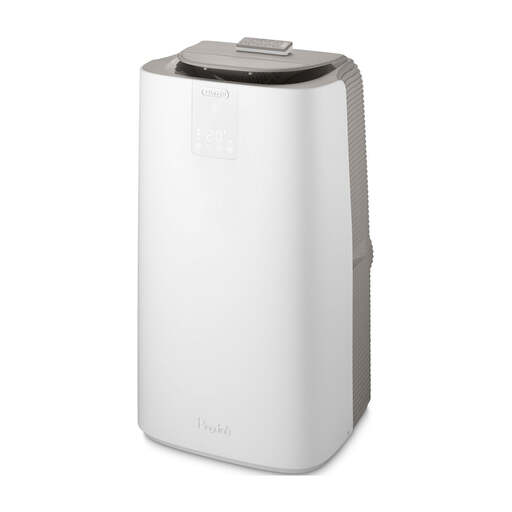
What makes it stand out: This monobloc air conditioner from De’Longhi is designed for large living spaces and can cool rooms up to 110 m?, according to the manufacturer. With a cooling capacity of 3.0 kW (11,000 BTU/h) and an A+ energy efficiency class, it combines power with efficiency. The Eco Real Feel technology automatically adjusts temperature and humidity to create a comfortable indoor climate with optimised energy consumption.
Pros:
- High cooling capacity for large rooms
- A+ energy efficiency class
- Eco Real Feel technology for automatic climate control
- Integrated dehumidifying function
- Quiet operation thanks to Silent Technology (sound pressure level 41–47 dB)
Who it's for: For homeowners and apartment dwellers seeking a powerful and easy-to-use cooling solution for large living rooms, bedrooms, or offices.
Midea PortaSplit-E 12K, Portable Mini-Split Air Conditioner
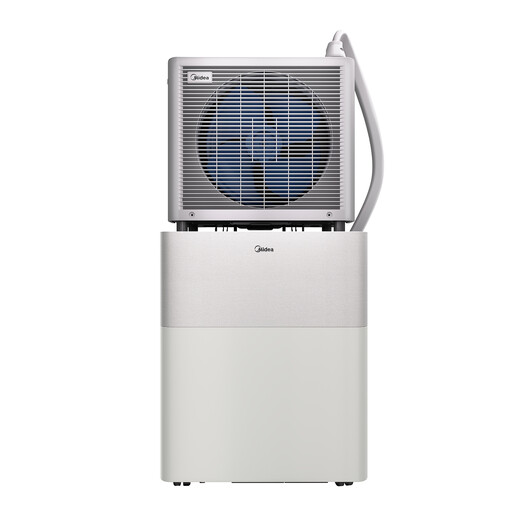
What makes it stand out: The Midea PortaSplit-E combines the flexibility of a portable unit with the advantages of a split system. By separating the indoor and outdoor units, it achieves very quiet indoor operation at just 39 dB(A). With a high cooling capacity of 12,000 BTU and an A++ energy efficiency class, it is both powerful and economical. Additionally, the unit has a heating function, making it usable all year round.
Pros:
- Very quiet indoor operation
- Outstanding A++ energy efficiency class
- High cooling capacity for rooms up to 105 m?
- Cooling and heating functions
- Modern split technology in a portable format
Who it's for: For users who need powerful air conditioning for living rooms or bedrooms and place the highest value on quiet operation and energy efficiency.
Discover More Options
This selection covers specific use cases. If you want to compare more models or explore a wider range of solutions for different room sizes and budgets, you can find additional options in our Floor Air Conditioner category.
Frequently Asked Questions
1. How does a portable air conditioner without an exhaust hose work?
True air conditioners that actively cool a room always need a way to expel heat to the outside. For monobloc units, this is done via an exhaust hose, and for split units, via the outdoor unit. Devices advertised as not having an exhaust hose are typically air coolers (evaporative coolers). They cool the air through the evaporation of water, which only slightly lowers the room temperature and increases humidity.
2. How loud is a portable air conditioner?
The volume is measured in decibels (dB) and can be found in the technical specifications of each device. Monobloc units tend to be louder because the compressor is located indoors. Portable split units like the Midea PortaSplit-E are significantly quieter, with levels around 39 dB(A). Models with a special sleep mode, like the EcoFlow WAVE 3 at 44 dB, reduce noise levels for the night.
3. Can I also use a portable air conditioner for heating?
Yes, some models, like the EcoFlow WAVE 3 and Midea PortaSplit-E featured here, are equipped with a heat pump function. Such an air conditioner with a heating function can be an efficient alternative to conventional heating, especially during the transitional seasons, to heat individual rooms quickly and as needed.