
Guide to Choosing Mite Removal Equipment for Mattresses and Sofas
Waking up with congested airways, itchy skin, or dry eyes is a frequent issue in modern apartments. Well-insulated windows and central heating maintain comfortable indoor temperatures in continental climates, but they also trap airborne humidity inside soft textiles. Mattresses, upholstered headboards, and plush sofa cushions accumulate dead skin cells over time, creating a welcoming breeding ground for microscopic house dust mites. Because these allergens bury themselves several centimetres deep into woven layers, traditional surface dusting simply moves the problem around rather than eliminating it.
Investing in dedicated mite removal equipment bridges the gap between basic surface vacuuming and genuine allergen hygiene. Navigating the market requires understanding how motor wattage converts to actual static suction pressure, how supplementary sanitising technologies like UV-C radiation and hot air alter fabric microclimates, and why advanced particulate exhaust filtration is essential to protect indoor air quality. This guide breaks down the essential technical parameters to help you choose the right appliance for your home.
Common Missteps When Selecting Mite Removal Equipment
Confusing High Motor Wattage with Effective Sealed Suction
A frequent marketing pitfall is judging cleaning performance solely by power consumption in watts. A vacuum motor may draw 600 W yet produce weak cleaning pressure if the airflow channel is wide or poorly sealed against fabric. Mattress cleaning requires high static lift, measured in Pascals or kilopascals, rather than massive volume airflow. Without high negative pressure and a narrow contact nozzle, dust mite waste trapped between compressed foam layers remains untouched.
Assuming UV-C Radiation Works Independently of Physical Extraction
Ultraviolet light is a valuable sanitising tool, but relying on a UV lamp alone without mechanical agitation and suction is ineffective. UV-C light neutralises surface micro-organisms only with sufficient direct exposure time, and it does not remove the allergen proteins present in mite carcasses and droppings. The actual trigger for respiratory allergic reactions is physical debris, meaning UV illumination must always function alongside strong mechanical extraction to deliver noticeable relief.
Overlooking Exhaust Filtration Quality and Chamber Architecture
Extracting fine particles from deep within a mattress is counterproductive if the vacuum blows them straight back out through porous exhaust vents. Dust mite droppings measure between 10 and 40 microns across, easily slipping through standard single-layer foam or mesh filters. Neglecting a sealed HEPA-grade filtration setup or selecting single-chamber designs prone to rapid clogging results in reduced suction midway through a cleaning session and plumes of airborne allergens in the bedroom.
Key Technical Benchmarks for Mattress and Fabric Cleaners
Suction Pressure and Negative Lift (Pascal Rating)
Extracting embedded debris through tightly woven ticking and thick mattress padding requires sustained static pressure rather than broad floor-level airflow.
- Baseline Pressure Threshold: Prioritise appliances delivering at least 10,000 Pa (10 kPa) of suction force to generate sufficient pull through dense mattress foam.
- Sealed Contact Footprint: A smooth, non-snagging suction mouth maintains an airtight contact patch against soft bedding without grabbing or tearing loose fabric.
Active Sanitisation Systems (UV-C and Thermal Air)
Supplementary sanitisation mechanisms disrupt mite habitats, neutralise surface bacteria, and actively condition mattress fabrics during cleaning passes.
- UV-C Radiant Exposure: Integrated ultraviolet lamps break down surface organic matter and micro-organisms when guided slowly over bed linens and cushions.
- Targeted Hot Air Venting: Systems expelling air at 50 to 65 degrees Celsius reduce residual humidity inside the mattress core, making fabrics inhospitable to pest colonies.
Separation Architecture and Particulate Filtration
Maintaining strong suction throughout an entire mattress cleaning session requires separating coarse dust from fine microscopic allergens before air reaches the motor.
- Dual-Chamber Cyclone Separation: Isolating bulk fibres from fine dust particles prevents premature filter clogging and preserves motor airflow across large surfaces.
- HEPA Allergen Containment: Dense microscopic filter media trap fine mite droppings and dander, ensuring exhausted air is clean and safe to breathe in confined sleeping quarters.
Our Top Recommendations for Mite and Fabric Cleaning
We have matched three distinct cleaning appliances to different household needs, ranging from multi-surface domestic cleaners to dedicated bed hygiene specialists.
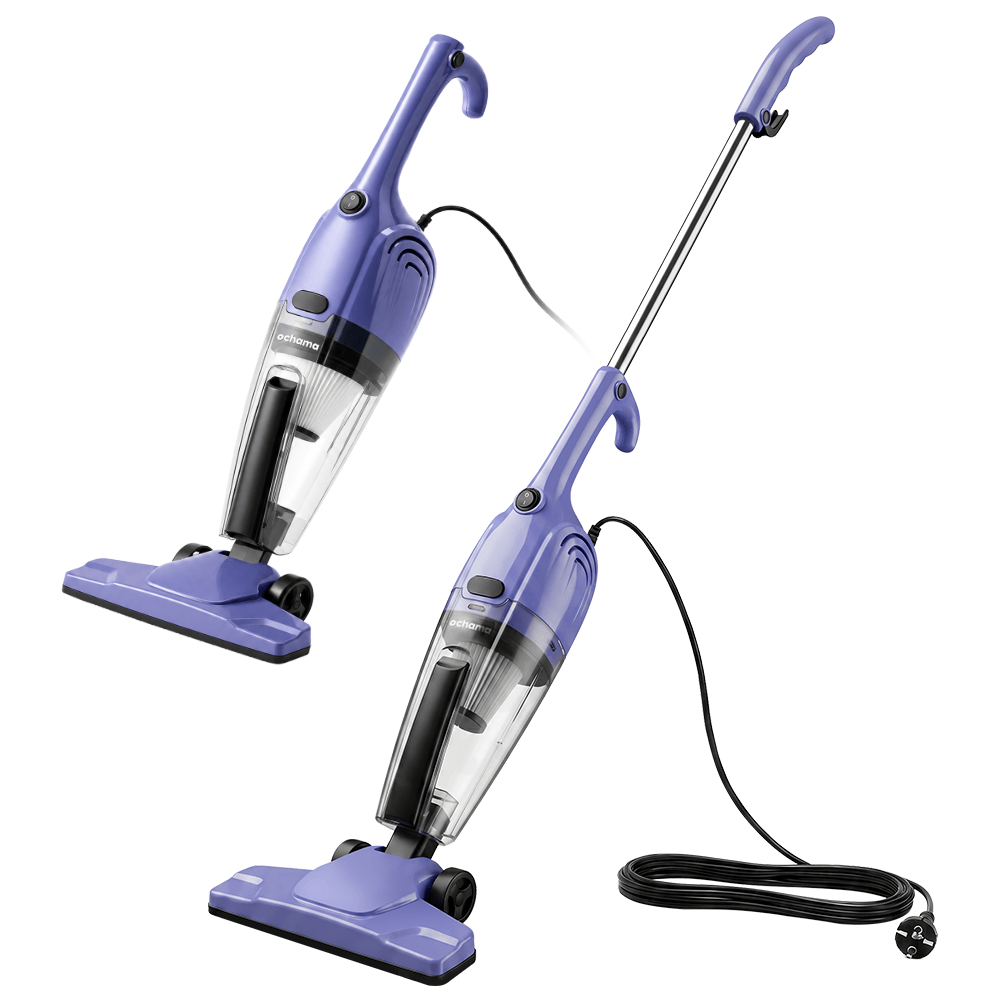
Ochama TC-20J 2-in-1 Corded Stick and Handheld Vacuum
Why This Fits Their Persona: This unit features a capable 550 W motor that transitions smoothly between upright floor cleaning and handheld upholstery maintenance. Finished in purple, it comes equipped with a 4.5-metre mains power cable and a visible 0.5-litre dust container, providing continuous power without the run-time anxiety of battery models.
It avoids the pitfall of battery fade during extended cleaning sessions, maintaining steady mains-driven suction across both living room rugs and sofa corners.
A washable filter arrangement paired with a convertible handheld configuration makes this lightweight appliance a flexible dual-purpose choice for compact apartments.
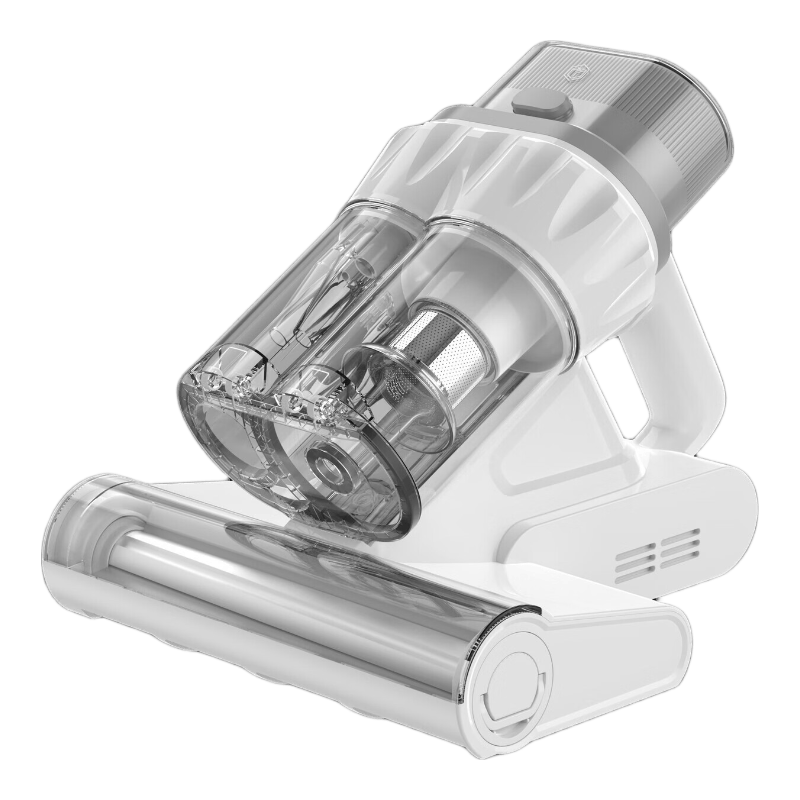
Ochama VC 02 Mattress Vacuum with Hot Air and UV
Why This Fits Their Persona: Tailored specifically for sleep surfaces, this 300 W specialist delivers a robust 12 kPa suction pressure backed by an internal motor spinning at 72,000 rpm. It features a 300 ml dual-chamber dust and mite separation system alongside an integrated UV lamp and 65-degree Celsius hot air flow.
Its dual-chamber design addresses rapid filter clogging by routing hair and bulk fluff into one compartment while trapping fine allergen dust in the other.
The combined effect of 12,000 Pa suction, 65-degree thermal drying, and UV sanitisation removes trapped moisture and deep-seated debris in a single pass.
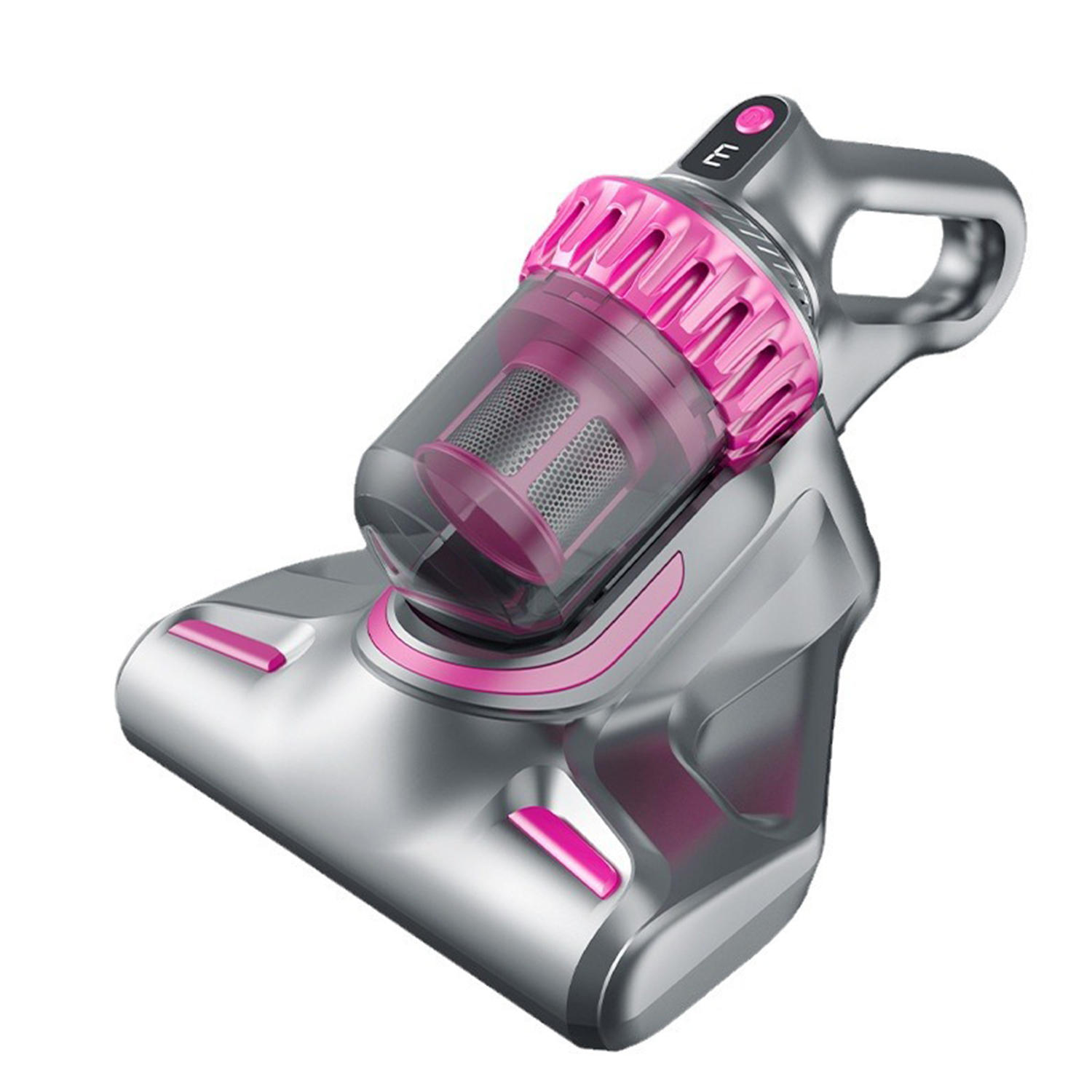
HB-808 Handheld UV-C HEPA Mattress Cleaner
Why This Fits Their Persona: Designed for focused bed and cushion hygiene, this 100 W handheld unit generates 10,000 Pa of static suction pressure directly against soft furnishings. It incorporates dedicated UV-C surface sterilisation combined with a multi-stage HEPA filter system to target fine microscopic allergen waste.
It prevents allergen blow-back into bedroom air by sealing extracted dust inside a high-retention HEPA cartridge rather than using basic porous mesh.
Compact handling and a direct 10 kPa contact profile allow sensitive sleepers to maintain clean, allergen-reduced mattresses with minimal physical effort.
Frequently Asked Questions
Is the suction power of a regular cylinder vacuum cleaner enough for mattresses?
A standard domestic cylinder vacuum is engineered for high air volume across broad floor heads, which disperses suction across a wide perimeter. Mattresses require concentrated static pressure in Pascals to extract microscopic debris trapped deep inside dense memory foam or pocket springs. Dedicated mattress tools feature narrow, sealed contact plates that channel negative lift directly into the fabric without snagging sheets or covers.
What function do UV-C light and hot air serve in dust mite control?
UV-C light disrupts the cellular structure of bacteria and surface micro-organisms when passed slowly over fabric. Hot air systems operating between 50 and 65 degrees Celsius address the core environmental factor: humidity. Dust mites absorb moisture from ambient air and perspiration trapped in bedding; applying dry heat lowers fabric humidity, creating an inhospitable microclimate while simultaneously relaxing textile fibres for deeper suction.
How does a HEPA filter prevent fine mite droppings from blowing back into the room?
Dust mite allergens are primarily concentrated in microscopic digestive droppings measuring only a few microns in size. Standard sponge or coarse mesh filters cannot capture particles that small, allowing them to vent back out and remain suspended in bedroom air. A true HEPA filter uses an intricately woven glass or synthetic fibre matrix that captures microscopic particles via impaction and diffusion, ensuring exhausted air remains clean.