
Choosing the Right Immersion Blender
A hand blender is a versatile kitchen tool that makes puréeing soups, preparing smoothies, or chopping herbs significantly easier. However, the selection of models is vast, with considerable differences in power, accessories, and price. Choosing the right appliance can quickly become overwhelming.
This guide is designed to help you navigate the options. We will introduce various models and explain the crucial criteria to consider when buying a hand blender. Our goal is to provide an objective foundation, helping you find a device that perfectly matches your needs and cooking style.
Buyer's Guide: Finding the Right Hand Blender
Before making a decision, it's helpful to understand the key features of a hand blender. The following points will help you evaluate the different options available.
Power (Watts) – More Than Just a Number
The wattage indicates the motor's power consumption and is an indicator of the appliance's strength.
- Up to 400 Watts: Sufficient for simple tasks like puréeing cooked vegetables or soft fruits. These models are often lighter and quieter.
- 400 to 800 Watts: A good middle ground for most everyday applications, including making pesto or blending creamy smoothies.
- Over 800 Watts: A powerful hand blender in this category is suitable for demanding tasks. This includes chopping nuts, frozen fruits, or even crushing ice, if specified by the manufacturer.
Accessories – From a Single Wand to a Complete Set
Many hand blenders are sold as sets with various accessories. Consider which tasks you perform regularly to decide which accessories are useful for you.
- Beaker: Practical for measuring and directly blending smaller quantities.
- Chopper: Ideal for herbs, onions, nuts, or cheese.
- Whisk: Useful for whipping cream or egg whites.
- Potato Masher: A special attachment for creamy mashed potatoes without a gummy texture.
A hand blender with multiple accessories offers more flexibility, but not everyone needs the full range. A targeted hand blender comparison helps you find a set with components you will actually use.
Material and Handling
The blending wand, the part that comes into contact with food, is usually made of plastic or stainless steel.
- Stainless Steel: Robust, durable, resists odours and stains (e.g., from carrots or tomatoes), and is suitable for processing hot foods.
- Plastic: Makes the appliance lighter and often more affordable, but can discolour over time.
Also, look for detachable and dishwasher-safe parts. This makes cleaning significantly easier and ensures better hygiene.
Top Standing Mixer Picks
Based on the criteria mentioned, we have compiled a selection of models that cover different needs.
Braun MultiQuick 7 MQ7005BWH
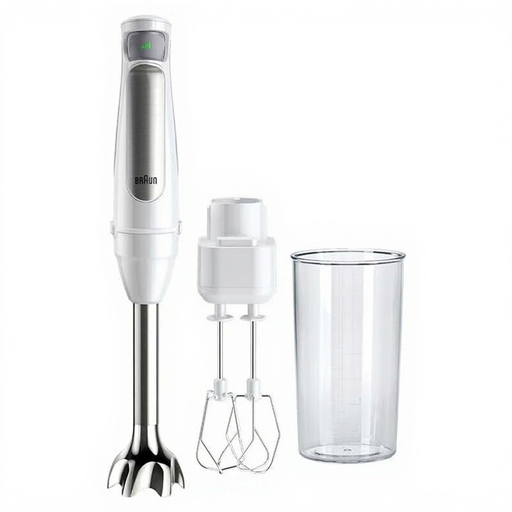
Why it stands out: The Braun MultiQuick 7 combines a powerful 1000-watt motor with intuitive speed control. Instead of fixed settings, the speed is controlled by how hard you press the button. According to the manufacturer, Braun, the special blade and bell shape deliver up to 50% faster results compared to the MQ100 model. An included ice-crushing attachment expands its range of uses.
Pros:
- Powerful 1000-watt motor
- Intuitive speed control via button pressure (SmartSpeed)
- Sharp blades and an optimised blending bell for efficient puréeing
- Includes an ice-crushing attachment
Who it's for: This model is an excellent choice for users looking for a powerful and versatile all-rounder. If you regularly process smoothies, soups, and harder ingredients and value flexible speed adjustment, this is a fitting appliance.
Braun MultiQuick 9 MQ9147X
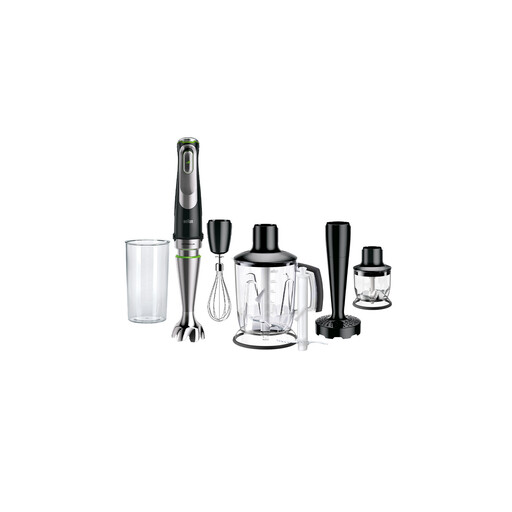
Why it stands out: As the top-of-the-line model in the Braun hand blender series, the MultiQuick 9 offers an impressive 1200 watts of power. Its standout feature is the "ActiveBlade" technology, where the blade moves up and down to effortlessly chop even the toughest foods. The comprehensive accessory package, including a potato masher, chopper, and blender attachment, makes this device a complete immersion blender set.
Pros:
- Very high performance with 1200 watts
- ActiveBlade technology for processing hard ingredients
- Extensive accessories for maximum versatility
- Three power modes (pulse, low, and high speed)
Who it's for: The MultiQuick 9 is aimed at ambitious home cooks who don't want to compromise on performance and features. If you regularly prepare complex recipes and are looking for one appliance for almost any task in the kitchen, this model is worth considering.
Bosch MSM 6B100
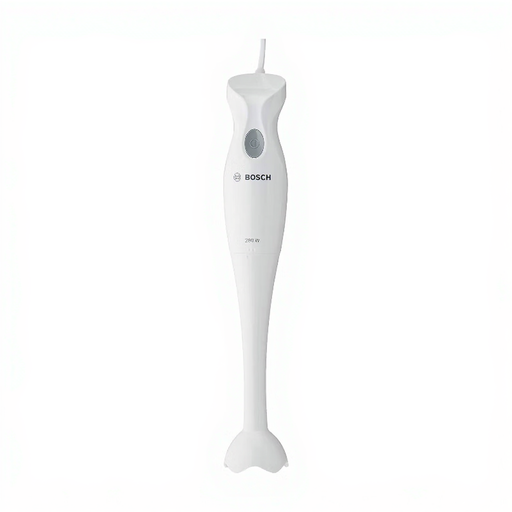
Why it stands out: The Bosch hand blender MSM 6B100 focuses on the essentials: simple and reliable blending. With 280 watts, it is designed for basic tasks like preparing soups and sauces. Its lightweight design and quiet, low-vibration motor make it particularly comfortable to handle. The blending wand with a splash guard ensures cleaner work.
Pros:
- Very lightweight and ergonomic
- Quiet and low-vibration operation
- Simple one-speed operation
- Detachable, dishwasher-safe blending wand
Who it's for: This model is ideal for beginners or users looking for a straightforward and budget-friendly hand blender for occasional, simple tasks. Anyone who mainly wants to purée soups or mix dips will find this to be a functional and easy-to-handle device.
Looking for More Flexibility?
For maximum freedom of movement in the kitchen, a cordless model might be the right choice. These appliances offer the convenience of not being tied to a power outlet, which is especially advantageous in large kitchens or when preparing food directly at the dining table.
Discover our selection of cordless hand blenders and find the perfect model without the cable clutter.
Frequently Asked Questions (FAQ)
How many watts should a hand blender have?
The required wattage depends on its intended use. For simple tasks like puréeing soups, 250–400 watts is sufficient. For versatile applications, including harder ingredients, 600–800 watts is recommended. Models with 1000 watts or more offer power reserves for very demanding tasks like chopping nuts or ice.
Can you crush ice with any hand blender?
No, crushing ice places high demands on the motor and blades. Only powerful hand blenders with specially designed blades or attachments are suitable for this task. Always check the manufacturer's specifications to avoid damaging the appliance. For example, the Braun MultiQuick 7 featured here includes a dedicated ice-crushing attachment.
What's the difference between a hand blender and a countertop blender?
A hand blender is a handheld device used directly in a pot, beaker, or bowl. It is ideal for soups, sauces, and smaller quantities. A countertop blender is a stationary appliance with a fixed motor base and a blending jar on top. It is better suited for larger quantities, making smoothies with frozen fruit, and often has higher overall power.