
Hair Straightener Recommendations: Find Your Ideal Hair Type Match
For many, a hair straightener is an indispensable tool for daily hair styling. But the market offers an overwhelming variety of models, materials, and technologies. Choosing the right device can be the deciding factor between hair that looks smooth and shiny, or dry and damaged. This article serves as a guide, presenting objective criteria to help you find a hair straightener that fits your individual needs. We'll look at various features and present a selection of models with different specialities.
What to Look for When Choosing a Hair Straightener
Before you make a decision, it's helpful to understand the basic features of hair straighteners. When searching for a hair straightener review, users often come across the following technical features, which are important for styling results and hair health.
1. The Heating Plate Material
The plates are the heart of any straightener, as they come into direct contact with your hair. The material affects heat distribution and how smoothly it glides.
- Ceramic: A ceramic hair straightener is common and known for its ability to distribute heat very evenly. This helps prevent heat spikes (so-called "hot spots") that can cause localized damage. Solid ceramic plates are considered particularly gentle, while ceramic-coated plates are a more budget-friendly alternative.
- Titanium: Titanium plates heat up extremely quickly and can reach very high temperatures. They are durable and glide easily through the hair. Due to the high heat, they are best suited for thick, coarse, and unruly hair. Caution is advised for fine hair.
- Tourmaline: This mineral is often used as a coating on ceramic plates. When heated, tourmaline emits negative ions, which counteracts static electricity in the hair and can contribute to more shine.
2. Adjustable Temperature and Additional Features
A flexible temperature control is a crucial feature for a hair-friendly straightener. Different hair types require different levels of heat:
- Fine, colour-treated, or damaged hair: Lower temperatures (approx. 130°C – 170°C) are generally sufficient and gentler.
- Normal hair: A medium temperature range (approx. 170°C – 200°C) is often ideal.
- Thick, curly, or coarse hair: Higher temperatures (up to 230°C) may be necessary to achieve the desired result.
Modern devices often offer other useful features. An ionic hair straightener reduces frizz and flyaways. Models with rounded edges function as a 2-in-1 straightener and curling iron, allowing you to style waves or curls. For maximum flexibility on the go, a cordless hair straightener is a practical option.
Hair Straightener Recommendations
Here, we present three models that stand out for their specific features and technological approaches. This selection is intended to cover various use cases—from the versatile all-rounder to the specialised device for on-the-go styling.
ANGENIL Graphene Ceramic Hair Straightener
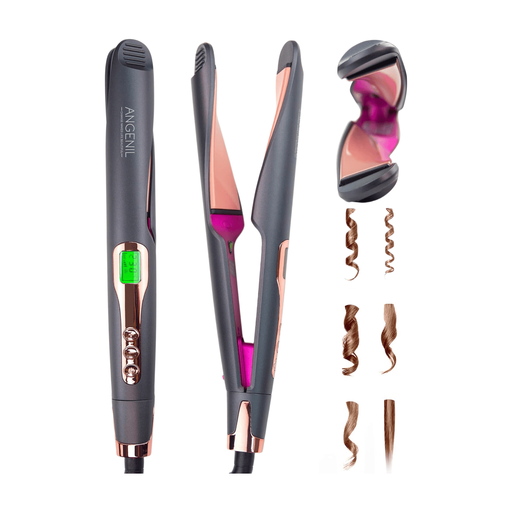
Why It Stands Out This model is distinguished by its 2-in-1 design with spiral-twisted heating plates. This construction is designed not only to straighten but also to make creating curls and waves easier. The wide temperature range and ionic technology make it a flexible tool for various hair types and styling preferences.
Advantages
- Versatile Styling: The 3D twisted plates allow for straightening, waving, and curling with just one device.
- Precise Temperature Control: 11 heat settings from 130°C to 230°C, adjustable via an LCD display.
- Ionic Technology: According to the manufacturer, it releases over 70 million negative ions to reduce frizz and promote shine.
- Worldwide Use: Thanks to its universal voltage (100V-220V), the device is travel-friendly.
Who Is It For? For users looking for a multifunctional styling tool that can create both straight hair and defined curls. The adjustable temperature makes it a practical choice for families with different hair types or for those who love to experiment.
GHD Unplugged Wireless Professional Hair Straightener
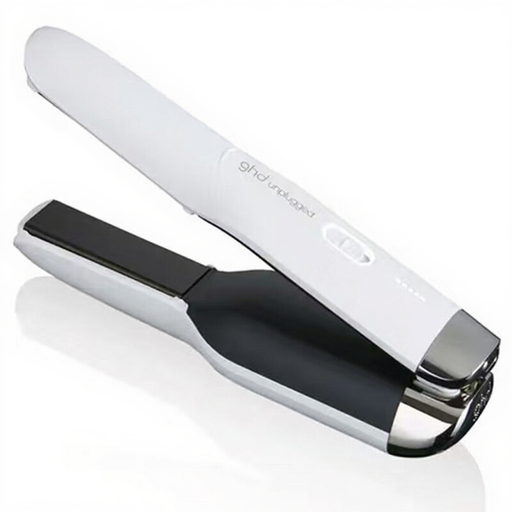
Why It Stands Out The GHD Unplugged is a cordless hair straightener designed for maximum portability. It operates at a constant styling temperature of 185°C, which GHD claims is the optimal balance between effective styling and hair protection. Its compact and lightweight design makes it the ideal companion for on the go.
Advantages
- Cordless Freedom: The lithium-ion battery provides up to 20 minutes of styling without a cord.
- Consistent Temperature: The dual-zone technology ensures a constant temperature of 185°C across the entire plates.
- Compact and Lightweight: Weighing only 300g, it's ideal for your handbag, the gym, or travel.
- Smooth Glide: The ceramic plates are designed for gentle, snag-free styling.
Who Is It For? This model is aimed at people with an active lifestyle, who travel frequently, or who want to touch up their style throughout the day. It's a great choice for anyone who values convenience and a high-quality brand known for its professional hair straighteners, without being tied to a power outlet.
Grundig HS 7030 Straightening Iron
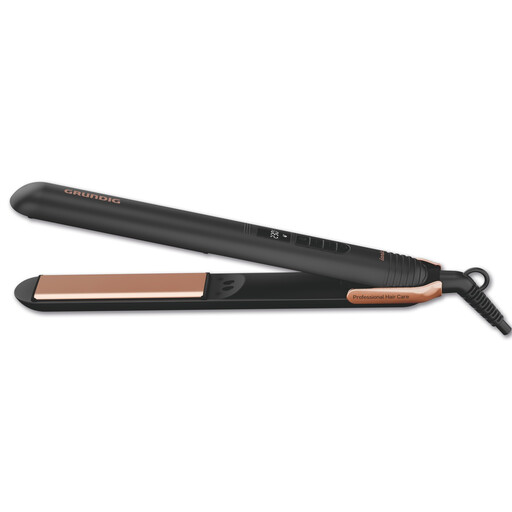
Why It Stands Out The Grundig HS 7030 places a special focus on hair protection. Its 'Hair Protection Mode' uses an intelligent sensor that, according to the manufacturer, analyses the hair's structure and automatically adjusts the temperature. The ceramic coating, enhanced with macadamia and coconut oil, is intended to provide additional care for the hair.
Advantages
- Intelligent Heat Protection: A sensor selects the optimal temperature to protect hair from excessive heat.
- Nourishing Coating: The ceramic plates are infused with oils to help retain moisture in the hair and enhance shine.
- Flexible Settings: In addition to the automatic mode, 6 manual temperature levels from 130°C to 230°C are available.
- Efficient Styling: The 11 cm long, floating plates ensure even pressure and are well-suited for long hair.
Who Is It For? Ideal for users whose top priority is hair health. Anyone who styles their hair daily and is concerned about heat damage will find this a technological solution that actively works to protect the hair.
Looking for Something Else?
The world of hair styling tools is diverse, offering the right device for every need. For example, if you're looking for a specific solution for beard care, you can find more specialised products in our beard straightener category.
Discover More Styling Tools Here
Frequently Asked Questions (FAQ)
1. What material is best for a hair-friendly straightener? For styling that's gentle on your hair, plates made of solid ceramic or with a high-quality ceramic coating are a good choice, as they distribute heat evenly. Models with a tourmaline coating can also help reduce frizz and make hair appear shinier by emitting negative ions.
2. Can you create curls with a hair straightener? Yes, it's possible. Models with rounded housing edges and narrow plates are particularly well-suited for this. To style curls, clamp a section of hair and rotate the straightener 180 degrees while slowly pulling it down to the ends. A hair straightener for curls is often designed to make this motion feel fluid.
3. What does ionic technology mean in a hair straightener? An ionic hair straightener emits negatively charged ions during use. These neutralise the positive static charge in the hair, which is often responsible for frizz and flyaways. The result is typically smoother, sleeker hair with more shine, as the hair's cuticle layer is sealed.