
Flipchart Markers 2026: A Guide to Choosing the Right Marker
Choosing the right flipchart marker is a practical decision that significantly influences the readability and professionalism of a presentation. A marker's technical specifications, such as tip type, ink composition, and barrel design, determine its suitability for specific use cases. This guide analyses the crucial criteria for selecting presentation markers and presents a selection of models based on their specifications.
Buyer's Guide: What to Look for in a Flipchart Marker
The functionality of a flipchart marker is defined by three core components: the tip, the ink, and the barrel. An informed decision is based on understanding these elements.
The Tip: Chisel Tip vs. Round Tip
The shape of the marker tip directly impacts the script and its potential uses.
- Chisel Tip: This tip allows for variable line widths. By holding the pen at different angles, you can draw both wide lines for headings and highlighting, as well as fine lines for details and annotations. A typical line width here varies between 2 mm and 5 mm. This makes it a versatile tool for dynamic presentations and workshops.
- Round Tip: It produces a consistent line width, resulting in a very uniform and clean script. Markers for flipcharts with a round tip are particularly well-suited for writing longer passages of text, as readability remains high even from a distance. The line width is usually a constant 2 mm to 3 mm.
Another quality feature is a locked tip, which prevents the tip from being pushed into the barrel under heavy writing pressure.
The Ink: Properties and Composition
The ink is the core of any flipchart pen. Its formulation determines colour vibrancy, drying time, and odour.
- Water-based ink: Modern presentation markers predominantly use water-based ink. This is low-odour and does not bleed through to the subsequent pages on high-quality paper (no bleed-through).
- Drying properties: Quick-drying ink is particularly advantageous for left-handers to avoid smudging what has been written.
- DRY SAFE Technology: Some manufacturers, like STAEDTLER, offer markers with a special technology that prevents the pen from drying out even if left uncapped for several days. According to the manufacturer, this has been tested according to ISO 554. This feature is highly practical in intensive work environments like workshops or long meetings, as the pen does not need to be constantly capped.
Refillability and Barrel Material
The durability and sustainability of a marker are determined by its barrel and the option to refill it.
- Refillable: A marker designed to be refillable reduces waste and is more cost-effective in the long run. Special refill stations allow for clean and easy refilling of the pen.
- Material: The barrel is often made of polypropylene (PP), a robust plastic that protects the pen from external influences and ensures a long service life. An integrated clip on the cap enhances practical handling.
Our Selection of Presentation Markers for 2026
The following selection is based on the technical criteria mentioned above and the specifications provided by the manufacturer.
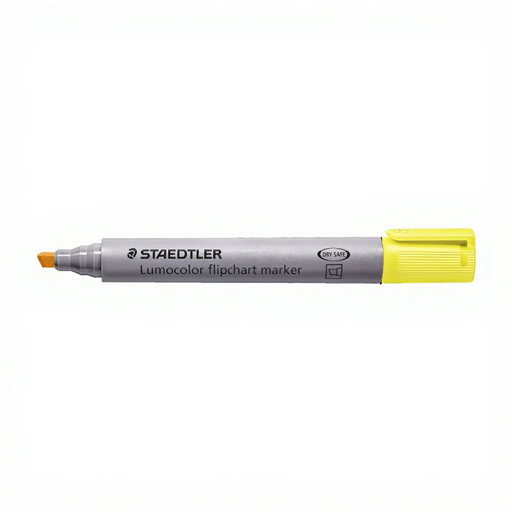
1. STAEDTLER Lumocolor Flipchart Marker Yellow - 2-5mm Chisel Tip
-
Why we recommend this product: This model is designed for visually structuring and highlighting content. The bright, vibrant yellow ink is ideal for marking keywords or colour-coding diagrams without obscuring the main text. The chisel tip provides the necessary flexibility.
-
Pros:
- DRY SAFE Technology: According to the manufacturer (tested to ISO 554), it can be left uncapped for days without drying out.
- Variable Line Width: The chisel tip allows for lines from 2.0 mm to 5.0 mm.
- Locked Tip: Prevents the tip from being pushed in under strong pressure.
- Low-Odour Ink: The water-based ink dries in seconds and is low-odour.
- Airplane-Safe: Automatic pressure equalisation prevents the pen from leaking on aircraft.
-
Who it's for: Trainers, facilitators, and project managers who want to create visual accents and structure content in workshops and presentations.
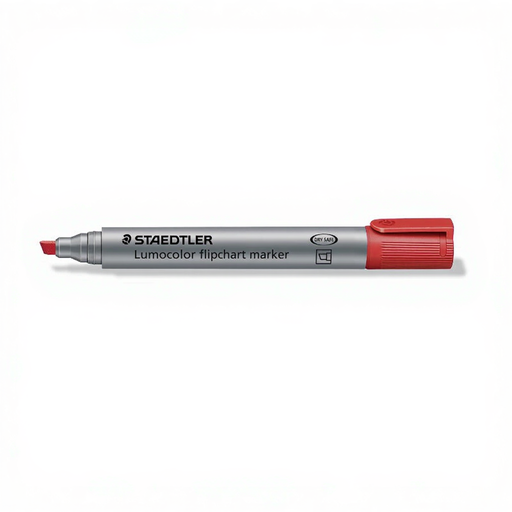
2. Lumocolor Flipchart Marker Red, 2-5mm Chisel Tip, Refillable
-
Why we recommend this product: This red STAEDTLER flipchart marker combines high visibility with cost-effectiveness. The intense red colour is ideal for corrections, warnings, or setting priorities. Its refillability makes it a long-term solution for heavy users.
-
Pros:
- Refillable: Can be refilled with the STAEDTLER refill station 488 56, which reduces operating costs.
- No Bleed-Through: The ink is formulated so that it does not bleed through to the next page of paper.
- DRY SAFE Technology: Offers protection against drying out, even if the cap is not immediately replaced.
- Robust Chisel Tip: Allows for variable line widths (approx. 2.0 mm to 5.0 mm) for headings and notes.
- Durable Barrel: Barrel and cap made of polypropylene (PP) ensure high durability.
-
Who it's for: Users in corporate and educational institutions with high consumption rates who value efficiency and the sustainable use of their work tools.
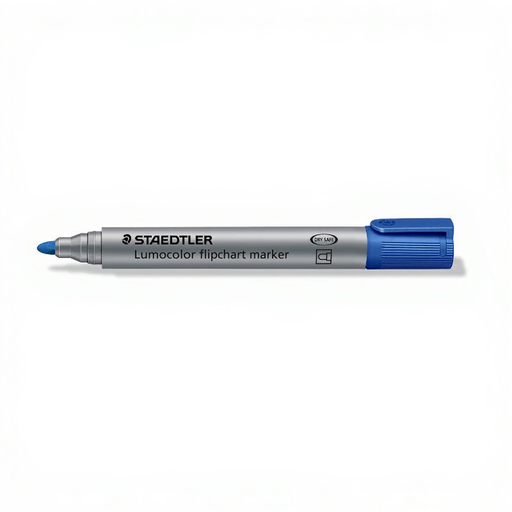
3. STAEDTLER Lumocolor Flipchart Marker, Blue, 2 mm Round Tip, Refillable
-
Why we recommend this product: This model is optimised for writing clear, legible text. The round tip with a constant line width of 2 mm ensures a uniform script, which is ideal for minutes, notes, and detailed lists.
-
Pros:
- Consistent Line Width: The 2 mm round tip creates a uniform and clean script.
- Refillable: Reduces waste and costs through the ability to be refilled.
- High Recycled Content: According to the manufacturer, the barrel material consists of 97% recycled plastic.
- Ink without Xylene and Toluene: The low-odour, water-based ink is free of these solvents.
- Locked Tip: The tip is secured against being pushed in and is therefore always ready for use.
-
Who it's for: Lecturers, teachers, and minute-takers who write a lot of text on flipcharts and value maximum readability and a tidy overall appearance.
More Options for Your Needs
If the models presented here do not exactly meet your requirements, or if you are looking for a wider selection of writing instruments for paper surfaces, you can find more products in our Pens for Paper category. A comprehensive range of markers with different tips, colours, and properties is available there.
Frequently Asked Questions (FAQ)
1. What is the difference between a flipchart marker and a whiteboard marker? The primary difference is the ink. Flipchart markers use a water- or alcohol-based ink that adheres permanently to paper and does not bleed through. Whiteboard markers contain special solvents that prevent the ink from permanently bonding to the smooth, non-porous surface of a whiteboard, allowing it to be dry-erased. Using a whiteboard marker on paper works, but a flipchart marker will leave permanent marks on a whiteboard.
2. How should you store presentation markers correctly? For maximum lifespan and even ink flow, it is recommended to store most presentation markers horizontally. This prevents the pigments from collecting at one end of the pen, which can lead to uneven colour application or drying out of the tip. Always replace the cap firmly after use.
3. Can flipchart pens dry out? Yes, in principle, any pen can dry out if left uncapped for an extended period. However, models with special technologies like the "DRY SAFE" feature offer significant protection. According to manufacturers, such pens can be left uncapped for several days without the ink drying out. This considerably increases reliability in daily work, as the pen won't dry out immediately.
Written by: Joybuy Product Recommendation Officer