
Dark Spot Serums: A 2026 Formulation Analysis
Dark spots, medically known as hyperpigmentation, are caused by a localised overproduction of melanin, the pigment that gives skin its colour. Factors such as UV radiation, hormonal changes, or inflammatory processes can trigger these accumulations. A serum for dark spots is a cosmetic formulation designed to reduce the appearance of this discolouration and promote a more even skin tone. The efficacy of these products is largely determined by the selection and concentration of their active ingredients.
This article analyses the mechanisms of relevant active ingredients and presents a selection of products based on specific technological approaches to visibly reduce dark spots on the face and correct an uneven skin tone.
Selection Criteria for a Brightening Serum
Choosing a suitable serum should be based on a rational evaluation of its ingredients and their concentrations. The following classes of active ingredients are particularly relevant in this context:
1. Retinoids (e.g., Retinal)
Retinoids are derivatives of Vitamin A and play a central role in skincare. They accelerate cell turnover, which causes hyperpigmented cells on the skin's surface to be shed more quickly and replaced by new, more evenly pigmented cells. Retinal (Retinaldehyde) is a potent form that is only one conversion step away from retinoic acid, the form of Vitamin A the skin can directly use. This allows for potentially faster results compared to traditional retinol.
2. Vitamin C (Ascorbic Acid)
Vitamin C is a powerful antioxidant that protects the skin from free radicals generated by UV radiation and environmental pollution. Of particular importance for treating hyperpigmentation is its ability to inhibit the enzyme tyrosinase. This enzyme is crucial for melanin production. By inhibiting it, the formation of new dark spots is reduced. L-Ascorbic acid is the purest and most well-researched form of Vitamin C.
3. Tyrosinase Inhibitors (e.g., Tranexamic Acid, Arbutin)
This group of active ingredients directly targets the biochemical process of melanin formation.
- Tranexamic Acid: This ingredient interrupts two signalling pathways that lead to melanin formation. It not only inhibits tyrosinase activity but also reduces UV-induced, plasmin-mediated melanocyte activation.
- Alpha-Arbutin: A more stable and effective form of arbutin that functions as a controlled-release version of hydroquinone. It blocks tyrosinase activity, thereby reducing melanin production without damaging skin cells.
4. Supporting Ingredients
- Hyaluronic Acid: Serves to hydrate the skin. Well-hydrated skin is more resilient and can absorb active ingredients more effectively.
- Niacinamide (Vitamin B3): Supports the skin barrier, has anti-inflammatory properties, and can reduce the transfer of melanin to the upper layers of the skin (keratinocytes).
- Vitamin E (Tocopherol): Another antioxidant, often used in combination with Vitamin C to enhance its stability and efficacy.
Our Product Selection for 2026
The following selection is based on the criteria mentioned above and represents different active ingredient approaches to addressing hyperpigmentation.
1. Medik8 Crystal Retinal 1 Age-Defying Encapsulated Retinal Face Serum
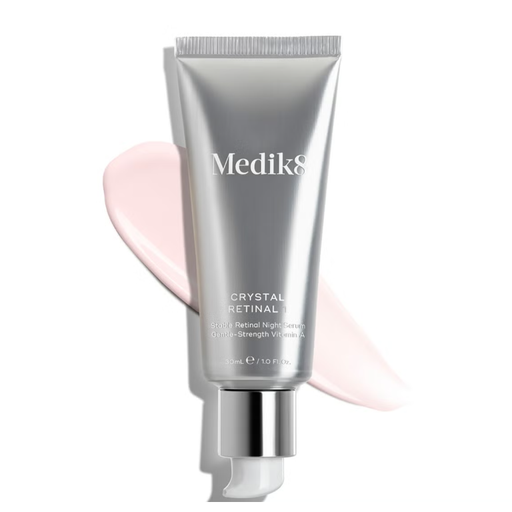
Why We Recommend This Product This serum utilises 0.01% stabilised Retinal, an advanced form of Vitamin A. The encapsulation technology ensures a time-release delivery of the active ingredient, which increases tolerability while maintaining high efficacy. The focus is on accelerating cell renewal to address both signs of ageing and hyperpigmentation.
Pros
- Contains stabilised retinal for accelerated cell turnover.
- Formulated with hyaluronic acid, glycerin, and Vitamin E for hydration and skin barrier protection.
- The 0.01% concentration is designed for beginners to retinoids or for sensitive skin types.
- Helps to reduce the appearance of blemishes.
Who It's For Individuals looking for a solution for the first signs of ageing, such as fine lines, as well as an uneven skin tone. It is a great option for users who want to start using high-potency retinoids.
2. L'Oréal Paris Revitalift Clinical 12% Pure Vitamin C Serum
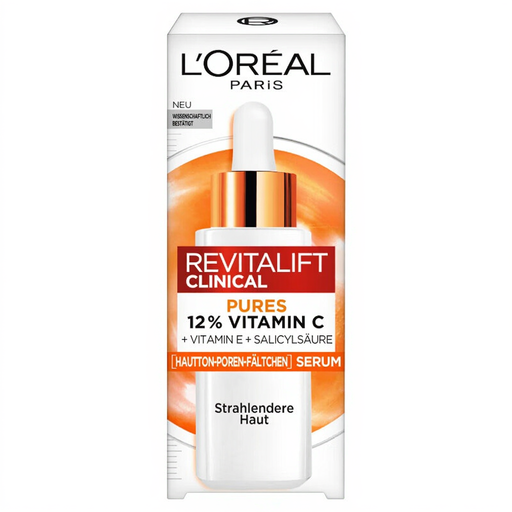
Why We Recommend This Product The formulation is distinguished by a high concentration of 12% pure Vitamin C (L-Ascorbic Acid). This active is renowned for its antioxidant properties and its ability to inhibit melanin production. The serum is complemented by salicylic acid, which has an exfoliating effect, and Vitamin E, which supports the antioxidant action.
Pros
- High concentration of pure Vitamin C for brightening the complexion and providing antioxidant protection.
- Contains salicylic acid to refine pores and smooth skin texture.
- According to the brand's clinical test, skin appears 2x more radiant and pores are 2x less visible after 8 weeks (Clinical scoring vs. untreated skin, 63 women, 8 weeks).
- Helps to correct an uneven complexion and first wrinkles.
Who It's For Users seeking a potent Vitamin C serum to revitalise dull skin, improve skin texture, and find a serum for radiant skin. It is suitable for normal skin types looking to proactively address the first signs of ageing and a lacklustre complexion.
3. Allies of Skin Tranexamic & Arbutin Advanced Brightening Serum
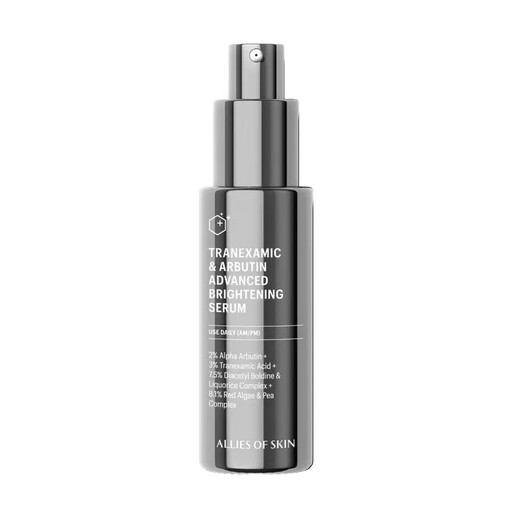
Why We Recommend This Product This hyperpigmentation serum takes a multi-active approach. It combines 3% Tranexamic Acid and 2% Alpha-Arbutin with a licorice root complex. This combination aims to interrupt melanin production on multiple levels and is specifically designed to treat stubborn pigmentary changes.
Pros
- Combines multiple high-potency brighteners (Tranexamic Acid, Alpha-Arbutin, Licorice Root).
- Targets the reduction of stubborn discolouration and improves skin resilience.
- Ophthalmologically tested and suitable for use around the eye area.
- The liquid texture absorbs quickly and is formulated for sensitive skin.
Who It's For Individuals with stubborn or recurring dark spots, including post-inflammatory hyperpigmentation (e.g., from acne marks). It is an alternative for users whose skin is sensitive to retinoids or high concentrations of Vitamin C.
Further Options to Consider
The products presented cover specific active ingredient strategies. For a broader overview of formulations tailored to different skin needs and preferences, an analysis of the entire product category is recommended. You can find a comprehensive selection under brightening serum.
Frequently Asked Questions (FAQ)
1. How quickly does a serum for dark spots work? The time to visible improvement depends on the active ingredient, its concentration, and individual skin condition. With consistent daily use, initial results can become visible after 4 to 12 weeks. Actives like retinoids, which influence the cell cycle, require at least one full skin renewal cycle (approx. 28 days) to show initial effects.
2. Can you combine Vitamin C and Retinal in the same routine? Yes, this combination is possible but requires correct application. A common method is to use the Vitamin C serum in the morning (for its antioxidant protection) and the Retinal serum in the evening. Applying them at the same time can lead to irritation in sensitive skin. Daily use of a high-SPF sunscreen is essential when using retinoids.
3. Is a brightening serum suitable for every skin type? Most modern formulations are designed for a wide range of skin types. However, individuals with very sensitive skin should pay attention to the active ingredient concentration and start with products designated for sensitive skin (e.g., low-dose retinal or serums with niacinamide and tranexamic acid). A patch test on an inconspicuous area, such as the inside of the forearm, is recommended before the first application to the face.