
The Perfect Coffee Table for 2026: An Analysis of Functional Designs
A coffee table is a multifunctional piece of furniture whose utility arises from the interplay of material, dimensions, and design. Selecting the right model depends on the specific requirements of the space and its intended uses. Whether it serves as a central surface in the living room, a slim console in the entryway, or a flexible side table, its technical specifications determine its suitability for any given location. This article analyses the various criteria to consider when choosing a table and presents two models with different functional focuses.
Buyer's Guide: What to Consider When Making Your Selection
The decision for a coffee table should be based on an objective evaluation of material, form, and function. These factors determine not only the aesthetics but also the durability and practical use in daily life.
Material Analysis: Engineered Wood vs. Metal
The choice of material directly impacts stability, maintenance, and style.
- Engineered Wood: Materials like MDF or particleboard are manufactured from wood fibres or chips and binding agents under high pressure and heat. They offer high dimensional stability and allow for a variety of surface finishes, such as a wood look or solid colours. Maintenance is generally straightforward, requiring only a dry or slightly damp cloth.
- Metal: Steel or aluminium, often powder-coated or painted, is used for frames and tabletops. A metal living room table is characterised by a high load-bearing capacity and a sleek design. Surface treatments protect against corrosion and scratches. Metal frames are characteristic of an industrial-style nightstand or modern accent tables.
Function and Form Factor: From Console Tables to Coffee Tables with Storage
A table's form factor defines its primary function and its footprint.
- Slim Console Table: With a shallow depth (often under 35 cm), this type is ideal for hallways, entryways, or as a surface behind a sofa. It serves as a hallway table for keys, mail, or decorative objects without obstructing the walkway.
- Round Side Table: Compact, round models can be flexibly placed next to a sofa or an armchair. They function as an accent table or a convenient surface for drinks and reading material.
- Coffee Table with Storage: Models with additional tiers, drawers, or compartments offer organised storage for remote controls, magazines, and other everyday items.
Our Picks for 2026
The following products were selected for their specific design features and functional properties. The analysis focuses on their technical specifications and resulting applications.
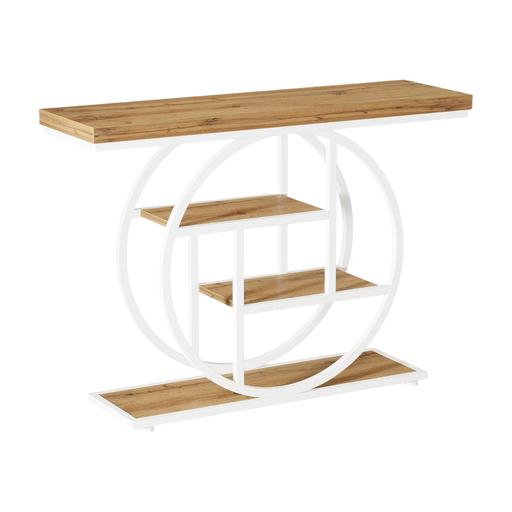
1. Tribesigns Console Table, 105 x 30 cm
Why We Recommend This Product
This model combines a slim form factor with a well-designed vertical storage solution. The four staggered shelves make efficient use of the furniture's height. The metal frame with a circular base ensures a stable construction, which, according to the manufacturer, allows for a load capacity of up to 50 kg. The 4 cm thick engineered wood top provides a robust main surface.
Pros
- High Storage Capacity: Four tiers offer ample space for decor, books, or storage boxes.
- Slim Design: With a depth of 30 cm, the table is ideal for narrow spaces like hallways or alcoves.
- Sturdy Construction: The metal frame and thick tabletop ensure a load capacity of up to 50 kg.
- Versatile Use: The design is suitable as a slim console table, sofa table, or hallway table.
Who It's For
This model is designed for users seeking a space-saving yet storage-rich solution for narrow areas. It fits well into interior concepts that combine modern or industrial elements with a light colour scheme.
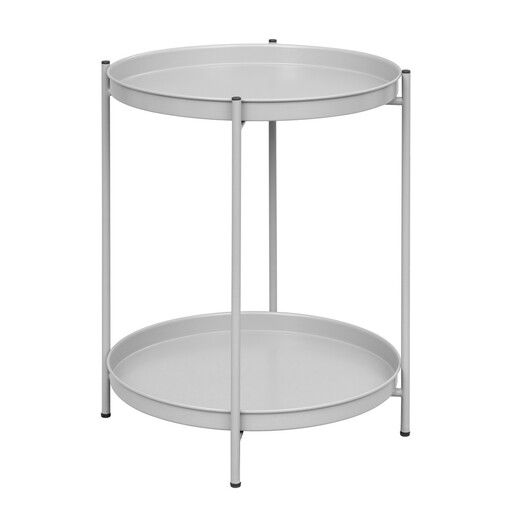
2. Woltu Round Side Table with Removable Trays
Why We Recommend This Product
The Woltu modern side table is distinguished by its high degree of flexibility. It consists of a metal frame and two removable trays with a diameter of 44 cm. These trays can not only serve as a surface but can also be used for serving or transporting items. Adjustable feet ensure a stable footing even on uneven floors. According to the manufacturer, the abrasion-resistant paint on the metal surface is rust-proof and easy to clean.
Pros
- Flexible Use: The two removable trays extend its functionality beyond that of a simple surface.
- Compact Design: With a diameter of 44 cm and a height of 53 cm, the table is a space-saving solution.
- Stability on Any Surface: Adjustable feet compensate for unevenness in the floor and prevent wobbling.
- Easy-to-Clean Surface: The painted metal surface can be easily cleaned with a damp cloth.
Who It's For
This product is aimed at individuals looking for a compact and multifunctional table for the living room or bedroom. Its suitability as a nightstand or flexible side table makes it particularly attractive for smaller apartments or for users who value adaptable furniture.
Discover More Options
If the featured models do not exactly meet your requirements for shape or size, a broader selection of designs may be helpful. Different diameters, heights, and materials offer solutions for various interior styles and spatial constraints.
Explore our selection of Round Coffee Tables to compare more models.
Frequently Asked Questions (FAQ)
1. How high should a coffee table be? The ideal height for a coffee table is based on the seat height of your sofa. A common guideline is that the tabletop should be at the same height as, or a few centimetres lower than, the sofa's seat cushions. This allows for comfortable access to items on the table. For side tables placed next to the sofa, a height level with the armrest is often practical.
2. What is the difference between a coffee table and a side table? A coffee table is typically larger and lower, placed centrally in front of the sofa. It serves as the main surface in the living area. A side table is smaller, often taller, and is positioned to the side of a sofa, armchair, or bed. Its function is to provide an additional, easily accessible surface for specific purposes.
3. How do you care for a metal coffee table? Caring for a metal table is generally straightforward. For daily cleaning, a soft, dry, or slightly damp cloth is sufficient. On painted or powder-coated surfaces, avoid using abrasive cleaning agents as they can damage the protective layer. Spills should be wiped up immediately to prevent staining.