
The Best Cat Tree of 2026: An Analysis for Modern Living Spaces
A cat tree is more than just a piece of furniture for cats. It fulfils the animal's fundamental behavioural needs: grooming their claws, marking their territory with scent glands in their paws, stretching their muscles, and climbing and observing from an elevated position. Selecting the right model is therefore a functional decision that directly impacts the cat's well-being and should also integrate harmoniously into the human living space. This article analyses the essential criteria for choosing a suitable piece of scratching furniture and presents various models based on their technical specifications and practical benefits.
Buyer's Guide: What to Consider When Making Your Selection
The decision to purchase a cat tree should be based on an objective evaluation of its material, stability, and functionality.
1. Materials and Craftsmanship
The longevity of a cat tree and its acceptance by the cat depend significantly on the materials used.
- Scratching Surfaces: Sisal is the de facto standard for scratching surfaces. This natural fibre is extremely robust, durable, and offers cats an ideal texture for claw care. The thickness of the sisal rope and the density of the wrapping on the scratching post are indicators of quality. Thin ropes or gappy windings wear out more quickly.
- Construction: The supporting structure often consists of engineered wood panels (e.g., MDF or particleboard). A heavy base plate contributes significantly to stability.
- Covers: Lounging areas and condos are often covered with plush or felt. It is crucial that the fabric is firmly anchored to prevent it from coming loose under heavy use. Washable cushions or covers simplify hygiene.
2. Stability and Safety
A climbing tree must withstand the weight and energy of a jumping cat without wobbling or tipping over. A wide, heavy base plate is the foundation for a secure stand. For ceiling-high or very slim models, an additional wall mount is a sensible safety measure to prevent tipping accidents. All connections and platforms should be firmly assembled and have no play.
3. Functionality and Footprint
Modern living concepts often require space-saving solutions. Multifunctional scratching furniture combines several functions within a small footprint.
- Vertical Design: Models that go up rather than out use space efficiently and satisfy a cat's climbing instinct.
- Integrated Elements: A cat tree with a condo provides a place for retreat. Integrated feeding stations or enclosures for the litter box can help keep the living space tidy.
- Modular Design: Some systems can be expanded or reconfigured, allowing for adaptation to changing spatial conditions or the cat's needs.
Our Top Picks for 2026
The following products have been selected for modern homes based on their construction, choice of materials, and functional design.
Coneko Urban Oasis - Cactus Scratching Board
-
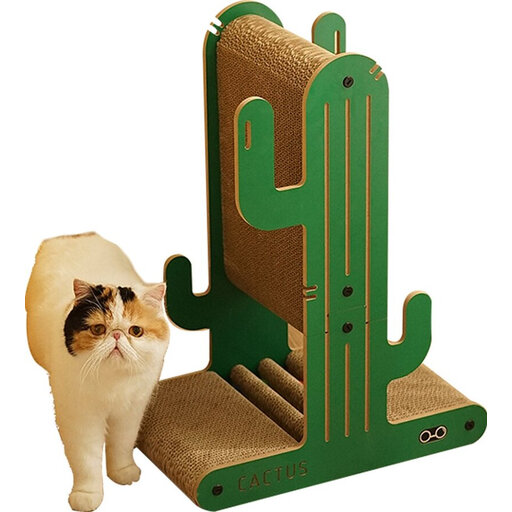
Why we recommend this product: The Coneko Urban Oasis model stands out for its unconventional design and high stability. The vertical T-structure allows for freestanding placement in a room without needing a wall for support. The 90 mm thick scratching surface provides a generous and comfortable zone for claw care. The combination of a scratching board, a lounging area, and an integrated toy makes it a multifunctional and space-saving solution.
-
Pros:
- Freestanding, stable T-construction
- Thick, durable scratching surface
- Combines scratching, sleeping, and playing
- Replaceable toy balls and components
-
Best for: Cat owners in smaller apartments who are looking for a functional designer cat tree that does not need to be placed against a wall.
H.XUN Multi-Layer Cat Tree with Bed
-
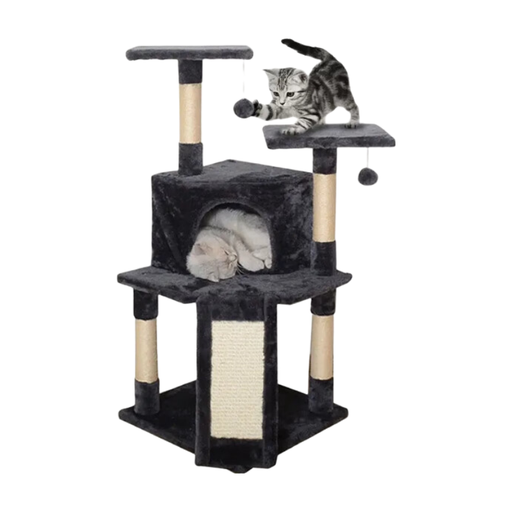
Why we recommend this product: This model from H.XUN is designed for maximum space utilisation on a small footprint. At a height of 102 cm and with a base of 43 x 43 cm, it offers various lounging and climbing opportunities on three levels. The semi-enclosed condo meets a cat's need for security and retreat. The combination of a sisal-wrapped post and an additional scratching board effectively directs scratching behaviour to the furniture.
-
Pros:
- Very compact due to its vertical design
- Semi-enclosed condo as a secure retreat
- Multiple scratching options (post and board)
- Integrated toy balls for entertainment
-
Best for: Households with small to medium-sized cats (up to 5 kg according to the manufacturer) where available space is limited and a vertical climbing option is desired.
Feandrea PCT312X01 Cat Tree with Scratching Post
-
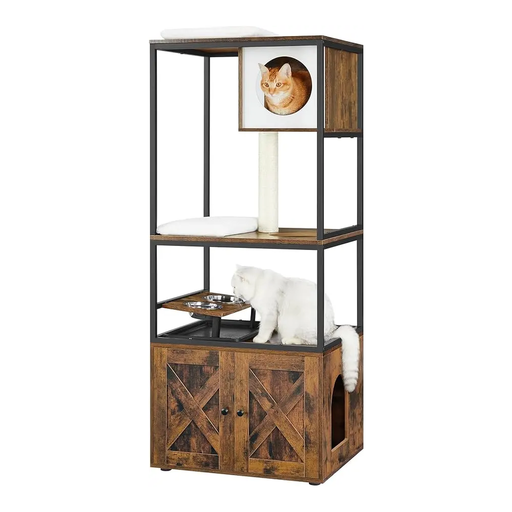
Why we recommend this product: The Feandrea PCT312X01 is an example of a highly integrated 4-in-1 system. It combines a climbing tree, a litter box cabinet, an elevated feeding station, and a sisal scratching post within a footprint of only approx. 0.3 m². This consolidation of functions is particularly efficient for maintaining order and making optimal use of apartment space. The lower cabinet conceals the litter box, which helps to minimise odours and contributes to a tidy appearance.
-
Pros:
- 4-in-1 functionality: cat tree, litter box cabinet, feeding station, lounge spot
- Concealed space for the litter box reduces odours and clutter
- Elevated food bowls for a more ergonomic eating posture
- Washable cushions for easy cleaning
-
Best for: Cat owners looking for a comprehensive all-in-one solution to unite multiple cat needs in a single, space-saving, and aesthetically pleasing piece of furniture.
Alternatives to Classic Cat Trees
If a full-sized cat tree is not an option due to space or design constraints, there are alternatives that can still contribute to the room's aesthetic. Another way to make the living environment both cat-friendly and stylish is through thematically appropriate decorative elements. For example, explore our selection of cat posters to add visual accents.
Frequently Asked Questions (FAQ)
1. Where is the best place to put a cat tree? The ideal location is a place where the family frequently gathers, such as the living room. Cats are social animals and enjoy observing their surroundings. A spot near a window provides additional stimulation with a view of the outdoors. The cat tree should not be hidden in a remote corner, as it may not be used otherwise.
2. How do I get my cat used to the new cat tree? If there is an old scratching object, initially place the new cat tree next to it. Make the tree interesting through interactive play with a cat wand. Placing treats on the different levels can also motivate the cat to explore the tree. Using catnip spray on the sisal surfaces can also increase its attractiveness.
3. What is the best material for scratching surfaces? Sisal has proven to be particularly suitable for scratching surfaces. The fibre is robust enough to withstand intensive use, and its rough texture instinctively encourages cats to scratch. Alternatives like jute or special cardboard scratchers are also functional but often have lower durability than high-quality processed sisal.