
The Best Cat Litter of 2026: A Guide to Materials and Performance
Choosing the right cat litter is a fundamental decision for household hygiene and your cat's well-being. The choice depends on several technical parameters, including the material, clumping ability, and odour control. An objective analysis of these factors allows you to make an informed choice that meets the needs of both your cat and you.
Buyer's Guide: What to Look for When Choosing Cat Litter
A litter's performance characteristics are primarily determined by its base material and how it's processed. Understanding the differences is crucial for selecting the right product for your needs.
An Overview of Materials
The most common materials for cat litter can be divided into mineral and plant-based categories.
- Bentonite Cat Litter: This is a natural clay known for its high absorbency and strong clumping action. When it comes into contact with liquid, the granules form firm, stable clumps that are easy to scoop out. This simplifies the daily cleaning of the litter box. Bentonite is typically heavier than plant-based alternatives.
- Plant-Fibre Cat Litter: This eco-friendly cat litter is made from renewable resources like wood, corn, or other plant fibres. It is characterised by its light weight and high absorbency. Many plant-fibre-based products are biodegradable and can be composted or disposed of in organic waste, subject to local regulations.
- Mineral Litter (Non-Clumping): Products made from materials like quartz sand and lime trap liquids inside the granules without forming solid clumps. The liquid is absorbed, and odours are locked in. This type of litter requires a regular, complete change-out, as the saturated granules cannot be removed individually.
Clumping vs. Non-Clumping: A Functional Comparison
The choice between clumping litter and non-clumping cat litter significantly impacts cleaning effort and cost-effectiveness.
- Clumping Litter: Forms solid clumps on contact with urine.
- Advantage: Allows for the targeted removal of waste, keeping the rest of the litter cleaner for longer. A full litter box change is needed less frequently.
- Use: Daily removal of clumps and solid waste.
- Non-Clumping Cat Litter: Absorbs liquid without clumping.
- Advantage: Often very low-dust and suitable for sensitive cats or kittens. Its use doesn't require daily sifting.
- Use: Daily removal of solid waste; the entire litter must be completely replaced at regular intervals (e.g., weekly).
Other Selection Criteria
- Odour Control: Effective odour control is essential for household hygiene. The mechanisms vary by material—from physical encapsulation in clay minerals to the neutralising effect of plant fibres.
- Dust Generation: A low-dust formula is better for the respiratory health of both humans and pets and reduces mess around the litter box.
- Granule Size: The size and texture of the granules can affect a cat's acceptance. A fine texture is often perceived as more comfortable on their paws but can be tracked out of the box more easily. A coarser granule reduces this effect.
- Suitability for Kittens: For young cats, litter for kittens is often recommended. It is typically non-clumping and made from natural, safe materials to prevent the risk of ingesting clumps.
Our Top Picks for 2026
Based on technical specifications and practical benefits, we present a selection of different cat litter types.
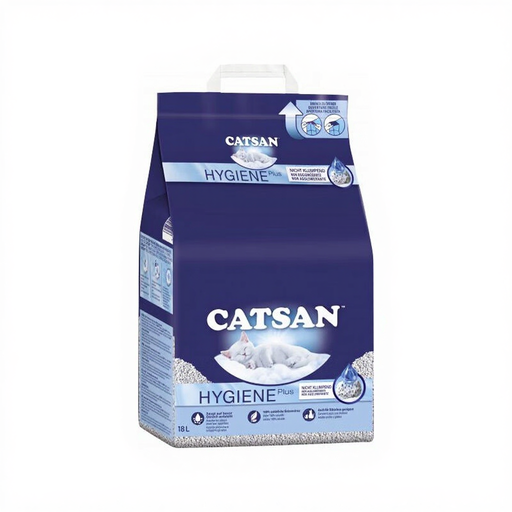
CATSAN Hygiene+ non-clumping cat litter 18 l
-
Why we recommend this product: This product is a classic, non-clumping hygiene litter. It is based on 100% natural raw materials (quartz sand and lime) and uses porous granules to absorb liquid quickly and lock in odours. The low-dust formula and its suitability for kittens make it a versatile option.
-
Pros:
- Non-clumping formula
- Made from natural raw materials without bleach
- Effective liquid and odour absorption
- Low-dust composition
- Suitable for kittens
-
Best for: Cat owners who prefer a straightforward, non-clumping solution and value a low-dust environment. Also a great choice for owners of young kittens.
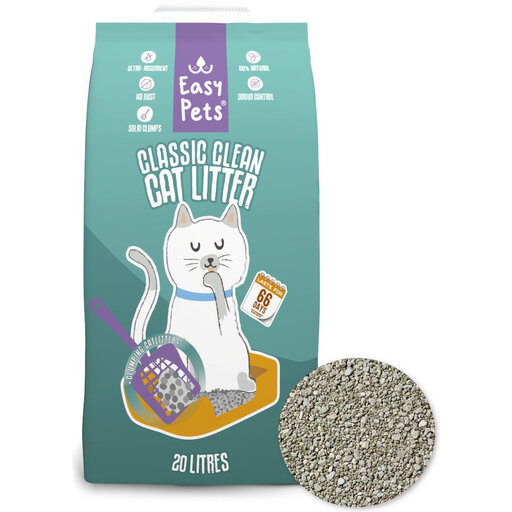
EasyPets Classic Clean Catlitter 20L
-
Why we recommend this product: EasyPets Classic Clean is a bentonite cat litter designed for maximum absorbency and firm clumping. According to the manufacturer, the extra-thick granules are designed to minimise tracking litter out of the box. The bulk pack also offers excellent value for money.
-
Pros:
- Strong clumping for easy cleaning
- High absorbency and odour control
- 100% natural bentonite
- Dust-free formula according to the manufacturer
- Bulk pack for long-lasting use
-
Best for: Price-conscious and practical-minded buyers looking for an efficient clumping litter with good odour control who want to minimise cleaning effort.
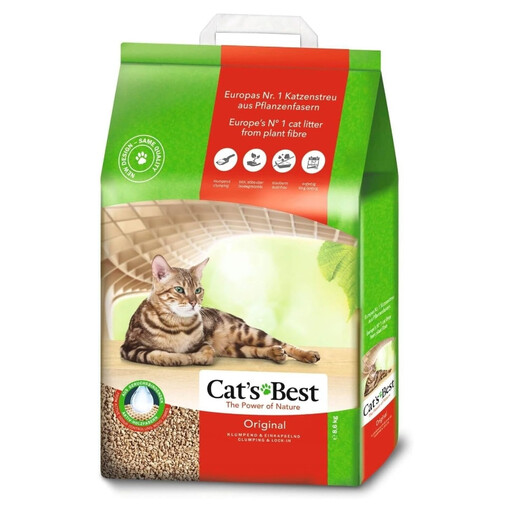
Cat's Best Original Cat Litter 20 L
-
Why we recommend this product: Cat's Best Original is an eco-friendly cat litter made from pure plant fibres. It combines the benefits of a clumping litter with sustainability. The manufacturer claims it is up to three times more efficient than conventional mineral litters. The product is also fully biodegradable.
-
Pros:
- Made from 100% pure organic fibres
- Clumping and very economical
- Effective liquid and odour control through plant-fibre technology
- Biodegradable and compostable
- Individual clumps can be disposed of in the household toilet, subject to local regulations
-
Best for: Eco-conscious cat owners who are looking for a sustainable, lightweight, yet high-performance clumping litter and are willing to invest in a premium product.
More Options in Cat Supplies
The products featured here cover a range of different needs. If you are looking for other alternatives or specific accessories for your cat, you can find a wider selection in our Cat Supplies category. There, you can compare various products and buy cat litter online to find the perfect solution for your needs.
Frequently Asked Questions (FAQ)
1. Which cat litter is suitable for kittens? For kittens, non-clumping cat litter made from natural materials is often recommended. This is because young kittens tend to explore their environment with their mouths and might ingest litter. With clumping litter, there is a risk of it clumping inside the digestive tract. Products like CATSAN Hygiene+, which are explicitly designated as safe for kittens, are a secure option.
2. How often should you completely change the cat litter? This depends on the type of litter. With clumping litter, waste is removed daily. A complete change-out is necessary approximately every 4-6 weeks, depending on usage and the number of cats. With non-clumping cat litter, the entire contents are typically replaced once a week, as the liquid is only absorbed by the granules, not locked into clumps.
3. What is the difference between bentonite and plant-fibre cat litter? The main difference lies in the material and its associated properties. Bentonite cat litter is a heavy clay that forms very firm clumps and is extremely absorbent. Plant-fibre cat litter is a lightweight, ecological alternative made from renewable resources. It is also highly absorbent and clumping, but is additionally biodegradable and lighter in weight.