
Bedside Crib Buyer's Guide 2026: A Practical Guide to Choosing the Right Model
A bedside crib, also known as a co-sleeper or bedside sleeper, is a sleeping solution for newborns designed to be placed directly next to the parents' bed. Its design features a drop-down side, allowing you to stay physically close to your baby while ensuring they have their own separate, safe sleeping space. This simplifies night-time routines like feeding or comforting your infant. Choosing the right model depends on your specific functional needs and its compatibility with your existing bed.
What to Look for When Choosing a Bedside Crib
The decision for a bedside crib should be based on objective criteria. The following technical features and safety aspects are crucial for making an informed choice.
1. Safety and Attachment System
A stable, gap-free connection to the parents' bed is the primary safety feature. Look for a robust attachment system, which typically consists of adjustable straps. These are wrapped around the frame or mattress of the parents' bed to prevent the bedside crib from shifting. Models that comply with the European safety standard EN 1130 meet specific requirements for stability and construction.
2. Height Adjustability and Compatibility
A key functional feature is height adjustability. A good bedside crib can be adjusted in multiple increments to match the height of the parental mattress. The goal is to create a seamless, level transition with no height difference or gap. This is especially important for beds of non-standard height, such as many box spring beds. Measure the height of your mattress top (from the floor) and compare it with the adjustment ranges of the respective bedside crib model.
3. Material, Mattress, and Air Circulation
The materials of the bed frame (often wood or aluminium) and textiles should be tested for harmful substances. An included mattress should be firm to prevent the child from sinking in, yet breathable. Side panels made of mesh fabric are a key advantage, as they ensure optimal air circulation and allow you to keep an eye on your baby, even when the drop-down side is closed.
4. Additional Features and Mobility
Depending on individual needs, other features can enhance practical use:
- Wheels: Models with wheels offer mobility, allowing the crib to be used as a bassinet in other rooms during the day. Locking brakes on the wheels are an essential safety feature here.
- Incline Function: Some cribs allow for a slight tilting of the sleeping surface. This anti-reflux position can aid the baby's digestion after feeding.
- Rocking Function: An integrated rocking function can help soothe the child and lull them to sleep.
- Convertibility: Some models are convertible and can later be transformed into a standalone crib, a bench, or a small desk, extending their lifespan.
- Travel Function: Compact, foldable models are also suitable as a travel crib.
Our Top Picks for 2026
Based on an analysis of technical specifications and feature sets, we present three standout models.
Kikka boo Side Bed Nanna 2 Grey
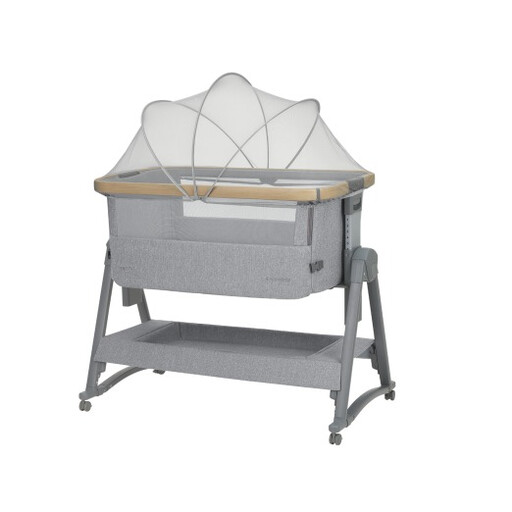
Why we recommend this product: The Kikka boo Nanna 2 combines a lightweight aluminium frame with an extensive set of features. The 7-level height adjustment offers great flexibility for adapting to various bed heights. Particularly noteworthy are the integrated anti-reflux position and the lockable rocking function, which enhance the child's comfort.
Advantages:
- High Adaptability: 7-level height adjustment (69–81 cm).
- Extra Comfort Features: Anti-reflux position and rocking function.
- Mobility: Four lockable wheels allow for easy transport within the home.
- All-in-One Package: Includes a soft mattress, mosquito net, and travel bag.
- Visibility and Ventilation: Mesh side panels for optimal air circulation.
Best for: Parents seeking a multifunctional and mobile bedside crib with advanced comfort features for the first six months of life.
roba Multifunctional Bed Star Magic Grey
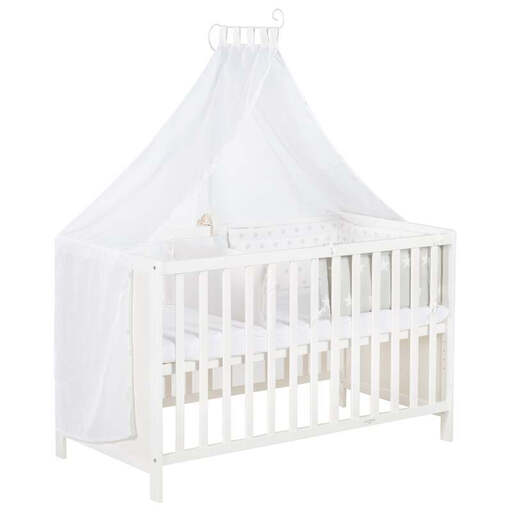
Why we recommend this product: The roba multifunctional bed stands out for its longevity and versatility. It can be used as a bedside crib, a standard crib, and later as a toddler bed, accompanying the child from birth to about five years of age. The construction of plywood and MDF is robust and supports up to 50 kg.
Advantages:
- Long-Term Use (0–5 years): Convertible from a bedside crib to a child's bed.
- High Weight Capacity: Designed to hold up to 50 kg.
- Comprehensive Set: Includes slatted frame, mattress, bumper, and canopy with rod.
- Flexible Adjustment: 6-level height adjustment (22 cm to 42 cm).
- Safe Entry and Exit: 5 removable bars for older children.
Best for: Parents looking for a sustainable, long-term sleeping solution that grows with their child and offers excellent value over time.
Chicco Next2Me Go Bedside Crib Soft Grey
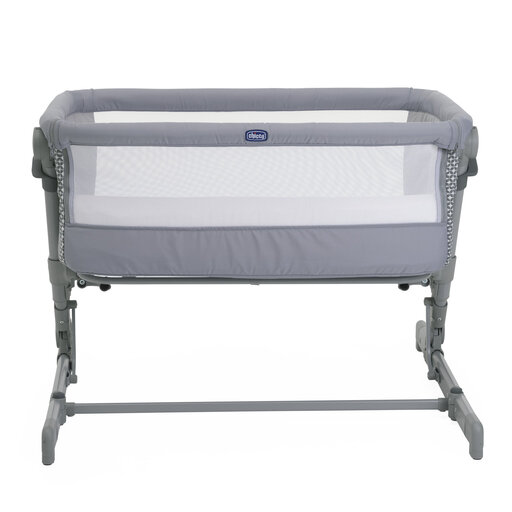
Why we recommend this product: The Chicco Next2Me Go focuses on maximum portability and ease of use. Its folding mechanism allows the crib to be collapsed in seconds without removing any parts. Weighing just 10.4 kg and including a travel bag, it is an excellent choice for families who are often on the go.
Advantages:
- Extremely Portable: Folds in seconds and includes a travel bag.
- Universal Compatibility: 6-level height adjustment fits various beds.
- Lightweight and Mobile: Low weight and four wheels for easy movement.
- Comfort and Hygiene: Inclinable sleeping surface and washable cover.
- Excellent Ventilation: All-around mesh fabric for optimal air circulation.
Best for: Parents with an active lifestyle who travel frequently or need a flexible sleeping solution that can be quickly set up, taken down, and transported.
Discover More Models and Alternatives
The models presented here cover a range of different needs. If you are looking for a different combination of features or a specific design, you will find a wider selection of solutions in our main category.
Discover more models in the category: Baby Bedside Crib
Frequently Asked Questions (FAQ)
1. How long can a baby sleep in a bedside crib? Most bedside cribs are designed for infants from birth up to about 6 months of age or a weight limit of 9 kg. Use should be discontinued as soon as the child can sit up, kneel, or pull themselves up independently, as there is a risk of falling out. Models that convert into a standard crib have a longer lifespan.
2. Is a bedside crib also suitable for box spring beds? Yes, many modern bedside cribs are suitable for box spring beds. Two factors are crucial: the maximum height setting of the bedside crib and the type of attachment system. Ensure that the sleeping surface of the bedside crib can be flush with the mattress of the box spring bed. The strap system must be long enough to securely wrap around the entire bed frame or mattress.
3. What should I look for in a mattress for a co-sleeper? The mattress should be a perfect fit for the specific crib model to leave no gaps at the edges. It should be relatively firm to prevent the baby's head from sinking in too deeply. For hygiene reasons, breathable materials and a removable, washable cover are also recommended.