
Barista Oat Milk Buyer's Guide 2026: A Technical Analysis for the Perfect Milk Foam
Selecting a barista oat milk is a decision driven by technical parameters and the desired functionality in coffee. Unlike conventional oat drinks, barista editions are specially formulated to create a stable and fine-pored microstructure—the milk foam—when subjected to heat and combined with the acidity of coffee. This article analyses the crucial criteria for selection and presents a range of products based on their specifications.
Buyer's Guide: What to Look For in a Barista Oat Milk
The suitability of an oat milk for frothing is determined by the interplay of protein content, fat content, and the use of stabilisers.
1. Foaming Performance and Texture
The core performance characteristic of a barista milk alternative is its ability to generate a stable foam volume.
- Protein Content: Proteins are essential for encapsulating air bubbles during frothing and forming a stable structure. A protein content of around 1 g per 100 ml or higher is often an indicator of good foaming capability. Some products use alternative protein sources, such as pea protein, to optimise this property.
- Fat Content: Fat contributes to the creaminess and mouthfeel of the foam. A higher fat content, typically around 3%, creates a richer and smoother foam that is well-suited for latte art. The type of oil used (usually rapeseed or sunflower oil) is decisive here.
- Acidity Regulators: Coffee is acidic. When cold milk alternatives meet hot coffee, the protein structure can denature, leading to curdling. Ingredients like dipotassium phosphate (an acidity regulator) buffer the pH value and prevent this undesirable reaction, ensuring stability in the hot beverage.
2. Flavour Profile and Ingredients
A vegan milk substitute for coffee should complement the coffee's flavour, not overpower it.
- Sugar Content: The sugar in oat drinks often occurs naturally during the production process, where enzymes convert oat starch into sugar. A lower sugar content results in a more neutral flavour profile. Check the nutritional information to identify products with a lower sugar percentage.
- Additives: Many barista products are fortified with vitamins (e.g., D, B2, B12) and minerals (e.g., calcium) to approximate the nutritional profile of cow's milk. This is a relevant factor for individuals who use plant-based barista milk as their primary milk substitute.
- Allergens: While oats can be naturally low in gluten, an explicit "gluten-free" label is necessary for those with coeliac disease. Products based on pea protein can be an alternative for individuals who react to soy or nuts.
3. Packaging and Storage
For regular use and stocking up, packaging type and shelf life are important considerations.
- Multipacks: Purchasing barista drink multipacks (e.g., packs of 6 or 8) offers logistical advantages and is often more cost-effective.
- Shelf Life: UHT (ultra-high temperature) treated products in cartons can be stored for months at room temperature unopened. Once opened, they require refrigeration and should be consumed within a few days, as specified by the manufacturer.
Our Selection of Barista Oat Drinks for 2026
The following selection is based on the technical criteria mentioned above and the product specifications provided by the manufacturers.
OATLY Oat Drink Barista Edition 6-Pack (6 x 1L)
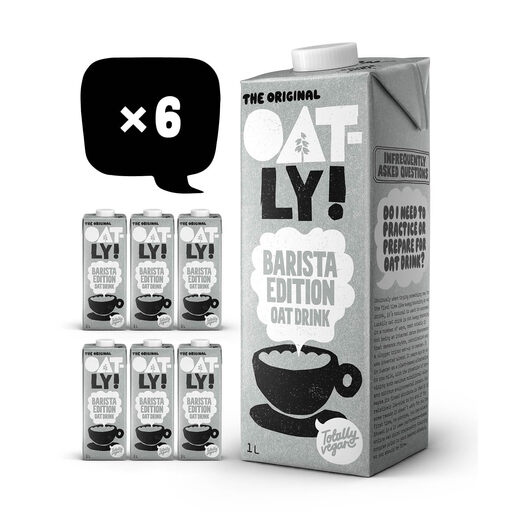
Why we recommend this product: The Oatly Barista Edition is a popular choice in the food service industry and among home users due to its balanced formulation. With 3% fat and the use of dipotassium phosphate as an acidity regulator, it is specifically designed for use in coffee and delivers consistent frothing results.
Pros:
- High fat content (3.0 g/100 ml): Ensures a creamy, dense foam and a full mouthfeel.
- Stability in coffee: The included acidity regulator prevents curdling in hot drinks.
- Fortified with nutrients: Contains added calcium as well as vitamins D2, riboflavin, and B12.
Who it's for: Users seeking a reliable and proven milk alternative for coffee with a characteristic, slightly sweet oat flavour and excellent foaming properties.
Vly No Milk Today Barista Milk Alternative 8-Pack (8 x 1L)
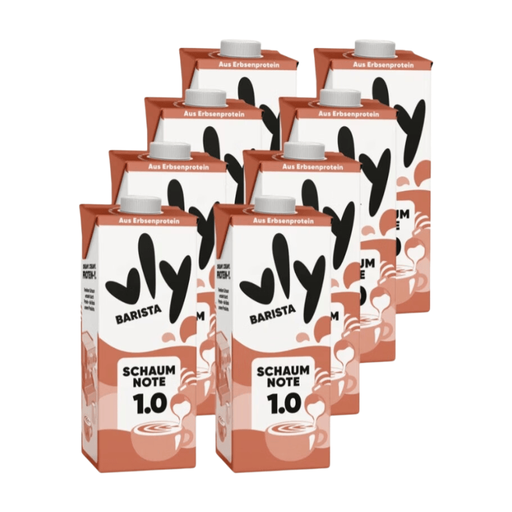
Why we recommend this product: Vly Barista stands out with its pea protein base (2.5%). This formulation results in a higher protein content (2.0 g/100 ml) and a lower sugar content (1.4 g/100 ml) compared to many oat drinks. According to the manufacturer, the product is free from soy, gluten, and nuts.
Pros:
- High protein content (2.0 g/100 ml): Supports the creation of an exceptionally stable microfoam.
- Low sugar content: Results in a very neutral taste that allows the coffee's aromas to take centre stage.
- Allergen profile: According to the manufacturer, it is free from common allergens like soy, gluten, and nuts, making it an option for consumers with sensitivities.
Who it's for: Coffee lovers who prefer a neutral-tasting product with high protein and low sugar. Ideal for users who need or want to avoid gluten, soy, or nuts.
Alpro Barista Oat Drink 8-Pack (8 x 1L)
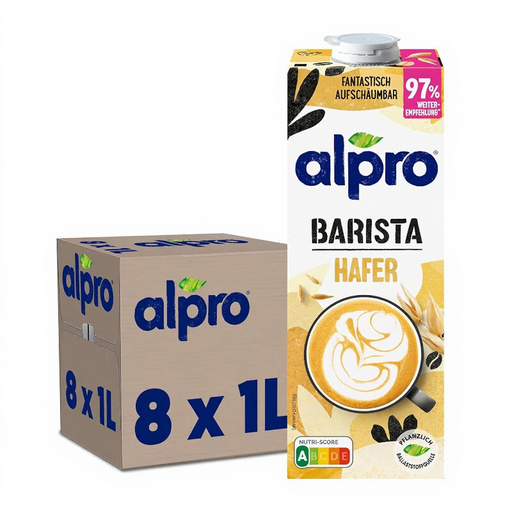
Why we recommend this product: The Alpro Barista oat-based variant offers solid performance with a fat content of 3.0 g/100 ml and a protein content of 0.8 g/100 ml. The formula is also equipped with an acidity regulator (potassium phosphates) to ensure stability and contains added dietary fibre from chicory root.
Pros:
- Balanced formula: Provides a good balance of creaminess and foamability for daily use.
- Added dietary fibre: Contains chicory root fibres as an additional ingredient.
- Nutrient fortification: Like other barista products, this one is also enriched with vitamins B2, B12, and D2.
Who it's for: Consumers looking for an established brand with a balanced flavour profile who value reliable performance for cappuccinos and latte macchiatos.
Discover More Options
The products presented represent a selection within the barista oat drink segment. The market for plant-based milk alternatives is constantly evolving, offering a wide variety of formulas and flavour profiles. For a more comprehensive overview of available products, including different pack sizes and brands, you can consult our oat milk products category.
Frequently Asked Questions (FAQ)
1. Why does my oat milk curdle in coffee? Curdling is caused by a chemical reaction between the acidity of the coffee and the proteins in the oat milk, especially with large temperature differences. Barista oat milk typically contains acidity regulators like dipotassium phosphate, which stabilise the pH and prevent this phenomenon. Using an edition specifically labelled "Barista" is therefore recommended.
2. Can you foam any oat milk? In theory, any liquid with sufficient protein and fat can be frothed to some extent. However, standard oat drinks often have lower protein and fat content and lack stabilisers. The result is usually a coarse-bubbled foam that collapses quickly and is unstable in coffee. Only barista editions are optimised for a dense, creamy, and long-lasting microfoam.
3. What ingredients are responsible for the foaming of barista oat milk? The three main components are:
- Proteins (from oats or added, e.g., from peas): They form the structure of the air bubbles.
- Fats (usually from rapeseed or sunflower oil): They provide creaminess and mouthfeel.
- Stabilisers/Acidity Regulators (e.g., phosphates): They ensure the stability of the foam and prevent curdling in hot coffee.