
Buying beef instant noodles: how to compare flavour, ingredients and pack size
Beef instant noodles are handy for the office, university, travelling or a quick meal at home. But there are clear differences between Asian instant noodles, Chinese instant noodles, beef ramen and beef rice noodles. Not every pack with a rich-tasting broth also offers a suitable type of noodle, clear ingredient labelling or a sensible portion size.
Common pitfalls when buying beef instant noodles
1. Big flavour claims without the ingredients to match
Descriptions such as ‘Beef’, ‘Brisket’ or ‘Roasted Beef’ often refer mainly to the flavour. They don’t automatically mean the product has a high beef content. If you’re looking for specific ingredients, check the ingredients list:
- Does it list beef, beef extract or beef powder?
- Does the product contain flavouring alone, or beef granules as well?
- Are there separate sachets for the broth, vegetables, oil and meat ingredients?
For example, Hefu Spicy Beef Noodles lists a beef content of 75% in the beef sachet. Other products contain beef powder, extract or artificial or blended flavourings. These descriptions are not interchangeable.
2. It’s easy to misjudge the heat and seasoning
‘Spicy’, chilli oil and Sichuan pepper can be much more intense than a classic instant beef noodle soup. Pickled vegetables, fermented bean paste and mustard greens also change the flavour profile.
If you’re looking for mild beef noodles, VIFON Pho Bo is an option with a stated spice level of 1. For a spicier meal, look for products with a separate chilli oil sachet or extra chilli powder. A separate seasoning sachet is handy because it makes it easier to adjust the heat.
3. The portion size and packaging don’t suit your routine
A single cup is convenient at work if you don’t have access to a kitchen. If you’re buying for several meals, an instant noodle 5-pack or a larger multipack may offer better value. Compare the total weight with the number of portions.
A cup isn’t automatically suitable for the microwave. With some products, the sachets need to be heated separately in hot water. Always follow the instructions on the packaging. This is especially important with soup sachets: not every sachet is microwave-safe.
What to check before you buy
Type of noodle: wheat, rice or potato
Wheat noodles are common in classic Chinese instant noodles and Japanese beef ramen. They contain gluten and are often sold as a firm or springy noodle block.
Beef rice noodles offer a different texture. VIFON Pho Bo and Acecook Oh Ricey use rice noodles and may suit you if you prefer a softer, lighter texture. Baekje lists a blend of rice and wheat ingredients, so be sure to check the allergens individually.
Omachi uses a potato and tapioca starch blend in its noodles. This may appeal if you’re looking for a different texture from conventional wheat noodles. However, it doesn’t make the product gluten-free, as it contains wheat.
Ingredients, allergens and halal labelling
In Germany, allergen information is particularly important. Beef instant noodles often contain wheat, soya, sesame, peanuts, fish or milk. Even products with a beef flavour may contain fish sauce, anchovies or blended seasonings.
For halal instant noodles, check the labelling on the specific product and its packaging. VIFON Pho Bo is described as halal-certified. Bai Xiang product names include ‘Halal Food’; nevertheless, check the current packaging and ingredients list before eating. A halal description should not be taken as a general statement about every product from a brand.
Nutritional values per 100g and per portion
Instant noodles can vary considerably in energy, fat and salt. The front of the pack isn’t enough for a useful comparison. Check:
- Energy per 100g and per portion
- Salt content, especially in heavily seasoned broths
- Fat content and saturated fat
- Portion weight, including seasoning sachets
Nutritional information may be presented differently depending on the product and preparation method. The information on the packaging you receive is the one to follow.
Products for different needs
The recommendations below group products by everyday use. They are not medical assessments, but are based on packaging, noodle type, pack size, preparation method and the ingredients listed.
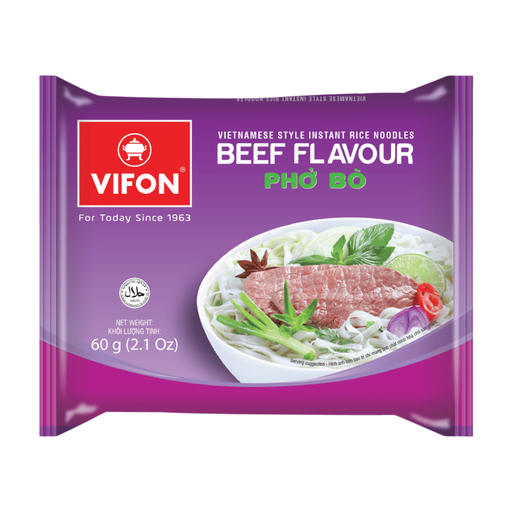
VIFON Vietnamese Beef Flavor Pho Bo 60g
Why this product suits this need: The 60g single portion is a good choice for a first try or a light meal. The rice noodles and stated spice level of 1 make it a relatively mild option to start with.
The portion size and stated spice level make it easier to choose, without having to commit to a larger stock-up straight away.
Rice noodles, a single portion and, according to the product information, halal certification; contains soya and wheat, among other ingredients.
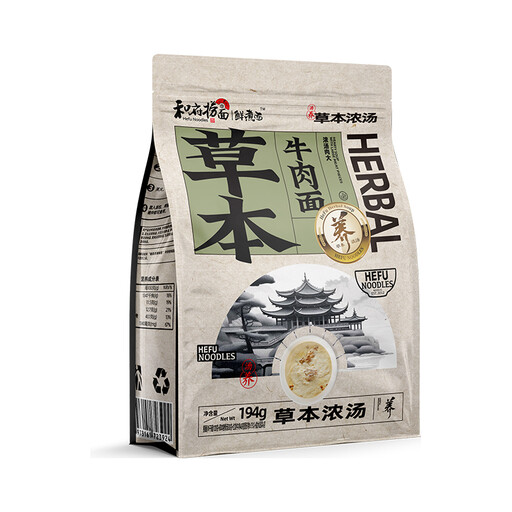
Hefu Noodle Herbal Beef Noodles 194g
Why this product suits this need: The set includes semi-fresh noodles, a soup base, vegetables and a separate beef sachet. It’s prepared in a pan, making it a good choice if you’re looking for more than a simple cup noodle option.
The ingredients and components are listed separately. This makes it easier to see whether the product really includes a beef sachet and vegetables.
194g portion, semi-fresh noodles and a listed beef sachet; contains wheat and soya.
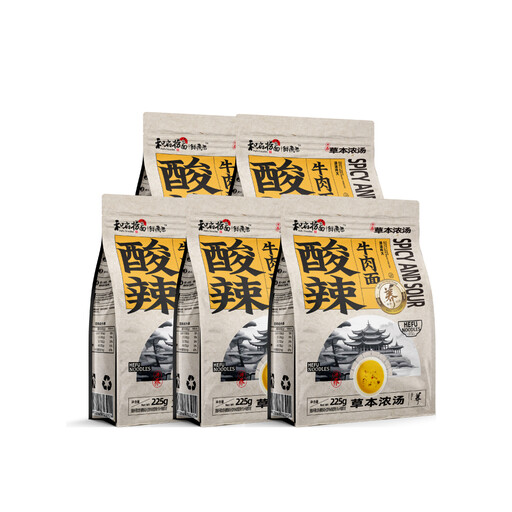
Hefu Noodle Spicy Beef Noodles 225g*5 (Pack of 5)
Why this product suits this need: This pack of 5, weighing 1.125 kg in total, is designed for households and regular noodle eaters. The combination of beef, broth, pickled vegetables and separate seasoning gives you several ways to tailor your meal.
The pack size is clearly stated. Allergens such as wheat, egg, soya, peanuts, fish and sulphites are also listed explicitly.
Five 225g portions, non-fried semi-dried noodles and a stated beef content of 75% in the meat sachet.
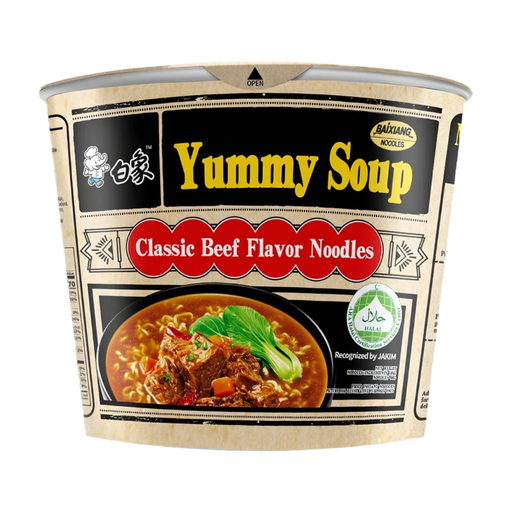
Bai Xiang Classic Beef Noodle Soup Bucket 107g
Why this product suits this need: The cup only needs boiling water and a short standing time. It’s a practical choice for the workplace, train journeys or places without a hob.
You prepare it straight in the cup. Wheat and soya are also listed as allergens, making it easier to check whether it’s suitable before you buy.
Cup packaging, a 3–4 minute standing time and listed beef granules; check the current halal labelling on the pack.
Looking for more options?
We’ve put together a complete, regularly updated list of products that meet these strict selection criteria and the safety regulations in force in the EU.
How to prepare and store them properly
For a classic instant noodle soup, pour boiling water over the noodles in the cup or cook them in a pan for three to five minutes. For larger sets, heat the soup and meat sachets as instructed. Never put sealed sachets in the microwave unless the packaging specifically says they are safe to do so.
Store unopened products in a cool, dry place away from direct sunlight. Once opened, use the seasonings and accompaniments promptly. The best-before date is shown on the packaging, though its position varies by product.
Frequently asked questions about beef instant noodles
How do you prepare beef instant noodles?
Depending on the product, pour boiling water over the noodles and leave covered for three to five minutes, or cook them in a pan. Add the soup sachet, oil and vegetables afterwards, following the instructions.
How long do instant noodles keep?
Unopened instant noodles will keep until the printed best-before date if stored in a cool, dry place. Once opened, they should be prepared and eaten straight away. Check the packaging for the specific date.
Are beef instant noodles halal?
It depends on the individual product. For items specifically labelled as halal, check the certification or labelling on the current pack. You should also check for ingredients such as fish sauce, alcohol and pork, as well as possible cross-contamination.